

In the era of Industry 4.0, “cost reduction and efficiency improvement” has become a top priority for manufacturers—and the key to achieving this lies in equipment that is both low-power and reliable. The low-power LPC1 industrial controller, built on NXP’s LPC microcontroller series, has emerged as a preferred choice for small factories and outdoor projects, thanks to its unrivaled combination of energy efficiency, durability, and compatibility. This guide covers everything you need to know: its working principle, peripheral matching solutions, model selection criteria, and real-world success cases—helping you build a high-performance and cost-effective industrial system.
What Is the Low-Power LPC1 Industrial Controller? And Why Is It So Efficient?
1.1 It’s Your Industrial “Power-Sipping Brain”
The low-power LPC1 industrial controller can be regarded as a compact, energy-efficient control hub for industrial environments. At its core is NXP’s LPC1 microcontroller, which integrates functions such as data collection, logic processing, and device communication—all while consuming minimal power. It is ideally suited for production lines, outdoor monitoring, logistics sorting, and any scenario requiring long-term stable operation.
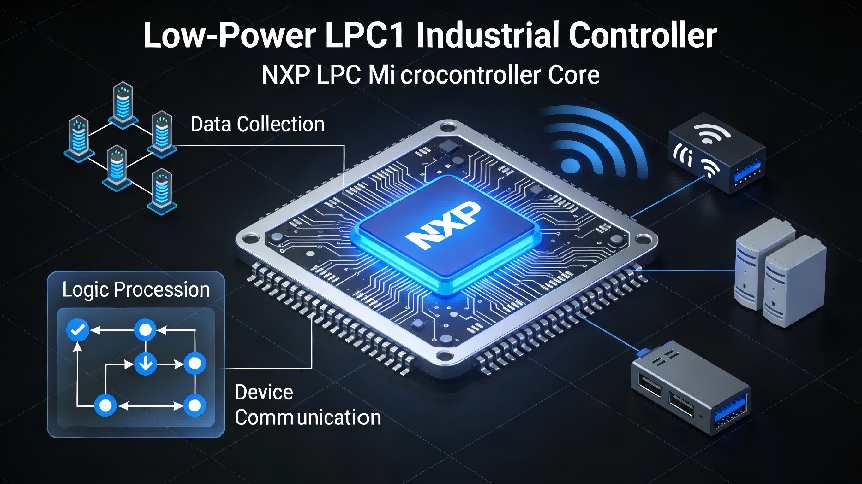
1.2 The Secret to Its Low Power Consumption
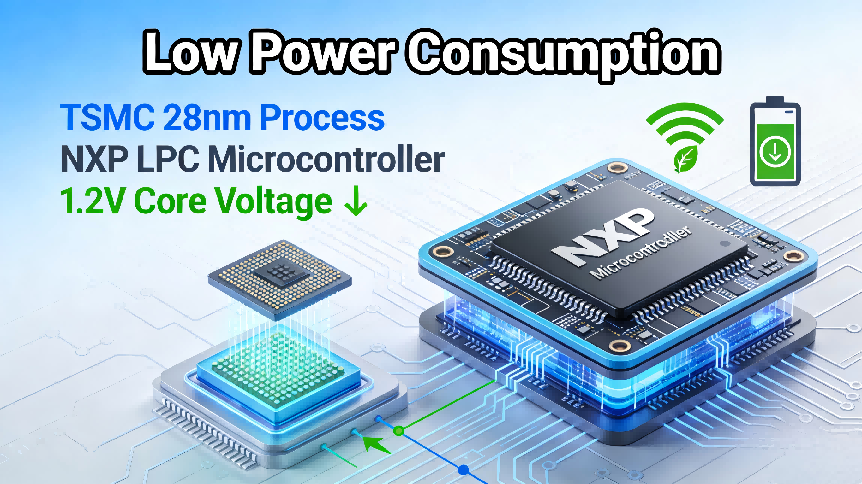
The LPC1’s high efficiency is not accidental but stems from intelligent design based on the NXP LPC microcontroller, with the following key advantages:
- Hardware advantages: Adopting TSMC’s 28nm process, it operates at a core voltage of only 1.2V. In idle mode, its power consumption is as low as 0.1W—barely enough to power a small lightbulb.
- Smart software: It employs “dynamic power management,” automatically switching between high-performance and sleep modes according to operational requirements. No energy is wasted during idle periods.
- Top-tier efficiency: Compliant with the U.S. DOE IE4 energy standard, it saves over 30% more power than traditional industrial controllers.
Pairing the LPC1 Controller: Optimal Gear Combos for Maximum Performance
While the LPC1 performs excellently on its own, pairing it with LPC expansion cards, data loggers, and other peripherals unlocks greater functionality. Below are three recommended configurations for common industrial scenarios:
2.1 Pair With LPC Cards for Flexible Customization
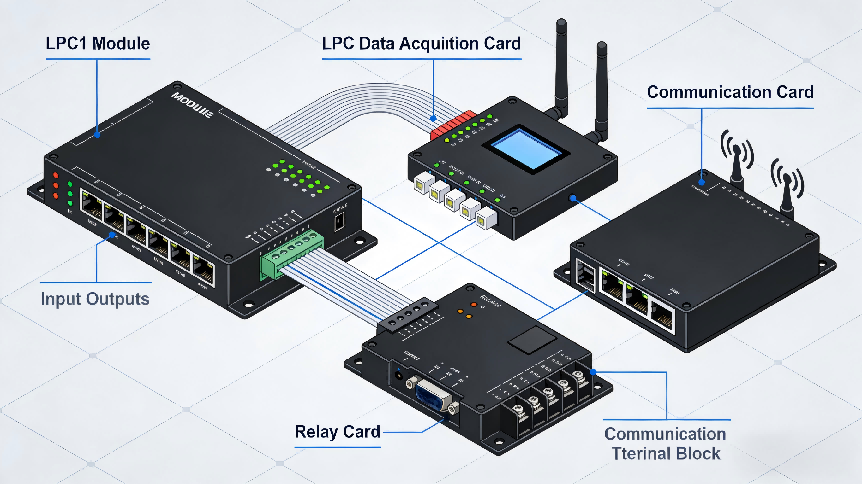
LPC cards are plug-and-play expansion modules that add specific functions, making them ideal for customizing your system:
- LPC data acquisition cards: Support 8-32 channels of analog/digital data collection, perfect for monitoring temperature, pressure, or flow rates on production lines.
- LPC communication cards: Add RS485, Ethernet, or 4G connectivity, enabling seamless communication between the LPC1 and PLCs, cloud platforms, or other devices.
- LPC relay cards: Control 8-16 relays to directly switch on/off motors, solenoid valves, or other equipment.
Real example: A food processing plant used an LPC1 controller paired with an LPC data acquisition card to monitor temperatures across 12 production lines. The data accuracy reached ±0.5℃, eliminating guesswork in process control.
2.2 Team Up With Rugged Data Loggers for Harsh Environments
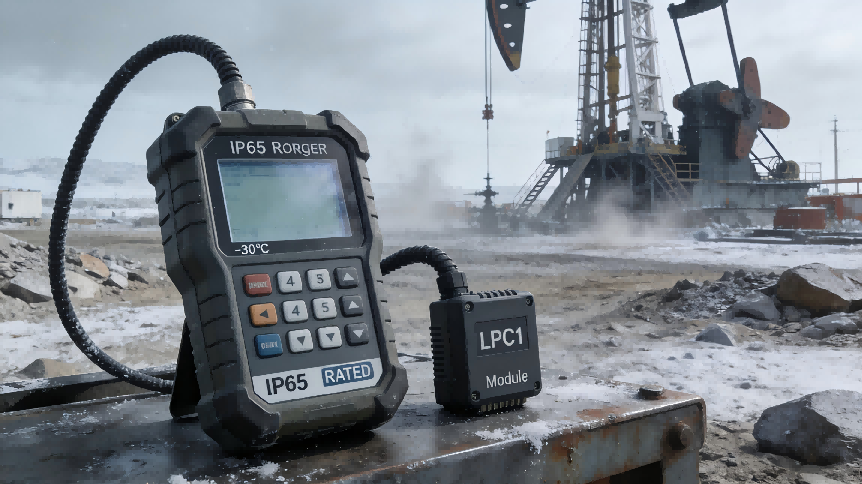
For outdoor applications, mines, oil fields, or other harsh environments (exposed to dust, water, or extreme temperatures), pair the LPC1 with an IP65-rated rugged data logger:
- Working principle: The LPC1 handles data processing and communication, while the rugged data logger stores data locally—preventing data loss in case of network outages.
- Upgrade recommendation: Choose a programmable data logger to set custom rules, such as “collect data every 10 minutes” or “send alerts when values exceed the threshold.”
Real example: An oil field deployed an LPC1 controller with a rugged data logger to monitor pipeline pressure. It operated stably for 18 months in environments with -30℃ temperatures and level 8 winds, with no malfunctions or data loss.
2.3 Add a Touchscreen for On-Site Control
For scenarios requiring on-site parameter adjustment or real-time data viewing (e.g., factory floors), pair the LPC1 with an industrial touchscreen:
- The LPC1 transmits data to the touchscreen, providing a clear real-time overview of system status.
- Users can send commands to the LPC1 with a simple tap on the screen, eliminating the need for a separate computer or complex programming.
How to Pick the Right LPC1 Controller: Avoid Common Mistakes
Selecting the appropriate LPC1 model is straightforward by focusing on three key factors—no professional technical expertise required:
- Match power consumption to your setup: For battery-powered applications (e.g., outdoor monitoring), select a model with standby power <0.5W. For mains-powered systems, prioritize processing performance.
- Check interfaces: If connecting multiple sensors, choose a model with multiple serial ports. For internet connectivity, ensure it has Ethernet or 4G modules.
- Consider the operating environment: For high-temperature or dusty conditions, select a model with an operating temperature range of -40℃~85℃ and IP54+ protection rating.
LPC1 Controller Selection Chart: Pick Your Model in Seconds
Model | Standby Power | Processor | Memory/Storage | Key Standard Interfaces | Operating Temp | Protection | Best For | Reference Price (USD) |
LPC1-01 (Basic) | ≤0.3W | NXP LPC1768 (32-bit ARM) | 512KB/4MB | 2×RS485, 1×Ethernet, 2×USB, 8x Digital Input | -20℃~70℃ | IP40 | Simple device control, basic data collection | $115-$145 |
LPC1-02 (Enhanced) | ≤0.5W | NXP LPC1788 (32-bit ARM, 72MHz) | 1MB/8MB | 4×RS485, 2×Ethernet, 4×USB, 16x Analog Input | -40℃~85℃ | IP54 | Production line monitoring, logistics sorting | $175-$215 |
LPC1-03 (Outdoor) | ≤0.4W | NXP LPC1114 (Ultra-Low Power Core) | 64KB/256KB | 2×RS485, 1×4G Module, 2×USB, 8x Mixed Input | -40℃~85℃ | IP65 | Outdoor monitoring, battery-powered projects | $215-$260 |
LPC1-04 (Expandable) | ≤0.6W | NXP LPC1857 (Dual-Core ARM, 180MHz) | 2MB/16MB | 6×RS485, 2×Ethernet, 4×USB, LPC Expansion Slot (Hot-Swappable) | -20℃~70℃ | IP40 | Complex setups, multiple peripherals | $260-$315 |
Quick Selection Tips:
- On a budget or need basic functionality? Choose the LPC1-01.
- Working in harsh conditions (dust, extreme cold)? The LPC1-03 (IP65 rating + wide temperature range) is the best choice.
- Plan to add multiple LPC cards later? The LPC1-04 features a built-in expansion slot, eliminating the need for extra wiring.
Real-World Wins: How the LPC1 Cuts Costs and Boosts Efficiency
Case 1: Small Electronics Factory Achieves Significant Energy Savings
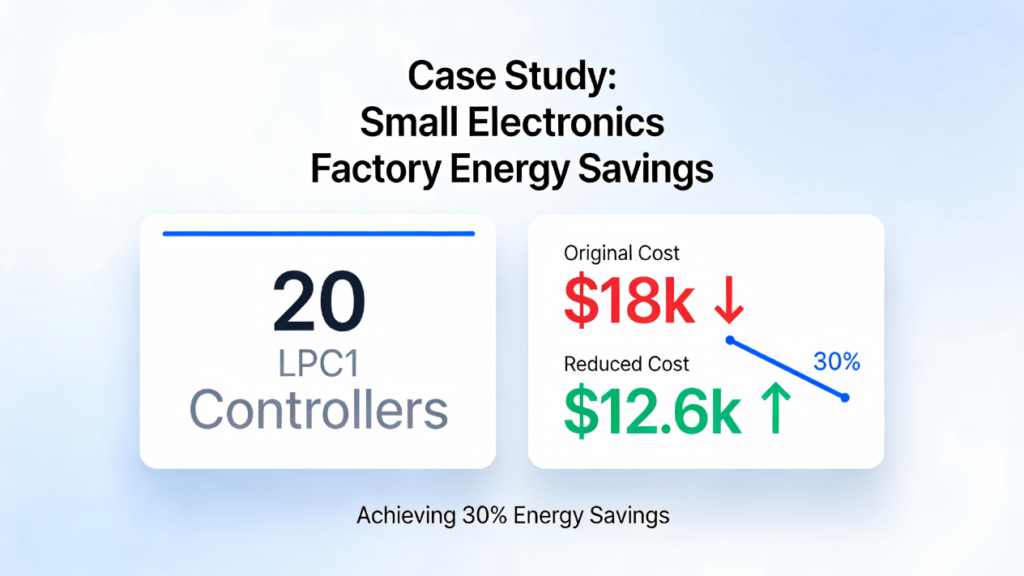
A small electronics plant in California replaced 20 traditional PLCs with LPC1 controllers, achieving the following results:
- Energy savings: Annual electricity bills decreased from $18,000 to $12,600—a 30% reduction.
- Reduced downtime: Equipment failure rate dropped from 12% to 5%, minimizing production interruptions and increasing output.
- Faster deployment: The palm-sized LPC1 controllers reduced installation time by 40% compared to bulky traditional PLCs.
Case 2: Smart Irrigation System for Farms
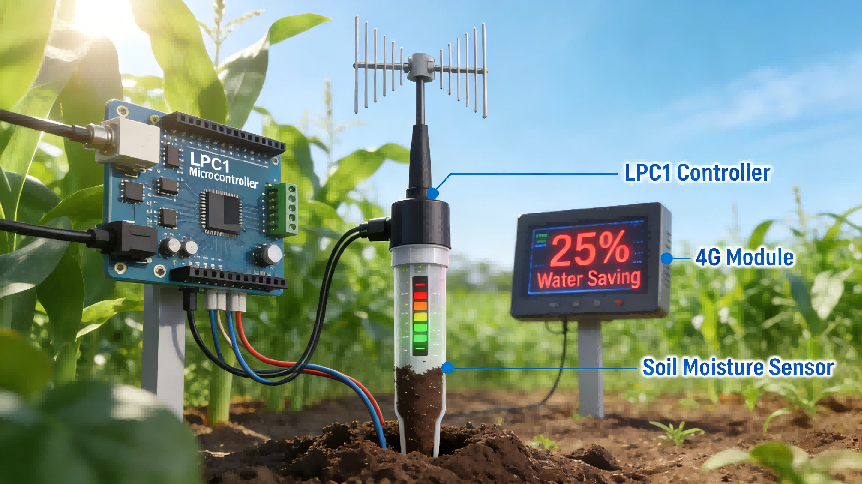
A farm built an automated irrigation system using an LPC1 controller, an LPC communication card, and a rugged data logger:
- The LPC1 collected soil moisture data and transmitted it to the cloud via 4G.
- The cloud platform activated sprinklers only when soil moisture was below the threshold, avoiding overwatering.
Results: Water usage decreased by 25%, and manual labor costs were reduced by 60%.
LPC1 vs. Traditional PLCs: Which Should You Choose?
Comparison Factor | Low-Power LPC1 Industrial Controller | Traditional Industrial PLC (e.g., Siemens S7-1200) | Best For |
Standby Power | ≤0.5W (DOE IE4 Certified) | 5-8W | Battery-powered, long-running projects |
Hardware Cost (Per Unit) | $115-$215 | $435-$725 | Small factories, multi-device setups |
Size (L×W×H) | 120mm×80mm×30mm (Palm-Sized) | 140mm×110mm×45mm | Space-constrained control cabinets |
Setup Difficulty | No professional programming needed—graphical setup | Requires ladder/function block programming | Small businesses, non-technical teams |
Expandability | Hot-swappable LPC cards—low cost to add features | Need expensive signal boards for expansion | Flexible setups that change often |
Environmental Resistance | -40℃~85℃, some models IP54 | 0℃~60℃, no built-in protection (needs a cabinet) | Outdoor, dusty, or extreme temps |
Data Processing Capacity | Handles up to 1,000 data points | Handles 5,000+ data points | Large production lines, complex logic |
Protocol Compatibility | Supports Modbus, Ethernet/IP, MQTT | Supports Profinet, Modbus, OPC UA (all major protocols) | Complex industrial networks |
Bottom Line:
Choose the LPC1 if you operate a small factory, manage outdoor projects, or plan a cost-cutting upgrade—it is more affordable, energy-efficient, and easier to set up.
Stick with a traditional PLC if you need to control large production lines or integrate with complex industrial networks.
The Future of LPC1: What’s Next?
Driven by microcontroller innovation, the LPC1 is continuously evolving with the following advancements:
- AI integration: New models incorporate edge computing capabilities, enabling the LPC1 to predict equipment failures (e.g., detecting motor issues from current data) before they occur.
- Expanded protocol support: Now compatible with OPC UA and MQTT, facilitating seamless integration with smart factory platforms.
- Modular design: Communication or data collection modules can be swapped on the fly—eliminating the need to purchase an entirely new controller when requirements change.
In summary, the low-power LPC1 industrial controller—when paired with LPC cards and rugged data loggers—simplifies industrial automation, reduces costs, and improves efficiency. Whether you are upgrading a small factory or building an outdoor monitoring system, it is a reliable, cost-effective solution that delivers long-term value.
Would you like me to compile a simple installation and debugging guide for the LPC1? It will walk you through the setup process step by step, with no technical jargon.