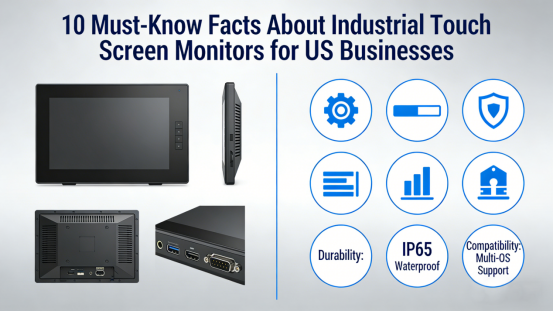

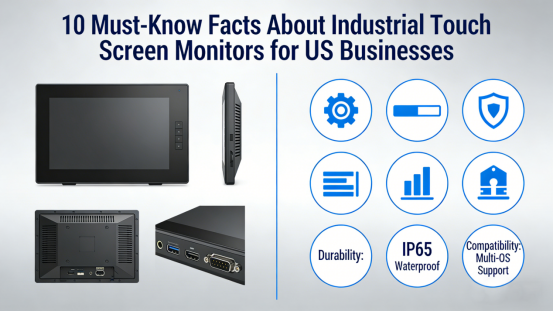
In the competitive US industrial world, every piece of equipment matters—and industrial touch screen monitors are no different. These tough, easy-to-use devices are the backbone of modern manufacturing, healthcare, and logistics operations, but most businesses overlook key details that’ll make or break your ROI.
Whether you’re running a Detroit auto plant, a Gulf of Mexico oil rig, or a Minneapolis medical device facility, the right industrial touch screen monitor can cut downtime by 15% or more and make your team way more efficient. But with so many options out there, how do you avoid wasting money on the wrong one? Here are 5 key facts to help you out.
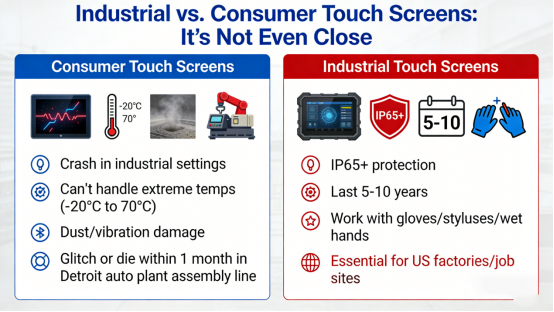
1. Industrial vs. Consumer Touch Screens: It’s Not Even Close
Consumer touch screens crash and burn fast in industrial settings—they can’t handle extreme temps (that’s -20°C to 70°C), dust, or vibration. Most consumer screens will glitch or die within a month in a Detroit auto plant’s assembly line—industrial ones, though? They’ve got IP65+ protection, last 5-10 years, and work with gloves, styluses, even wet hands—total musts for US factories and job sites.
2. Resistive vs. Capacitive: Choose Based on Your Workflow
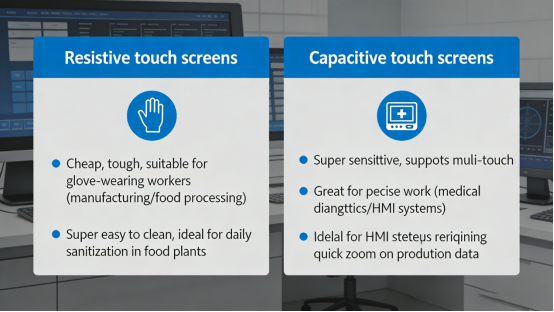
- Resistive touch screens: Cheap, tough, and perfect for workers who wear gloves (think manufacturing or food processing). They’re also super easy to clean, which is a big plus for food plants that need to sanitize equipment daily.
- Capacitive touch screens: Super sensitive, support multi-touch, and great for precise work (like medical diagnostics or HMI systems). They’re ideal for HMI setups where you need to zoom in on production data quickly without fumbling with buttons.
3. Customization Isn’t a Luxury—It’s a Necessity
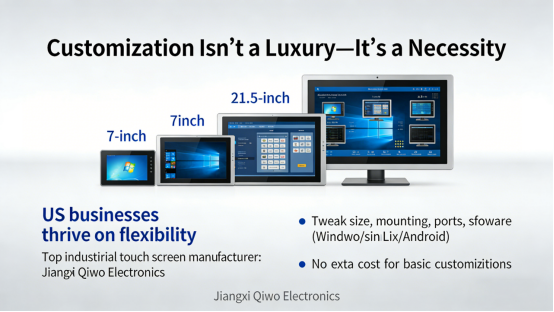
US businesses thrive on flexibility, and top industrial touch screen manufacturers like Jiangxi Qiwo Electronics get that. From tiny 7-inch displays to 21.5-inch large touch screen monitors, you can tweak the size, mounting, ports, and software (Windows/Linux/Android) to fit exactly what you need. Whether you need a screen that fits in a tight control panel or one that works with your existing Linux system, Jiangxi Qiwo can tweak it to match—no extra cost for basic customizations.
4. Environmental Ratings Matter More Than You Think
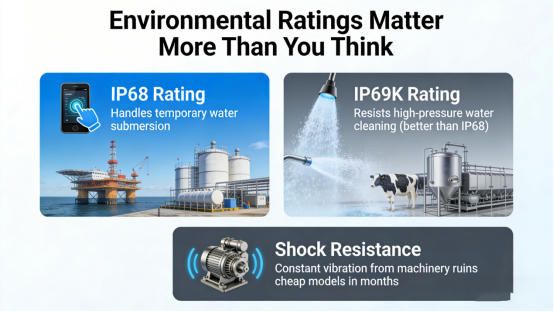
An IP68 rating means your touch screen can handle temporary water submersion—super important for offshore oil platforms or dairy plants. For dairy plants that use high-pressure water to clean equipment, an IP69K rating (even better than IP68) is worth investing in—it won’t short out during cleaning. Don’t skimp on shock resistance, either—constant vibration from machinery will ruin cheap models in just a few months.
5. US-Centric Support Saves Headaches
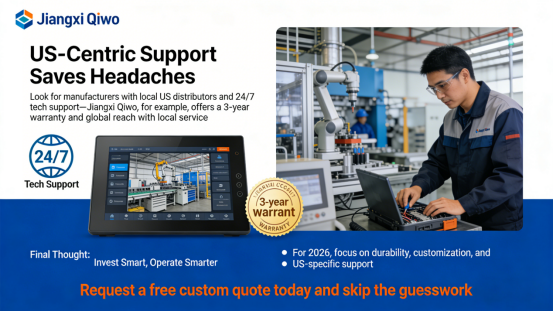
Look for manufacturers with local US distributors and 24/7 tech support—Jiangxi Qiwo, for example, offers a 3-year warranty and global reach with local service, meaning you’ll never be stuck during a production emergency.
Final Thought: Invest Smart, Operate Smarter
Industrial touch screen monitors aren’t just tools—they’re investments in your business’s productivity and safety. For 2026, focus on durability, customization, and US-specific support, and you’ll pick a solution that grows with you. Skipping these key points is how many US businesses waste money on screens that fail too soon or don’t fit their workflow.
Ready to find the perfect industrial touch screen monitor for your US business? Request a free custom quote today and skip the guesswork.