
If you work in industrial operations—whether it’s a factory, plant, or production facility—you’ve probably heard the term industrial HMI thrown around. But let’s be real: a lot of people don’t actually know what it does, or why it’s way better than the old-school control panels they’re still using. Spoiler: It’s not just a “fancy screen”—it’s the bridge between your team and your machinery, and it’ll make your day-to-day way easier.
I get it—change is scary. Why fix something that “works”? But here’s the deal: those clunky, outdated control panels you’re using are slowing your team down, increasing mistakes, and costing you money. Industrial HMI (short for Human-Machine Interface) is the upgrade you didn’t know you needed—simple to use, powerful, and built to make your industrial operations run smoother than ever.
Let’s cut through the jargon and break this down like we’re chatting over coffee. No tech speak, no fluff—just what you need to know about industrial HMI, how it works, and why it’s worth adding to your operation.
First Things First: What Even Is Industrial HMI?
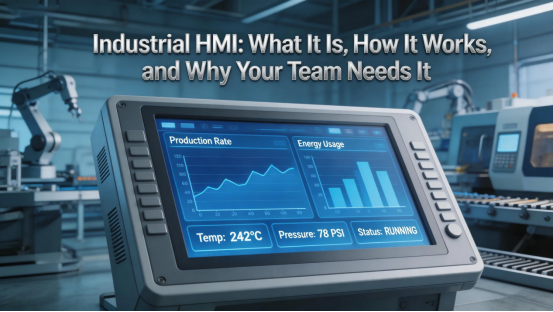
Forget the complicated definitions you’ll find online. Industrial HMI is basically a user-friendly screen (and software) that lets your team interact with your industrial machinery and systems. Think of it like the dashboard in your car—you don’t need to know how the engine works to use it; you just look at the gauges, press a few buttons, and go. That’s exactly what industrial HMI does for your equipment.
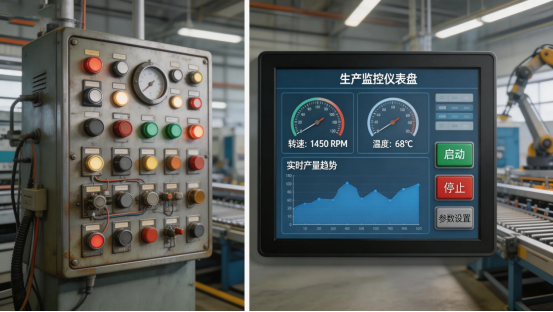
Unlike old control panels with hundreds of confusing buttons, dials, and lights, industrial HMI puts everything in one place—clear visuals, simple controls, and real-time data. Your operators don’t need to be tech experts to use it; they can learn the basics in an hour or two, which means less training time and fewer mistakes.
How Industrial HMI Works (In Plain English)
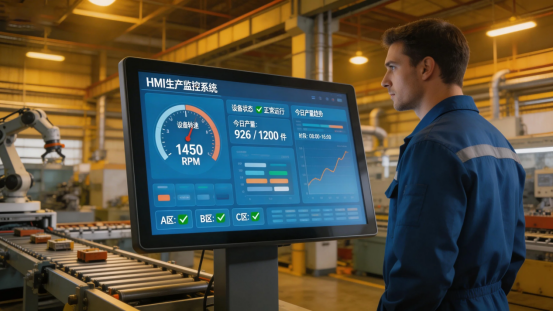
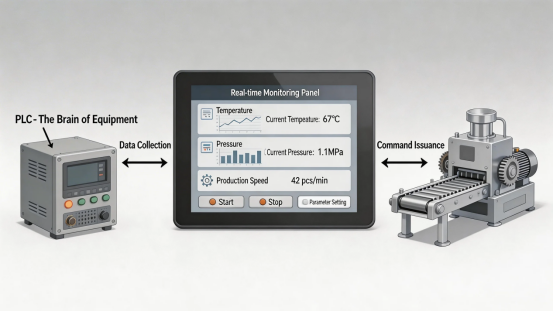
Industrial HMI connects directly to your machinery’s PLC (Programmable Logic Controller)—that’s the “brain” of your equipment. The HMI pulls real-time data from the PLC (like temperature, pressure, production speed) and displays it in an easy-to-read way—think graphs, charts, and simple alerts.
Here’s the best part: it’s two-way. Your operators can use the HMI to send commands to the machinery, too. For example, if a machine is running too fast, they can slow it down with a tap on the screen. If there’s a problem (like a jam or overheating), the HMI will send an alert—no more staring at a wall of lights trying to figure out what’s wrong.
It’s not rocket science—it’s just making your machinery easier to control and monitor. And that simple change? It makes a huge difference in how your team works.
Old Control Panels vs. Industrial HMI: The Difference Is Night and Day
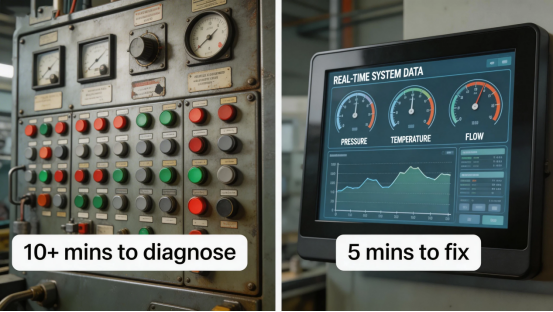
Let’s be honest—old control panels are a pain. I’ve seen teams waste 10+ minutes trying to figure out why a machine isn’t working, just because the alerts are confusing or the buttons are labeled poorly. Industrial HMI fixes that. Here’s how they stack up, no fluff:
- Old Control Panels: Hundreds of buttons/dials, confusing labels, no real-time data, hard to train new operators, easy to make mistakes.
- Industrial HMI: One user-friendly screen, clear visuals, real-time data at a glance, simple controls, quick training, fewer errors.
For example, a production team using old control panels might spend 30 minutes troubleshooting a minor issue. With an industrial HMI system, they can see the problem instantly (thanks to real-time alerts) and fix it in 5 minutes. That’s time saved, mistakes avoided, and more production done.
3 Reasons Your Team Needs Industrial HMI (Even If You Think You Don’t)
Still on the fence? Let’s talk about the real-world benefits—ones that will make your team’s life easier and your business more efficient. These aren’t just “nice-to-haves”—they’re game-changers:
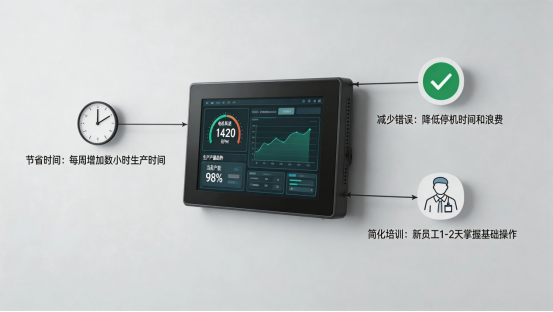
1. It Saves Time (And Time = Money)
No more fumbling with confusing buttons or trying to decode cryptic alerts. Industrial HMI puts all the info your team needs right in front of them, so they can troubleshoot faster, adjust settings quicker, and spend less time on admin work. Over a week, that adds up to hours of extra production time.
2. It Reduces Mistakes (Big Time)
Mistakes happen—but industrial HMI makes them way less likely. Clear visuals, simple controls, and built-in alerts mean your operators won’t accidentally press the wrong button or miss a critical issue. Less mistakes = less downtime, less waste, and more consistent production.
3. It Makes Training New Operators a Breeze
Training new hires on old control panels can take weeks—there are so many buttons, dials, and procedures to learn. With industrial HMI, new operators can learn the basics in a day or two. The user-friendly interface does most of the work, so you can get new team members up and running fast.
What to Look for When Choosing an Industrial HMI
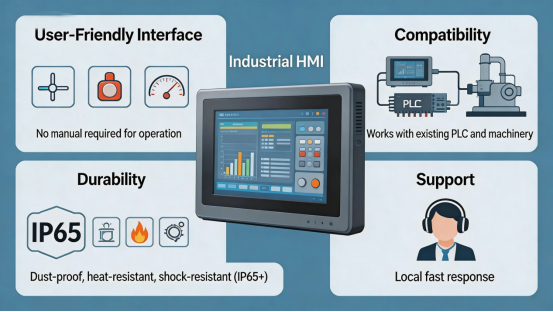
Not all industrial HMI systems are the same—some are clunky, some are too complicated, and some just won’t work with your existing machinery. Here’s what to focus on (keep it simple):
- User-Friendly Interface: It should be easy to navigate—no confusing menus or hidden controls. Your team should be able to use it without a manual.
- Compatibility: Make sure it works with your existing PLC and machinery. Top manufacturers like Jiangxi Qiwo Electronics offer HMI systems that work with most industrial setups—no need to replace all your equipment.
- Durability: It needs to hold up in industrial environments—dust, heat, and minor drops. Look for IP65+ protection and a rugged design.
- Support: If something goes wrong, you need help fast. Choose a manufacturer with good tech support and local distributors—no waiting around for overseas help.
Final Thought: Industrial HMI Isn’t a Luxury—It’s a Necessity
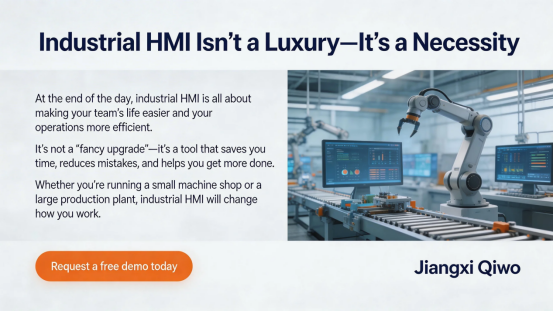
At the end of the day, industrial HMI is all about making your team’s life easier and your operations more efficient. It’s not a “fancy upgrade”—it’s a tool that saves you time, reduces mistakes, and helps you get more done. Whether you’re running a small machine shop or a large production plant, industrial HMI will change how you work.
Ready to see what industrial HMI can do for your team? Request a free demo today—Jiangxi Qiwo will show you how their HMI systems fit your workflow, no jargon, no pressure.