

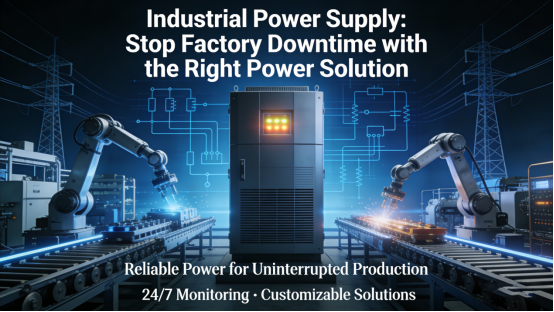
Imagine this: Your factory is running at full speed, production is on track, and then—suddenly—everything shuts down. No lights, no machines, no sensors. You check the power, and it’s not the utility company’s fault. It’s your power supply—cheap, generic, not built for industrial use—burned out again. Sound familiar?
If you’re a factory manager or maintenance worker, you’ve probably dealt with this exact scenario. Power outages from bad power supplies cost you time, money, and frustration. You might think, “It’s just a power supply—how much difference can it make?” But here’s the truth: An industrial power supply isn’t just a “plug” for your machines. It’s the lifeline of your factory, keeping every device—from PLCs and sensors to robots and control systems—running steady, even when the power grid is unstable.
Most factories use generic power supplies (the same ones you’d buy for a home computer) and wonder why they keep failing. Today, I’m going to break down why generic power supplies don’t work in factories, what an industrial power supply actually does, how to pick the right one for your setup, and the biggest mistakes to avoid—all in plain English, no tech jargon, just stuff that actually helps you keep your factory running.

Why Generic Power Supplies Keep Failing in Factories (You Know This Pain)
Let’s get real: Generic power supplies are made for homes and offices—places where power is stable, temperatures are controlled, and devices don’t run 24/7. Factories are the opposite: power fluctuates, temperatures swing, machines draw huge amounts of energy, and everything runs non-stop. Here’s why generic power supplies can’t keep up—you’ve definitely experienced at least one of these:
1. They Can’t Handle Power Fluctuations
Factory power grids are messy. Voltage spikes, dips, and blackouts happen all the time. Generic power supplies don’t have protection against these—one big voltage spike, and they burn out, taking your machines with them. I’ve seen a generic power supply fail because of a 10-second voltage dip, shutting down an entire assembly line for 2 hours. That’s thousands of dollars in lost production—all over a $20 power supply.
2. They Overheat Fast
Factories get hot—really hot. Generic power supplies have cheap cooling systems (or no cooling at all), so they overheat when running 24/7. Overheating leads to short circuits, burnout, and more downtime. I worked with a food processing plant that used generic power supplies—they were replacing 5-6 per month because they kept overheating in the factory’s 35°C+ environment.
3. They Can’t Handle Industrial Loads
Factory machines—like motors, pumps, and PLCs—draw way more power than a home computer or printer. Generic power supplies are designed for low, steady loads. When you plug a high-power machine into them, they strain, overwork, and fail. It’s like trying to power a truck with a car battery—you can do it for a minute, but it won’t last.
4. They’re Not Durable Enough
Factories are dusty, noisy, and full of vibration. Generic power supplies have flimsy plastic casings and delicate internal parts. Dust clogs their vents, vibration shakes parts loose, and moisture seeps in—all leading to failure. A generic power supply might last 6 months in a factory, if you’re lucky. That’s constant replacement, constant downtime, constant headaches.

What an Industrial Power Supply Actually Does (It’s More Than Just “Powering Stuff”)
An industrial power supply is built specifically to fix all the problems generic ones have. It’s not just a power source—it’s a protector, a stabilizer, and a workhorse. Here’s what it does, in simple terms:
1. Stabilizes Voltage (No More Spikes or Dips)
Industrial power supplies have built-in voltage regulation and surge protection. They smooth out voltage spikes and dips, making sure your machines get a steady, consistent flow of power—even when the grid is unstable. This prevents burnout and keeps your machines running smoothly, no matter what the power grid throws at you.
2. Cools Efficiently (No Overheating)
Industrial power supplies have heavy-duty cooling systems—either fanless designs (no dust buildup) or high-quality fans that can handle dust and heat. They’re built to run 24/7 in temperatures from -40°C to 70°C, so they never overheat, even in the hottest factories.
3. Handles High Industrial Loads
They’re designed to power high-demand industrial equipment—motors, PLCs, sensors, robots—without straining. Industrial power supplies have higher power ratings and can handle sudden spikes in power demand (like when a machine starts up) without failing. This means no more shutdowns because your power supply can’t keep up.
4. Built to Last in Harsh Factories
Industrial power supplies have metal casings, IP65+ dust and water protection, and vibration resistance. They can handle the dust, moisture, and shaking of factory life, lasting 5-10 years—compared to 6 months for generic ones. That’s fewer replacements, less maintenance, and way less downtime.

How to Pick the Right Industrial Power Supply (3 Simple Steps)
You don’t need to be a tech expert to pick a good industrial power supply. Just follow these 3 steps, and you’ll avoid the mistakes most factories make:
Step 1: Match the Power Rating to Your Machines
First, figure out how much power your machines use. Add up the power requirements of all the devices you’ll plug into the power supply (look for the “watts” rating on each device). Then, choose an industrial power supply with a power rating that’s 20% higher than that total. This gives you a buffer for sudden power spikes—so you don’t strain the supply.
For example: If your machines need 500 watts total, pick a 600-watt industrial power supply. It’s better to have a little extra power than not enough.
Step 2: Choose the Right Type for Your Factory
There are two main types of industrial power supplies: switching and linear. Here’s the simple difference:
- Switching power supplies: Smaller, more efficient, better for factories with limited space and varying power needs. Most factories use these—they’re the most versatile.
- Linear power supplies: More stable, better for sensitive equipment (like precision sensors or medical devices). Use these only if you have equipment that needs ultra-stable power.
Step 3: Prioritize Durability and Protection
Look for these key features to make sure the power supply can handle your factory:
- IP65+ dust and water protection: Keeps dust and moisture out.
- Voltage surge protection: Shields against power spikes.
- Wide temperature range (-40°C to 70°C): Works in hot or cold factories.
- Metal casing: Withstands vibration and impact.
Top brands like Jiangxi Qiwo Electronics make industrial power supplies with all these features—so you don’t have to worry about cutting corners.

The Biggest Mistake Factories Make with Industrial Power Supplies
The number one mistake I see? Buying the cheapest industrial power supply you can find. I get it—you want to save money. But cheap industrial power supplies are just generic ones with an “industrial” label. They don’t have the protection, durability, or power handling you need. They’ll fail in a few months, costing you more in downtime and replacements than a quality one would have cost upfront.
Another big mistake: Underestimating your power needs. If you pick a power supply that’s too small, it will strain, overheat, and fail. Always go 20% above your total power needs—you’ll thank yourself later.

Who Needs an Industrial Power Supply? (Spoiler: You Do)
If you run any kind of industrial facility with electrical equipment, you need an industrial power supply. This includes:
- Manufacturing factories (assembly lines, packaging, metal fabrication)
- Water treatment plants and wastewater facilities
- Mining and oil/gas operations
- Warehouses with automated equipment
- Any facility with 24/7 operations or sensitive industrial equipment
If you’re still using generic power supplies, or if you’re tired of constant power-related downtime, it’s time to make the switch. An industrial power supply isn’t a cost—it’s an investment that saves you money, time, and frustration.

Final Thought: Your Factory Deserves Reliable Power
A factory can’t run without power—and it can’t run well with unreliable power. Generic power supplies are a false economy—they save you a few bucks upfront, but end up costing you thousands in downtime and replacements. An industrial power supply is the lifeline of your factory, keeping your machines running steady, your production on track, and your costs down.
Ready to stop dealing with power-related downtime? Request a free demo today from Jiangxi Qiwo Electronics. They’ll show you how their industrial power supplies work with your equipment, help you pick the right power rating and type, and even let you test it for 30 days. No jargon, no pressure—just a simple, reliable solution to your power headaches.
