

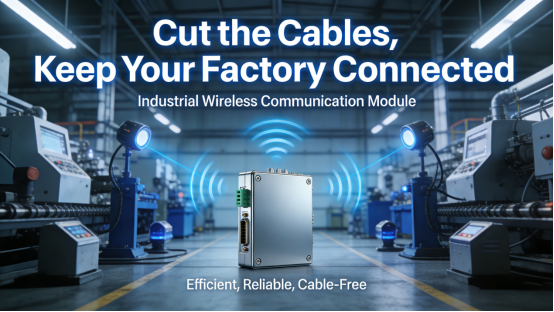
If you’ve ever managed a factory—big or small—you know the struggle: cables everywhere. They run along floors, up walls, through ceilings, and even under machines. You spend hours installing them, more time troubleshooting broken connections, and still, they hold your factory back. What if you could get rid of all those cables—without sacrificing reliability or data speed?
That’s not a pipe dream—it’s exactly what an industrial wireless communication module does. This compact, tough device lets your factory equipment communicate wirelessly, cutting through the cable clutter and making your operations smoother, faster, and more flexible. But if you’re skeptical, I get it: Wireless in factories? Isn’t that unreliable? Won’t it drop signals or slow down data? Let’s put those fears to rest—today, I’m breaking down everything you need to know, in plain language, no tech jargon.
I’ll cover what an industrial wireless communication module is, why it’s better than wired connections for factories, the real problems it solves (ones you’re probably dealing with right now), how to choose the right one, and why it’s worth the switch. By the end, you’ll wonder why you didn’t ditch the cables sooner.

What Is an Industrial Wireless Communication Module? (No Fluff, Just Facts)
Let’s keep this simple. An industrial wireless communication module is a device that lets your factory equipment—sensors, PLCs, robots, meters, and control systems—send and receive data without wires. It connects to your devices, picks up their data, and transmits it wirelessly to other devices or your central control system (like SCADA or MES).
But here’s the key: It’s not like the Wi-Fi you use in your office. Industrial wireless modules are built for factories—they’re tough, reliable, and designed to handle interference from machines, metal structures, and harsh environmental conditions. They use industrial-grade wireless protocols (like LoRa, Wi-Fi 6, or 4G/5G) that are made for long distances, stable connections, and real-time data transfer.
Think of it this way: Wired connections are like a landline phone—you’re tied to a cord, and if the cord breaks, you lose connection. An industrial wireless module is like a smartphone—you’re free to move around, and the connection stays strong, even in tough conditions. It’s freedom from cables, without the hassle of unreliable signals.

Why Wired Connections Are Holding Your Factory Back (You Know These Pain Points)
Most factories still rely on wired connections, and it’s costing them time, money, and flexibility. Here are the four biggest problems with wired setups that an industrial wireless module fixes—problems you’ve probably dealt with firsthand:
1. Cables Are a Nightmare to Install and Maintain
Installing wired connections means running miles of cable through your factory—drilling holes, pulling cables through walls, and paying technicians to set everything up. That takes days, even weeks, and costs thousands of dollars. And once they’re installed, maintaining them is even worse. If a cable breaks or gets damaged, you have to shut down production, trace the cable, and fix it—wasting hours of valuable time.
2. Cables Limit Flexibility (No More Moving Equipment)
If you want to move a sensor, robot, or machine, you have to re-run all the cables—which is time-consuming and costly. Wired connections tie your equipment to one spot, making it hard to reconfigure your factory or adapt to new production needs. With a wireless module, you can move equipment anywhere—no cables, no hassle, no downtime.
3. Cables Are Prone to Damage (More Downtime)
Factory floors are tough on cables. Forklifts run over them, machines pull them, dust and moisture corrode the connections, and vibration wears them down. Every time a cable is damaged, you have downtime—costing you hundreds or thousands of dollars per hour. Wireless modules eliminate this problem entirely—no cables, no damage, no downtime from broken connections.
4. Cables Create Safety Hazards
Tangled cables on the floor are tripping hazards for workers. Cables running near machines can get caught in moving parts, causing equipment damage or even injuries. Industrial wireless modules get rid of these hazards, making your factory safer for everyone.

How Industrial Wireless Modules Work (In Real Factory Scenarios)
You don’t need to be a tech expert to understand how these modules work. Let’s look at two real-world examples of how factories are using them to cut cables and boost efficiency:
Scenario 1: Warehouse Inventory Tracking
A large warehouse used wired sensors to track inventory levels and equipment status. The cables ran along the floor, getting damaged by forklifts and causing frequent downtime. They installed industrial wireless communication modules on each sensor, connecting them to a central control system via Wi-Fi 6. Now, sensors send data wirelessly—no more cables, no more damage, and inventory tracking is 100% reliable. They cut downtime from cable issues by 90% and saved $15,000 in cable replacement costs in the first year.
Scenario 2: Remote Machine Monitoring
A water treatment plant had machines spread across a 20-acre site. Wired connections were impossible to run to remote machines, so technicians had to drive to each machine to check status—wasting 4+ hours per day. They installed 4G industrial wireless modules on each remote machine, letting them send data to the central control room in real time. Now, technicians monitor all machines from the office, cutting on-site visits to zero and saving $80,000 per year in labor costs.

Key Features to Look for in an Industrial Wireless Communication Module
Not all industrial wireless modules are the same. To make sure you get one that works for your factory, look for these 4 non-negotiable features:
1. Industrial-Grade Wireless Protocols
Choose a module that supports the right wireless protocol for your factory: LoRa for long distances (up to several miles), Wi-Fi 6 for high-speed data transfer, or 4G/5G for remote locations with no Wi-Fi. Avoid consumer-grade protocols—they’re not reliable in factories.
2. Durability for Factory Environments
Look for IP65+ dust and water protection, a wide temperature range (-40°C to 70°C), and vibration resistance. The module needs to handle dust, moisture, extreme temperatures, and machine vibration—no exceptions. A module that can’t survive your factory floor is a waste of money.
3. Stable, Real-Time Data Transfer
Your factory needs data in real time—delays can cause downtime or safety issues. Choose a module with low latency (less than 100ms) and high reliability (99.9% connection uptime). This ensures your data is sent quickly and never dropped.
4. Easy Integration with Your Existing Equipment
You don’t want to replace all your existing equipment to use a wireless module. Look for modules that integrate easily with your PLCs, sensors, and control systems. Most top modules (like those from Jiangxi Qiwo Electronics) work with common industrial protocols, so you can plug them in and start using them right away.

Wireless vs. Wired: The Real Cost Savings
Still on the fence about switching to wireless? Let’s break down the cost savings—real numbers from real factories:
- Installation costs: 70% less than wired connections (no cables, no drilling, less labor).
- Maintenance costs: 85% less (no cable replacements, no troubleshooting broken connections).
- Downtime savings: 90% less downtime from cable-related issues (worth thousands per hour).
- Flexibility savings: Save time and money when reconfiguring your factory or adding new equipment.
A manufacturing factory I worked with saved over $30,000 in the first year after switching to industrial wireless modules. The ROI was less than 6 months—well worth the initial investment.

Who Needs an Industrial Wireless Communication Module?
If you have any of these, you need a wireless module:
- A factory with messy, hard-to-maintain wired connections
- Equipment spread across a large area (hard to run cables)
- Frequent downtime from broken or damaged cables
- A need to move equipment or reconfigure your factory
- Remote machines or sensors that are hard to reach
This includes manufacturing factories, warehouses, water treatment plants, mining operations, oil/gas facilities, and more. If you’re tired of cables holding you back, it’s time to switch to wireless.
Final Thought: Wireless Is the Future of Smart Factories
Cables are a relic of the past. Today’s smart factories use industrial wireless communication modules to cut clutter, boost efficiency, save money, and stay flexible. These modules aren’t just a “nice-to-have” upgrade—they’re a necessity for any factory looking to stay competitive.
You don’t have to deal with messy cables, costly downtime, or limited flexibility anymore. An industrial wireless communication module gives you the freedom to run your factory the way you want—without being tied down by wires.
Ready to cut the cables and take your factory to the next level? Request a free demo today from Jiangxi Qiwo Electronics. They’ll show you how their industrial wireless modules work with your existing equipment, help you choose the right protocol and model, and even let you test it for 30 days. No jargon, no pressure—just a simple, reliable solution to your cable headaches.
