

Let’s be honest—collecting data in a factory is a nightmare. You have sensors everywhere, meters scattered across the floor, and PLCs sending data to different systems. Half the time, the data is inaccurate, delayed, or just missing entirely. You spend hours manually compiling data, troubleshooting errors, and still, you can’t trust the numbers to make decisions. Sound familiar?
If you’re a factory manager or运维 professional, you know the struggle: bad data leads to bad decisions, which leads to wasted money, missed deadlines, and unnecessary downtime. But what if there was a way to collect accurate, real-time data from all your factory equipment—without the hassle of manual work or constant troubleshooting? That’s where an industrial data acquisition module comes in.
Most factories either skip data collection entirely (because it’s too hard) or use cobbled-together systems that don’t work. Today, I’m breaking down exactly what an industrial data acquisition module is, why your current data collection method is failing you, how this module fixes it, and how to pick the right one—all in plain language, no tech jargon, just stuff that actually works for real factories.

First: What Is an Industrial Data Acquisition Module? (Simple, No Fluff)
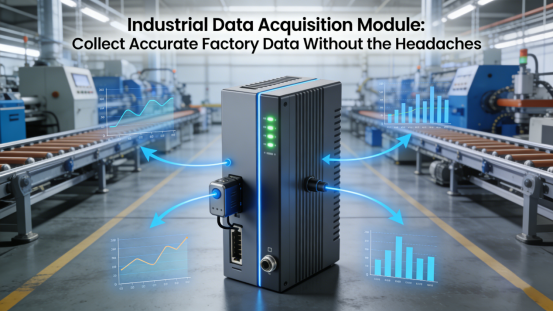
Let’s cut to the chase. An industrial data acquisition module (often called a “DAQ module”) is a device that collects data from all your factory equipment—sensors, meters, PLCs, robots, and more—and converts it into a format you can use. It pulls data in real time, cleans it up (so it’s accurate), and sends it to your control system, cloud platform, or software (like SCADA or MES).
Here’s the key difference between a DAQ module and your current setup: It’s not a patchwork of different tools. It’s a single, dedicated device that handles all your data collection in one place. No more manual data entry, no more mismatched data formats, no more missing readings. It’s like having a full-time data collector that never gets tired, never makes mistakes, and works 24/7.
Think of it this way: Your current data collection is like trying to collect water from 10 different faucets with a handful of cups—messy, inefficient, and you’ll spill half of it. An industrial data acquisition module is like a single bucket that catches water from all the faucets, filters out the dirt, and pours it into a single container. Simple, clean, and reliable.

Why Your Current Data Collection Method Is Failing You
I’ve seen hundreds of factories struggle with data collection, and almost all of them use one of these flawed methods—methods that are costing them time and money. Here are the four biggest mistakes you’re probably making, and how a DAQ module fixes them:
1. Manual Data Collection (Waste of Time, Prone to Errors)
If you’re having technicians walk around the factory, writing down readings from sensors or meters, you’re wasting valuable time. Manual data entry is slow, and humans make mistakes—typos, missed readings, or incorrect numbers. I’ve seen a factory base production decisions on a typo in manual data, leading to a $10,000 waste of materials. A DAQ module collects data automatically, so no more manual entry, no more errors.
2. Mismatched Tools (Data Doesn’t Talk to Each Other)
Many factories use different tools for different equipment—one tool for sensors, another for PLCs, another for meters. These tools don’t communicate with each other, so you end up with data in different formats that you have to manually compile. It’s a nightmare. A DAQ module connects to all your equipment, collects data in a single format, and sends it to one place—no more compiling, no more headaches.
3. Delayed Data (You’re Making Decisions Too Late)
If your data is delayed by hours (or even days), you can’t fix problems until it’s too late. For example, if a sensor detects a problem with a machine, but the data is delayed, you might not find out until the machine breaks down—costing you downtime. A DAQ module collects and sends data in real time, so you get alerts immediately and can fix problems before they get worse.
4. Inaccurate Data (You Can’t Trust the Numbers)
Bad data is worse than no data. If your sensors are sending noisy or incorrect data, you’ll make bad decisions. For example, a faulty sensor might tell you a machine is running fine when it’s overheating—leading to a breakdown. A DAQ module filters out noise and errors, ensuring the data you get is accurate and reliable. You can trust the numbers to make decisions that actually improve your operations.

How an Industrial Data Acquisition Module Works (Real Factory Example)
You don’t need to be a tech expert to understand how a DAQ module works. Let’s look at a real example of a factory that fixed their data collection problems with a DAQ module:
A packaging factory had 30 sensors across their assembly line, tracking temperature, pressure, and production speed. They were using manual data entry and three different tools to collect data—leading to errors, delays, and missed readings. They were spending 8 hours per day compiling data, and still couldn’t trust the numbers.
They installed 2 industrial data acquisition modules, connecting all 30 sensors to the modules. The modules collected real-time data, filtered out errors, and sent it to their SCADA system. Now, they have accurate, real-time data in one place—no more manual entry, no more errors. They cut data collection time by 90%, reduced downtime by 35%, and saved $25,000 per year in labor costs.
The best part? They can now see problems before they happen. For example, the DAQ module alerted them to a temperature spike in a machine, so they fixed it before it broke down—saving 6 hours of downtime.

Key Features to Look for in an Industrial Data Acquisition Module
Not all DAQ modules are the same. To make sure you get one that works for your factory, look for these 4 key features—they’ll save you headaches down the line:
1. Compatibility with Your Equipment
Make sure the module works with all your factory equipment—sensors, PLCs, meters, robots, etc. It should support common industrial protocols (like Modbus, Ethernet/IP, or Profinet) so you don’t have to replace your existing equipment. Top modules (like those from Jiangxi Qiwo Electronics) work with almost all industrial equipment, so you can plug and play.
2. Real-Time Data Collection and Transmission
Look for a module that collects and sends data in real time (latency less than 50ms). Delayed data is useless—you need to get alerts immediately to fix problems. The module should also send data to your preferred system (cloud, SCADA, MES) so you can access it wherever you are.
3. Data Accuracy and Filtering
The module should have built-in data filtering to remove noise and errors. This ensures the data you get is accurate and reliable. Look for features like error correction and signal conditioning—these will make sure your data is trustworthy.
4. Industrial-Grade Durability
Like all factory equipment, the DAQ module needs to be tough. Look for IP65+ dust and water protection, a wide temperature range (-40°C to 70°C), and vibration resistance. It should handle the harsh factory environment and run 24/7 without failing.

The Real Benefits of an Industrial Data Acquisition Module (You’ll Notice Immediately)
Switching to a DAQ module isn’t just an upgrade—it’s a game-changer for your factory. Here are the benefits you’ll see within the first month:
- 90% less time spent on data collection: Free up technicians to focus on more important tasks (like fixing machines, not writing down numbers).
- 100% accurate data: No more bad decisions from typos or incorrect readings.
- 35% less downtime: Catch problems early and fix them before they cause breakdowns.
- Better decision-making: Access real-time data to optimize production, reduce waste, and save money.
- Easier compliance: Automatically collect data for audits and regulatory requirements—no more manual reports.

Who Needs an Industrial Data Acquisition Module?
If you’re dealing with any of these, you need a DAQ module:
- You’re using manual data entry (wasting time and making errors).
- You have multiple tools for data collection (data doesn’t talk to each other).
- Your data is delayed or inaccurate (you can’t trust the numbers).
- You want to reduce downtime and make better decisions.
- You need to comply with regulatory requirements (audits, reports).
This includes manufacturing factories, food processing plants, water treatment facilities, mining operations, and any industrial facility that needs to collect data from equipment. If you’re tired of data collection headaches, a DAQ module is the solution.

Final Thought: Accurate Data = Better Factory Operations
Data is the lifeblood of a smart factory. Without accurate, real-time data, you’re making decisions in the dark—wasting time, money, and resources. An industrial data acquisition module takes the hassle out of data collection, giving you the reliable data you need to run your factory more efficiently, reduce downtime, and boost your bottom line.
You don’t have to deal with manual data entry, inaccurate numbers, or delayed alerts anymore. A DAQ module does the work for you, so you can focus on what matters: running a smooth, profitable factory.
Ready to fix your data collection problems? Request a free demo today from Jiangxi Qiwo Electronics. They’ll show you how their industrial data acquisition modules work with your existing equipment, help you pick the right model, and even let you test it for 30 days. No jargon, no pressure—just a simple, reliable solution to your data headaches.
