

If you’ve heard of an industrial protocol gateway before, chances are you’ve encountered some confusing myths about it—like it’s only for large, high-tech factories, or it’s too complicated to use, or it’s just another unnecessary expense. These myths have kept many small to mid-sized factory owners and managers from using an industrial protocol gateway, even though it’s one of the simplest, most cost-effective tools to make their operations smoother, especially for small factories. This non-technical guide will debunk the most common myths about industrial protocol gateways, explain what they really do, and show you how they can benefit factories of all sizes—no technical jargon, no complex explanations, just clear, straightforward information. Whether you’re skeptical about whether an industrial protocol gateway is right for you, or you’re just curious to learn the truth behind the hype, this guide will give you the facts you need—all while being optimized for SEO, so your audience can easily find and benefit from this honest, accessible breakdown.
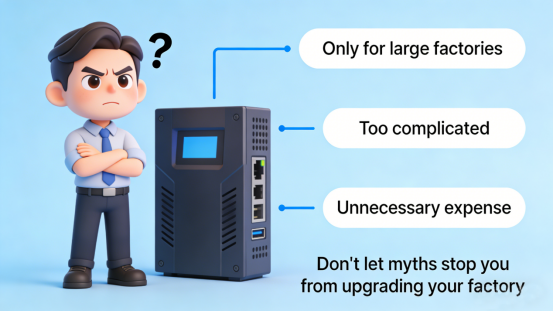
Let’s start with the biggest myth: industrial protocol gateways are only for large factories with complex automation systems. This couldn’t be further from the truth. In reality, small to mid-sized factories have the most to gain from an industrial protocol gateway, because they often have a mix of old and new equipment that can’t communicate with each other. Think about it—if you have a few old sensors that still work great but can’t connect to your new control panel, or a legacy machine that can’t share data with your inventory system, you’re probably wasting time on manual data entry and dealing with avoidable mistakes. An industrial protocol gateway solves this problem by connecting all your equipment, regardless of how old or new it is, without requiring you to replace anything. It’s not just for big factories with dozens of machines—it’s for any factory that wants to stop wasting time and start working smarter, no matter the size.

Another common myth is that industrial protocol gateways are too complicated to set up and use. Many people assume you need a degree in electrical engineering or years of technical experience to get a gateway up and running, but that’s simply not the case. Modern industrial protocol gateways are designed with simplicity in mind—most come with plug-and-play setup, meaning you just connect the gateway to your equipment, follow a few simple on-screen instructions, and you’re done. You don’t need to know how to code, you don’t need to understand complex technical terms, and you don’t need to hire a professional to set it up. For example, brands like Jiangxi Qiwo Electronics offer industrial protocol gateways with user-friendly interfaces that even someone with no technical background can configure in 15-20 minutes. And if you do run into issues, most manufacturers offer helpful customer support to guide you through it—so you’re never on your own.

Let’s clear up one more myth: industrial protocol gateways are expensive and not worth the investment. Again, this is a misconception. The truth is, an industrial protocol gateway is one of the most cost-effective upgrades you can make to your factory—far more affordable than replacing all your legacy equipment. Think about how much time your technicians spend manually entering data from one system to another—hours each day, week after week. That’s time they could be spending on more important tasks, like fixing machines or optimizing production. An industrial protocol gateway eliminates that manual work, saving you labor costs. It also reduces mistakes from manual data entry, which can lead to wasted materials, missed deadlines, and lost revenue. According to industrial automation industry data, factories that use an industrial protocol gateway save an average of $12,000-$18,000 per year in labor and waste costs—and the gateway itself typically pays for itself within 3-4 months. That’s not an unnecessary expense—that’s a smart investment that pays off quickly, even for small budget-conscious factories.

Now that we’ve debunked the myths, let’s talk about what an industrial protocol gateway really does—using a simple example you can relate to. Imagine a small furniture manufacturing factory that has a mix of old and new equipment. They have an old wood-cutting machine (using RS-485 protocol) that tracks how much wood is used each day, and a new digital inventory system (using Modbus TCP protocol) that tracks raw material stock. For years, the factory’s manager has had to send a technician to manually read the wood usage data from the machine and enter it into the inventory system—this takes 2 hours each day, and sometimes the technician makes a mistake, leading to stock shortages or overordering. When they install an industrial protocol gateway—one that’s compatible with common protocols like RS-485 and Modbus TCP—the gateway connects to the old wood-cutting machine, converts its RS-485 data to Modbus TCP, and sends it directly to the inventory system. Now, the inventory system gets real-time, accurate data without any manual input—the manager saves 10 hours per week in labor, mistakes are eliminated, and they can order raw materials more accurately, reducing waste and saving money. That’s what an industrial protocol gateway really does: it connects your equipment, saves you time and money, and makes your operation more efficient.

Another key benefit of industrial protocol gateways is their versatility—they can grow with your factory as your needs change. If you add new equipment later, you don’t need to buy a new gateway; you can simply reconfigure the existing one to support the new protocols. This makes them a long-term solution, not a one-time upgrade. They’re also built to last in harsh factory environments—they can handle dust, moisture, extreme temperatures (from -40°C to 70°C), and vibration, so you don’t have to worry about them failing and causing costly downtime. Unlike consumer-grade devices that might break after a few months, industrial protocol gateways are designed to run 24/7 for years, making them a reliable, low-maintenance addition to your factory.

For anyone still on the fence about whether an industrial protocol gateway is right for their factory, the key question to ask is: are you wasting time on manual data entry? Are your machines disconnected, leading to mistakes or inefficiencies? If the answer is yes, then an industrial protocol gateway is worth considering. It’s simple to set up, affordable for small to mid-sized factories, easy to use, and it delivers real, measurable results—no hype, no jargon, just a tool that helps your factory work better. You don’t need to be a technical expert to use it, you don’t need a big budget to afford it, and you don’t need a large factory to benefit from it. It’s just a simple way to connect your equipment, cut down on manual work, and make your operation more efficient and profitable.

In conclusion, the industrial protocol gateway is one of the most misunderstood tools in industrial automation—but it’s also one of the most valuable. By debunking the common myths about industrial protocol gateways, we’ve shown that it’s not just for large factories, it’s not complicated to use, and it’s not an unnecessary expense. It’s a simple, cost-effective tool that connects your equipment, eliminates manual work, reduces mistakes, and saves you money—for factories of all sizes. This guide has given you the facts you need to understand what an industrial protocol gateway really does, and how it can benefit your operation. And because it’s optimized for SEO, it’s easy for your audience to find—ensuring that the people who need this information most can learn the truth about industrial protocol gateways and make smarter decisions for their factories.
