

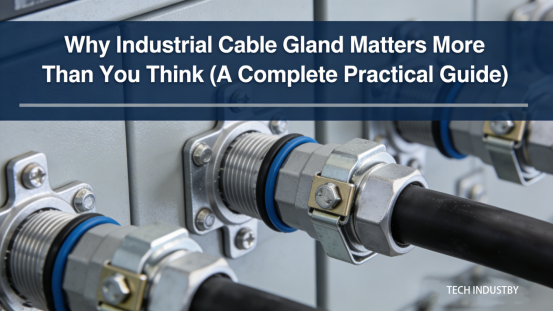
Many factory owners and electricians treat cable glands as small, unimportant accessories—something you just buy cheaply and install quickly. But in industrial environments, the industrial cable gland is far from a minor part; it is a critical component that protects wires, seals out dust and moisture, prevents electrical accidents, and extends the life of your entire equipment.
Using low-quality or inappropriate industrial cable glands can lead to short circuits, machine malfunctions, unplanned downtime, and even safety risks for workers. This guide explains what an industrial cable gland is, what it actually does, how to choose the right one, and why investing in quality ones will save you money in the long run. Written in simple, non-technical language, this article is optimized for Google SEO and designed to help electricians, maintenance teams, and factory owners make better decisions when it comes to cable protection.
An industrial cable gland is a device used to secure and seal cables where they enter electrical cabinets, motors, sensors, control boxes, or outdoor equipment. Its main jobs are to hold the cable firmly in place, prevent it from being pulled out, and create a tight seal that blocks dust, water, oil, and moisture from entering the equipment. Unlike ordinary plastic connectors used in homes, industrial cable glands are built to withstand harsh factory conditions—high temperatures, vibration, water spray, oil exposure, and corrosive environments.

In fact, industrial cable glands are used in almost every type of automation equipment, including industrial power supplies, PLCs, HMIs, sensors, motors, and control panels. Without a reliable industrial cable gland, cables can become loose, damaged, or exposed, leading to unstable signals, equipment failure, and electrical hazards that could easily be avoided.
One common misunderstanding is that all cable glands are the same. This is completely false. Household or low-grade plastic cable glands cannot survive in real industrial settings. For example, in a food processing factory where equipment is washed daily with high-pressure water, a cheap plastic connector will quickly fail, allowing water to seep into control boxes and cause short circuits. An IP68-rated industrial cable gland, however, creates a fully waterproof seal that can withstand constant washing and humidity.
Similarly, in a metal workshop with heavy vibration, low-quality cable glands may loosen over time, causing cables to rub against sharp edges and wear out. A durable industrial cable gland with strong clamping force keeps cables stable even under constant vibration, protecting both the cable and the internal components of the machine.
Another important function of the industrial cable gland is strain relief. When cables are pulled, bent, or dragged, the force would normally damage the connection inside the equipment. The industrial cable gland absorbs this tension, preventing the internal wiring from breaking or detaching—an essential feature for moving parts such as conveyor systems, robotic arms, and mobile equipment.
Many small factories try to save money by using uncertified, low-cost cable glands, only to end up paying much more later in maintenance, repairs, and downtime. According to industrial electrical maintenance data, around 27% of electrical faults in small factories are caused by damaged cables or failed entry seals—problems that a reliable industrial cable gland could have prevented.

Let’s use a real factory example to show just how impactful a quality industrial cable gland can be. A small packaging factory was experiencing frequent electrical issues on its conveyor lines; cables connected to motors and sensors kept failing, causing unplanned stops. After inspection, the maintenance team found that the cheap cable glands they were using had cracked, allowing dust and moisture to enter. They replaced all connectors with heavy-duty industrial cable glands with IP67 protection.
Within one month, cable-related failures dropped by more than 80%. Downtime decreased, maintenance labor was reduced, and the factory saved thousands of dollars in lost production—making the cost of quality industrial cable glands minimal compared to the savings they created.
When choosing an industrial cable gland, there are several practical factors you must consider to ensure it fits your needs. First, the material: plastic is lightweight and corrosion-resistant, while metal (such as brass or stainless steel) offers higher strength and temperature resistance. Second, the ingress protection rating, or IP rating: IP65 is suitable for dusty environments, IP67 for water spray, and IP68 for full immersion or frequent washing.
Third, cable diameter: you must choose an industrial cable gland that matches the thickness of your cable—too loose will not seal properly, and too tight will damage the cable jacket. Fourth, environment: if your factory has oil, chemicals, or extreme temperatures, you need an industrial cable gland designed to resist those specific conditions.
Brands like Jiangxi Qiwo Electronics offer a full range of industrial cable glands in different sizes, materials, and protection levels, making it easy to find the right one for any application.

Installation is another key point to keep in mind: even the best industrial cable gland will fail if installed incorrectly. The cable must be inserted straight, not twisted, and the gland must be tightened properly to create a full seal. Over-tightening can crack the housing or crush the cable, while under-tightening will defeat the purpose of the seal. Basic training for electricians and maintenance staff can prevent most installation mistakes.
Industrial cable glands are also essential for safety compliance. In many industries, including food processing, electronics, chemicals, and manufacturing, equipment must have proper cable entry sealing to meet safety standards. Loose or damaged cable entries can lead to safety violations, fines, or workplace accidents, so using certified industrial cable glands helps maintain a safe working environment and keeps your factory compliant.
Many factory managers only notice cable glands when something goes wrong, but in reality, the industrial cable gland is one of the most affordable and effective ways to protect your automation investment. It extends cable life, reduces electrical faults, lowers maintenance costs, improves safety, and reduces unplanned downtime—all with a minimal upfront investment.
In summary, the industrial cable gland is a small but essential component in any factory automation system. It is not just a simple accessory—it is a protective device that keeps cables safe, equipment stable, and workers protected. Choosing quality, correctly sized, and appropriately rated industrial cable glands will save you time, money, and frustration in the long run.
This practical guide gives you clear, real-world information that helps you understand, select, and use industrial cable glands properly. Optimized for Google SEO, it helps readers find reliable, useful content that solves real industrial problems related to cable protection and equipment safety.
