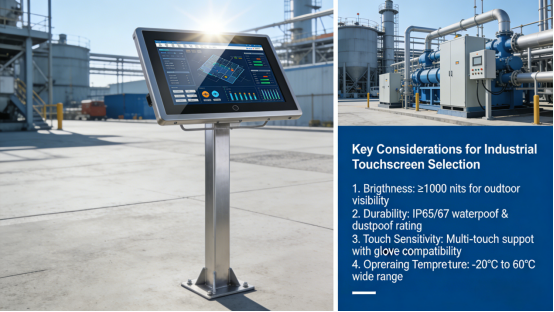

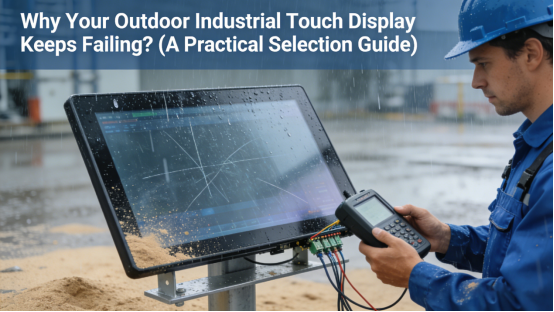
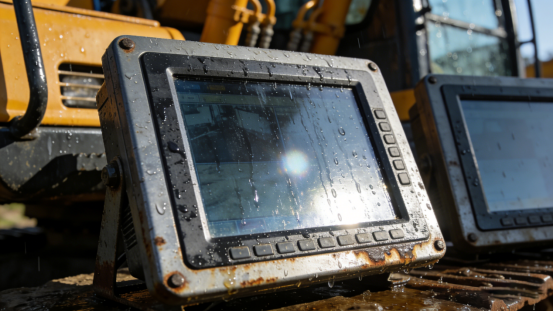
Industrial professionals working with outdoor equipment—such as outdoor monitoring terminals, construction machinery, and outdoor control panels—often face a frustrating problem: outdoor touch displays fail far too quickly. Frequent screen dimming, unresponsive touch in sunlight, water damage, and short service life disrupt operations, drive up maintenance costs, and cause costly downtime.
The problem isn’t poor product quality—it’s choosing the wrong type of display. Most generic touch displays are designed for indoor use, not the harsh outdoor environment: direct sunlight, extreme temperatures, rain, dust, and UV radiation all take a toll on ordinary displays.
In this article, we share fact-based, actionable guidance—aligned with official industrial product manuals and technical standards—on choosing a reliable industrial-grade outdoor high-brightness touch display. No marketing jargon, no exaggerated claims, just practical tips to help you avoid mistakes, save money, and extend your outdoor display’s lifespan.
What Makes an Industrial-Grade Outdoor High-Brightness Touch Display Different?
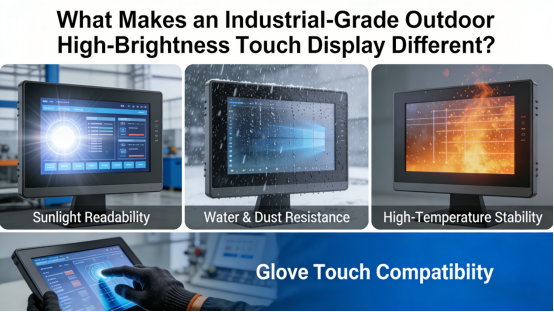
An industrial-grade outdoor high-brightness touch display isn’t just a “brighter indoor display”—it’s a specialized component engineered to withstand outdoor industrial challenges. Unlike indoor models, it must meet strict standards to perform reliably in harsh conditions:
- High brightness to counter direct sunlight (no more unreadable screens in bright weather)
- Weatherproof and dustproof design to resist rain, snow, dust, and humidity
- Wide operating temperature range to handle extreme heat and cold
- UV resistance to prevent screen yellowing and aging over time
- Durable touch performance that works in rain, with gloves, or in dusty conditions
These features are non-negotiable for outdoor industrial use. A single display failure can halt outdoor operations, leading to costly delays and replacements.
6 Critical Specs to Check Before Buying (From Official Product Manuals)
To avoid premature display failure, focus on these six core specs—all verified by industrial product manuals and standards. They directly determine outdoor performance and durability:
1. Brightness (The Most Critical Spec for Outdoor Use)
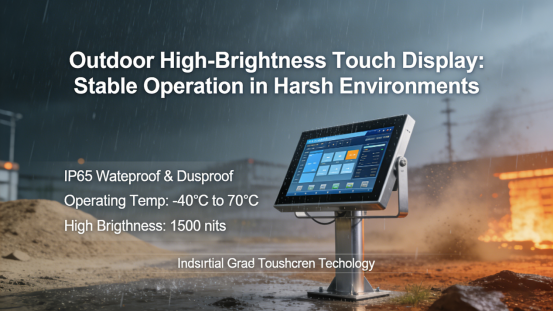
Direct sunlight washes out ordinary indoor displays (typically 200-300 nits), making them unreadable. A reliable industrial outdoor high-brightness touch display must have a brightness of ≥500 nits (preferably ≥700 nits for direct sunlight exposure).
Higher brightness ensures clear visibility even in midday sunlight, cutting operational errors and boosting efficiency. Look for displays with automatic brightness adjustment (per product manuals) to save energy while maintaining readability.
2. Weatherproof & Dustproof Rating
Outdoor displays are exposed to rain, snow, dust, and humidity—poor weather resistance leads to internal damage and failure. Prioritize a display with a protection rating of IP65 or higher (per industrial standards).
IP65 means the display is fully dust-tight and protected against low-pressure water jets (e.g., rain, sprinklers)—critical for most outdoor settings. For harsher environments (e.g., dusty construction sites, heavy rain), opt for IP67 or higher.
3. Operating Temperature Range
Outdoor temperatures fluctuate drastically—from freezing winters to sweltering summers. A reliable outdoor industrial display should support a working temperature range of -20°C to 70°C (per product manual specs).
This range guarantees stable performance in freezing winters (e.g., outdoor monitoring) and sweltering summers (e.g., construction machinery)—eliminating screen freezes, blackouts, or component damage from temperature extremes.
4. Touch Performance for Outdoor Conditions
Outdoor touch displays must perform in less-than-ideal conditions—rain, dust, and with gloves. Prioritize these touch specs (from official product manuals):
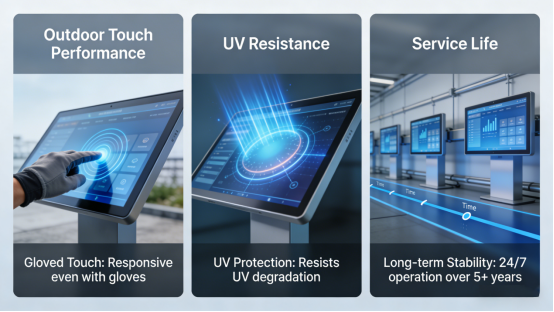
- Touch Technology: Capacitive touch with water-resistant design (works in light rain) or resistive touch (ideal for heavy rain, gloves, or dusty environments).
- Response Time: ≤10ms to ensure fast, accurate inputs—critical for real-time outdoor control.
- Surface Hardness: ≥7H to resist scratches from debris, tools, and outdoor wear.
5. UV Resistance
Prolonged outdoor exposure to UV radiation causes ordinary displays to yellow, fade, or crack over time. Look for displays with UV-resistant glass and housing (per product manual specs).
UV resistance prevents premature aging, extending the display’s service life and reducing long-term replacement costs.
6. Service Life & Reliability
Outdoor industrial equipment is designed to last for years—your display should too. Choose a display with a service life of ≥50,000 hours (continuous operation) and a touch life of ≥30 million operations (per industrial standards).
This durability handles 24/7 outdoor use for years, cutting replacement costs and unplanned downtime.
5 Common Mistakes to Avoid (Save Time & Money)
Based on real-world outdoor industrial experience, these five mistakes often lead to costly display failures. Avoid them to make the right choice:
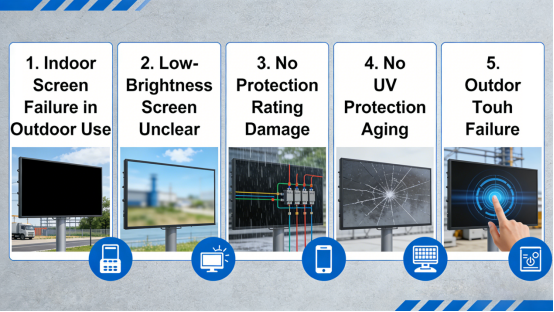
Mistake 1: Using Indoor Displays Outdoors
Indoor displays lack the brightness, weather resistance, and temperature tolerance for outdoor use. They’re cheaper upfront but fail quickly—costing more in replacements and downtime over time.
Mistake 2: Prioritizing Price Over Brightness
Choosing a low-brightness display (≤300 nits) to save money leads to unreadable screens in sunlight, reducing efficiency and causing errors. Invest in a display with ≥500 nits for reliable outdoor visibility.
Mistake 3: Ignoring Weatherproof Rating
Skipping the IP rating check leads to water or dust damage. Always choose a display with IP65 or higher to ensure it can withstand outdoor conditions.
Mistake 4: Forgetting UV Resistance
Displays without UV resistance yellow and fail quickly in direct sunlight. This adds unnecessary replacement costs—always check for UV-resistant components.
Mistake 5: Not Testing Touch Performance Outdoors
A display that works well indoors may fail outdoors—test touch performance in rain, with gloves, and in direct sunlight to ensure it meets your needs.
Conclusion: Choose the Right Display for Outdoor Industrial Use
Choosing a reliable industrial-grade outdoor high-brightness touch display doesn’t have to be complicated. The key is to prioritize outdoor-specific specs: brightness, weatherproof rating, temperature range, touch performance, UV resistance, and service life.
By focusing on these specs—all aligned with official product manuals and industrial standards—you’ll select a display that performs reliably in harsh outdoor conditions, reduces failures, lowers maintenance costs, and keeps your outdoor operations running smoothly.
This article helps industrial professionals (designers, buyers, maintenance teams) make informed decisions—no promotions, no sales pitches, no exaggerated claims. Just practical, fact-based guidance to stop wasting money on unreliable outdoor industrial touch displays.