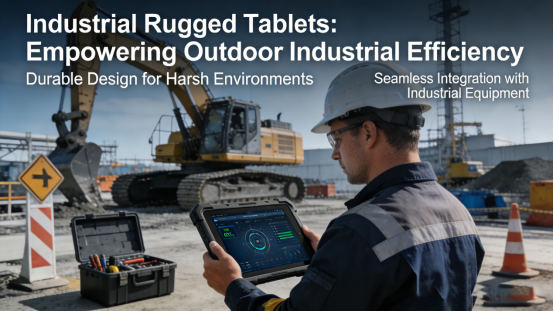

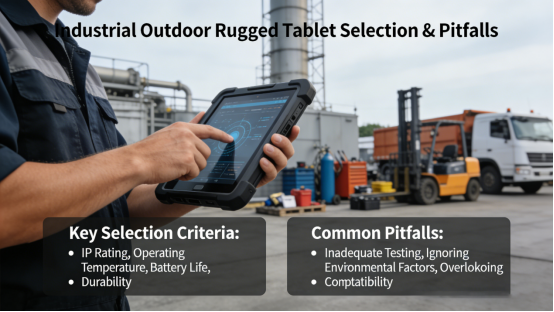
For industrial field operators, maintenance technicians, and equipment purchasers, rugged tablets are indispensable tools for outdoor and harsh-environment work. Yet frequent malfunctions—screen cracks, water damage, short battery life, or signal loss—plague many professionals, and these issues rarely stem from poor product quality alone. More often, they arise from choosing a model misaligned with on-site working conditions—a problem easily avoidable with the right guidance.
Unlike consumer tablets, industrial rugged tablets are engineered specifically to withstand the rigors of outdoor industrial work—drops, dust, water, extreme temperatures, and constant movement. As a key product of Jiangxi Qiwo Electronics, its rugged tablets (models: W80N/W10N/W10Y/W18Y/W30U) meet these harsh demands, with all specifications strictly adhering to official product manuals and wide application in mobile operation, field maintenance, and outdoor industrial scenarios.
This article offers objective, practical guidance rooted in Jiangxi Qiwo’s product manual and real-world outdoor operation experience. Free of exaggerated promotions and sales pitches, it focuses on helping you select a rugged tablet that fits your specific outdoor work needs—avoiding costly mistakes and boosting field efficiency.
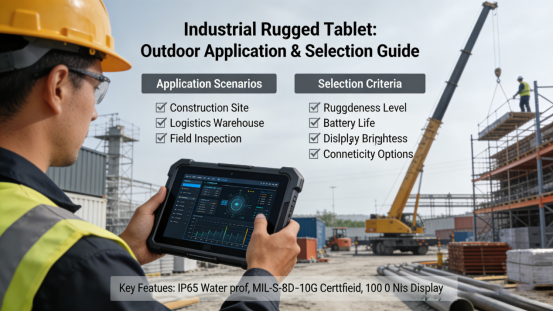
What Makes an Industrial Rugged Tablet Essential for Outdoor Work?
An industrial rugged tablet is more than a portable device; it’s a workhorse that combines the portability of a tablet with the durability of industrial equipment, tailored to the unique challenges of outdoor industrial work. Unlike consumer tablets—designed for indoor use and light tasks—rugged tablets resist the elements of field work: sudden rain, heavy dust, accidental drops, and extreme temperature swings.
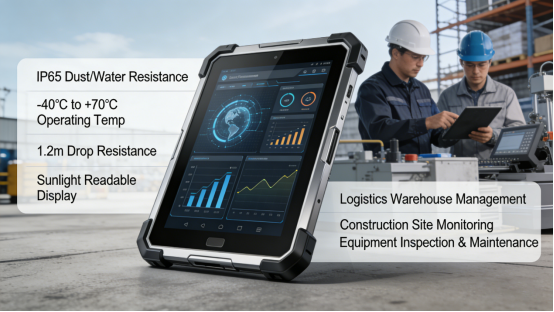
Jiangxi Qiwo’s rugged tablets stand out for their alignment with these industrial needs, with core features that directly address outdoor work pain points. Their high protection rating (IP65/IP68) keeps dust and water at bay, preventing internal damage even in rainy or dusty environments. A wide operating temperature range of -20~60℃—customizable to -30℃ for extreme cold regions—ensures reliable performance in both hot summer days and freezing winter mornings. Enhanced display performance, with brightness up to 1000cd/m², guarantees clear visibility even in direct sunlight—a critical detail for outdoor operations where screen readability can mean the difference between efficiency and costly errors.
These devices also support glove and wet hand touch—a must for outdoor work where operators often wear protective gloves or work in rainy conditions—and offer optional 4G/5G/GPS and scan modules to meet diverse field needs, from real-time data transmission to asset management. Their lightweight, durable design makes them easy to carry during frequent patrols or field maintenance, while a long service life cuts replacement costs and unplanned downtime.
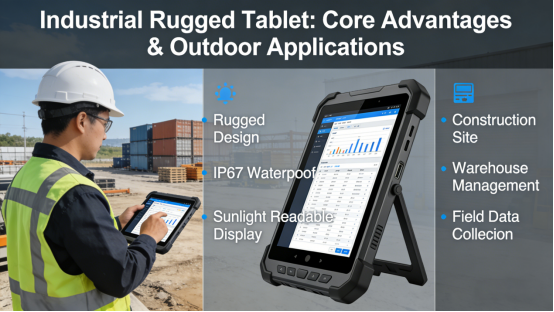
How to Select a Rugged Tablet That Fits Your Outdoor Industrial Scenario
Selecting the right rugged tablet isn’t about choosing the most expensive model; it’s about matching the device to your specific working environment, operational needs, and portability requirements—all guided by Jiangxi Qiwo’s product manual and real-world experience. The key is to focus on how each feature translates to practical outdoor use, rather than getting bogged down in technical jargon.
Start with the protection rating—the foundation of any rugged tablet for outdoor use. Jiangxi Qiwo’s models offer IP65 and IP68 ratings, and the choice depends on your work environment. For general outdoor tasks like factory outdoor maintenance or construction site inspection, an IP65 rating suffices to resist occasional rain and dust. For harsher environments—such as outdoor mining, field exploration, or areas with frequent heavy rain—an IP68 rating is essential, as it protects against short-term submersion and heavy dust, preventing costly water or debris damage.
Screen brightness and touch functionality are equally critical for outdoor use. Direct sunlight can render ordinary tablet screens unreadable, which is why Jiangxi Qiwo’s rugged tablets feature brightness up to 1000cd/m²—ensuring clear visibility even on the sunniest days. Glove and wet hand touch support is another non-negotiable feature; outdoor work rarely happens in ideal conditions, and being able to operate the tablet while gloved or in light rain eliminates frustration and operational delays.
Temperature adaptability is often overlooked but can make or break a rugged tablet’s performance. The standard operating temperature range of -20~60℃ covers most outdoor industrial scenarios, but if your work takes place in extremely cold regions—such as northern outdoor industrial sites in winter—opting for a customized -30℃ range is a worthwhile investment. A tablet unable to withstand local temperature extremes will suffer battery failure, screen blackouts, or system crashes, disrupting field work and leading to costly repairs.
Size and portability must balance functionality and ease of use. Jiangxi Qiwo’s 8-inch models (e.g., W80N) are lightweight and easy to carry, perfect for frequent movement like patrol inspections or equipment maintenance. For tasks requiring complex document, image, or data viewing—such as on-site design or data analysis—10.1–13.3-inch models (e.g., W10N/W10Y/W18Y) offer a larger screen without sacrificing too much portability. A model too large becomes cumbersome during long field days, while one too small makes data hard to read, leading to errors.
Configuration and functionality should align with your specific work tasks. Intel/MTK processors ensure stable performance for industrial software—whether you’re using data collection tools, mapping software, or asset management programs. Windows/Linux/Kirin operating systems offer flexibility to match your existing software ecosystem, while optional 4G/5G/GPS lets you transmit data in real time and navigate field locations without relying on Wi-Fi. If your work involves barcode or QR code scanning—such as asset inspection or product verification—a model with an optional scan module streamlines workflows and reduces manual data entry errors.
Battery life is the final piece of the puzzle for outdoor work, where power access is often limited. A rugged tablet should support a full day of field work without recharging, and models with replaceable batteries are ideal for extended shifts—allowing on-site battery swaps to avoid work interruptions. Following the product manual’s battery care recommendations also extends its lifespan, cutting long-term replacement costs.
Common Mistakes to Steer Clear of When Choosing a Rugged Tablet
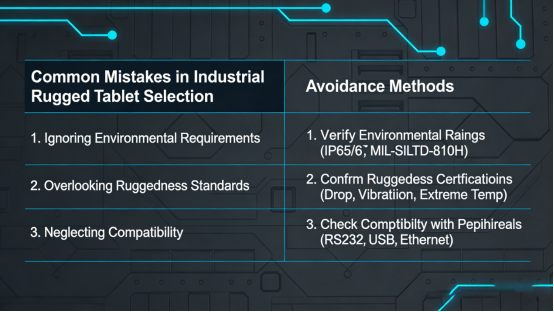
Even with the right guidance, many professionals make avoidable mistakes when selecting a rugged tablet, leading to unnecessary costs and work disruptions. These errors often stem from overlooking practical on-site needs or focusing on the wrong features, rather than aligning the device with real-world outdoor conditions.
One of the most frequent errors is ignoring the protection rating. Choosing a model with a rating lower than IP65 for outdoor use—such as IP54—leaves the tablet vulnerable to dust and water, leading to frequent malfunctions and costly repairs. For example, an IP54 tablet used on a construction site will quickly accumulate dust or suffer water damage during rain, rendering it unusable.
Overlooking screen brightness is another common pitfall. Opting for a model with brightness below 500cd/m² makes the screen nearly unreadable in direct sunlight, leading to operational errors and reduced efficiency—critical for tasks requiring precise data entry or document viewing outdoors.
Neglecting temperature adaptability also leads to failures. Choosing a tablet with a narrow temperature range—such as 0~50℃—for cold or hot outdoor environments results in battery failure or system crashes. For instance, a tablet used in northern winter outdoor work without a customized -30℃ range will struggle to start or maintain performance in freezing temperatures.
Choosing the wrong size is a simple but costly mistake. A 13.3-inch model may suit data analysis but becomes cumbersome during frequent patrols, while an 8-inch model may be too small for complex schematics or images. Balancing size with your specific work tasks ensures the tablet is both functional and easy to use.
Finally, overlooking battery life and connectivity disrupts field work. A tablet with short battery life leaves you stranded mid-task, while poor 4G/5G/GPS signal prevents real-time data transmission or navigation—critical for field inspection or asset tracking. Always verify these features against the product manual to ensure they meet your on-site needs.
Conclusion: Choose Wisely for Smooth Outdoor Industrial Operations
A reliable rugged tablet is a cornerstone of efficient outdoor industrial work, and choosing the right one comes down to aligning its features with your specific environment, tasks, and portability needs. Jiangxi Qiwo’s rugged tablets (W80N/W10N/W10Y/W18Y/W30U) are engineered to meet these demands, with customizable options for diverse outdoor scenarios—all backed by strict product manual standards and real-world industrial experience.
By focusing on practical needs rather than unnecessary features, avoiding common mistakes, and leveraging this article’s guidance, you’ll select a rugged tablet that’s durable, reliable, and tailored to your outdoor work. This not only reduces malfunctions and maintenance costs but also boosts field efficiency, ensuring smooth operations even in the harshest outdoor industrial environments.
This article provides objective, practical guidance for industrial field operators, maintenance technicians, and purchasers—no promotions, no sales pitches, just fact-based tips to help you choose the right rugged tablet for your outdoor industrial needs.