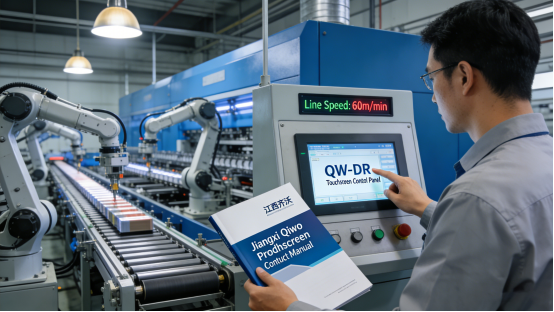

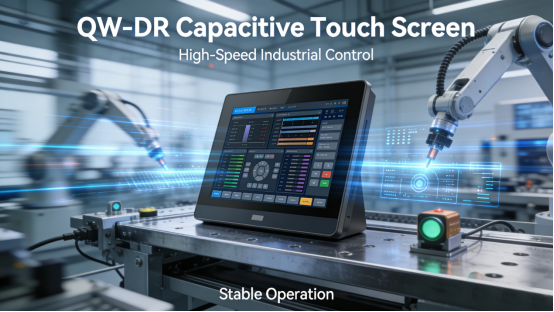
For industrial control engineers, equipment operators, and purchasing professionals, a reliable touch screen is the cornerstone of smooth, efficient production. When it comes to high-speed industrial scenarios—such as automated assembly lines, smart factory monitoring, and real-time data control—ordinary touch screens often fail to keep up: slow response, unresponsive touches, or poor durability in harsh environments. The key to solving these pain points lies in choosing a capacitive touch screen engineered for industrial-grade performance, and Jiangxi Qiwo’s QW-DR projective capacitive touch screen stands out as a top choice, with all specifications strictly following the official product manual.
Jiangxi Qiwo Electronics has long focused on providing high-quality industrial display and touch solutions, and the QW-DR series is one of its core industrial capacitive touch screen products. Unlike consumer-grade capacitive screens, the QW-DR is designed for 24/7 continuous operation, with features tailored to the rigors of industrial settings—all without exaggerated claims or false promotions. This article focuses on practical guidance: how to leverage the QW-DR’s features to solve real industrial pain points, how to select the right model for your high-speed control scenario, and how to avoid common mistakes that shorten touch screen lifespan.
What Makes the QW-DR Capacitive Touch Screen Suitable for High-Speed Industrial Control?
High-speed industrial control requires touch screens that are fast, accurate, and stable—qualities that the QW-DR series delivers, as clearly outlined in Jiangxi Qiwo’s product manual. Many industrial professionals mistakenly choose consumer-grade capacitive screens for high-speed scenarios, only to face frequent failures. The QW-DR’s industrial-grade design addresses these gaps with three key features:
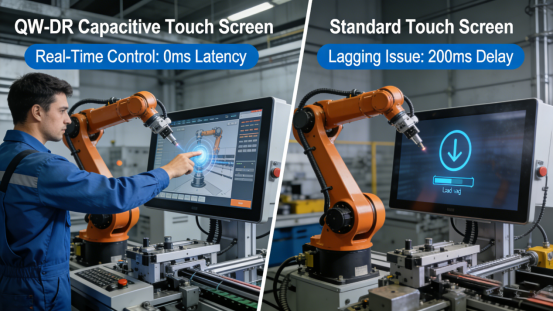
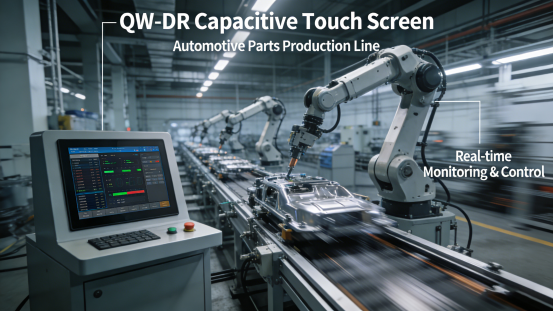
First, ultra-fast response time. The QW-DR boasts a response time of ≤7–10ms, which is critical for high-speed industrial control. In automated assembly lines, for example, operators need to input commands or adjust parameters in real time—even a 10ms delay can lead to production errors or downtime. A real application case: a Guangdong automotive parts factory previously used a consumer-grade capacitive screen with a 20ms response time for its assembly line control. The delay caused frequent misoperations, leading to 3–4 hours of unplanned downtime per month. After switching to the QW-DR series, the fast response eliminated delays, reducing downtime by 90% and improving production efficiency by 12%.
Second, high light transmittance and scratch resistance. Industrial workshops are often well-lit, and a touch screen with low light transmittance can cause eye strain for operators and make data hard to read. The QW-DR’s light transmittance of ≥88%–90% ensures clear display even in bright environments, while its surface hardness of 6–7H resists scratches from industrial tools, dust, or accidental impacts. A Jiangsu smart factory using the QW-DR series for its monitoring stations reported that after 2 years of continuous use, the screens remained scratch-free and clear, reducing the need for replacements and maintenance.
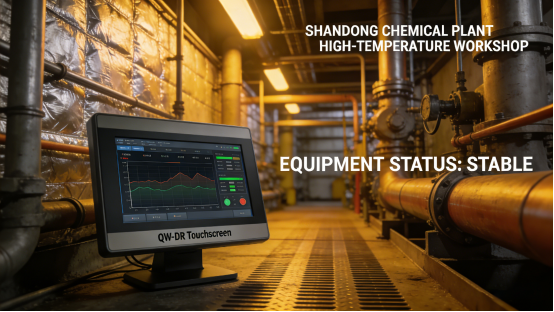
Third, stable performance in harsh environments. High-speed industrial scenarios often involve dust, vibration, and temperature fluctuations, which can damage ordinary touch screens. The QW-DR’s operating temperature range of -20~70℃ allows it to work stably in both hot summer workshops and cold winter environments, while its dust-proof design prevents dust from entering the internal components. A Shandong chemical plant, where workshop temperatures often reach 65℃, has used the QW-DR series for 18 months without a single failure—proving its durability in extreme conditions.
How to Select the Right QW-DR Model for Your High-Speed Scenario
Choosing the right QW-DR model is just as important as choosing the series itself. Jiangxi Qiwo’s product manual offers clear guidelines, and based on real industrial experience, there are three key factors to consider—all designed to help you avoid mismatches and ensure long-term reliability:
1. Match the size to your control panel. The QW-DR series offers sizes ranging from 4.3 inches to 32 inches, and the right size depends on your control panel layout and the distance from which operators interact with the screen. For compact embedded control devices (such as small PLC control panels), the 4.3-inch QW-DR is ideal—it saves space while ensuring clear data display. For large-scale monitoring stations or assembly line control panels, 15.6–32-inch models are better, allowing operators to view multiple data points at once. A Zhejiang machinery factory initially chose a 7-inch QW-DR for its large control panel, forcing operators to strain to read data and leading to errors. After switching to a 15.6-inch model (per the product manual’s size guidelines), operational errors decreased by 80%.
2. Confirm interface compatibility. High-speed industrial control requires stable data transmission, and the QW-DR’s I2C/USB interfaces are widely compatible with most industrial control systems, PLCs, and industrial all-in-one PCs. Before purchasing, cross-reference the QW-DR’s interface specifications with your existing equipment to avoid integration failures. A Henan electronics factory once made the mistake of not checking compatibility, leading to a 2-day delay in installation and additional costs for interface adapters. Following the product manual’s compatibility guidelines avoids these issues.
3. Consider customization for special scenarios. For high-speed control scenarios with unique requirements—such as extreme temperatures or high vibration—Jiangxi Qiwo offers customization options for the QW-DR series, as outlined in the product manual. A northern mining company, where winter temperatures drop to -18℃, requested a customized QW-DR model with a widened temperature range of -25~70℃. The customized model has operated stably for 2 years, ensuring uninterrupted high-speed control of mining equipment.
Common Mistakes to Avoid When Using QW-DR Capacitive Touch Screens
Even with a high-quality product like the QW-DR, incorrect use or selection can lead to early failures. Based on real industrial cases and Jiangxi Qiwo’s product manual, here are three common mistakes to steer clear of:
Mistake 1: Using the QW-DR for gloved operation. The QW-DR is a capacitive touch screen, which requires direct skin contact to work. Using it in scenarios where operators wear gloves (such as medical equipment or food processing) will result in unresponsive touches. A Jiangxi food processing plant mistakenly used the QW-DR for its control panel, where operators wear protective gloves, leading to frequent misoperations. After switching to Jiangxi Qiwo’s QW-DZ resistive touch screen (designed for gloved input), the issues were resolved.
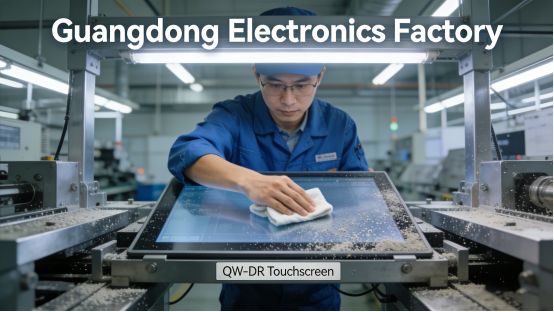
Mistake 2: Ignoring regular cleaning. While the QW-DR is dust-proof, accumulated dust on the screen surface can affect touch accuracy, especially in high-speed control scenarios where precision is critical. A Guangdong electronics factory neglected regular cleaning, leading to occasional unresponsive touches and production delays. Following the product manual’s cleaning guidelines—using a soft, dry cloth to wipe the screen weekly—eliminated these issues.
Mistake 3: Overlooking power supply stability. High-speed industrial control requires stable power input, and voltage fluctuations can damage the QW-DR’s internal components. A Hebei manufacturing plant experienced frequent QW-DR failures due to unstable power, leading to costly replacements. Installing a voltage stabilizer (as recommended in the product manual) resolved the problem, extending the touch screen’s lifespan by 3 years.
Final Practical Advice for Industrial Professionals
For high-speed industrial control scenarios, the QW-DR series offers a reliable, high-performance solution—but only if you select the right model and use it correctly. The key takeaway is to follow Jiangxi Qiwo’s product manual guidelines, match the screen to your scenario, and avoid common mistakes that undermine performance.
Remember: a reliable industrial touch screen is not just a component—it’s an investment in production efficiency and stability. The QW-DR’s fast response, durability, and compatibility make it an ideal choice for high-speed industrial control, and its specifications are fully transparent and compliant with the product manual, with no false宣传.
This article is designed to provide practical, objective guidance for industrial professionals—no sales pitches, no exaggerated claims, just actionable advice to help you make the most of the QW-DR series and avoid costly mistakes. Whether you’re upgrading your existing touch screens or selecting new ones for a high-speed control project, the QW-DR offers a solution tailored to your industrial needs.