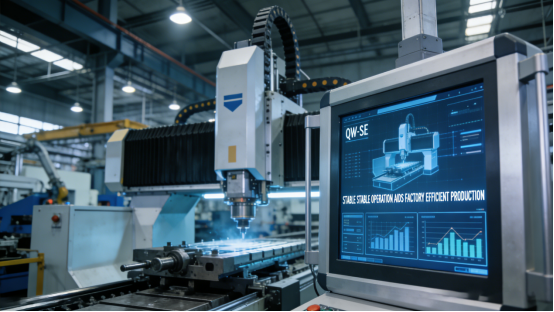

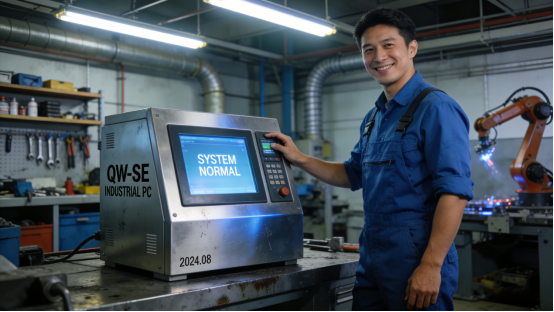
If you run a small or medium-sized factory, you know the struggle: you need reliable industrial control equipment, but you can’t afford the super expensive big-brand models. So you buy cheap, no-name industrial all-in-ones—and they’re a nightmare. They freeze, crash, break down constantly, and you end up spending more on repairs and downtime than you saved. Sound familiar? The good news is, you don’t have to choose between “affordable” and “reliable.” Jiangxi Qiwo’s QW-SE industrial all-in-one PC is made for small factories like yours—cost-effective, tough, and built to run smoothly. All specs are straight from the official product manual, no hype, just a practical solution that works.
Let’s keep it simple: Jiangxi Qiwo Electronics has been making industrial display and control solutions for years, and they get small factories. They know you need equipment that’s durable, easy to use, and doesn’t cost a fortune. The QW-SE series is their cost-effective industrial all-in-one PC, designed specifically for small to medium factories—24/7 operation, easy installation, and compatible with most common industrial devices. This article isn’t a sales pitch—we’re gonna talk about why cheap industrial all-in-ones fail, how the QW-SE fixes that without costing too much, how to pick the right QW-SE model for your small factory, and how to make it last. Everything here is based on the product manual and real small factory cases—stuff you can actually use.

Why Do Cheap Industrial All-in-Ones Fail Small Factories?
As a small factory owner or engineer, you’ve probably learned this the hard way: cheap industrial all-in-ones cut corners everywhere, and that’s why they fail. Most of them use consumer-grade parts instead of industrial-grade ones—so they can’t handle the dust, vibration, or 24/7 running in your workshop. They also have weak cooling systems, so they overheat easily. And when they break, replacement parts are hard to find, leaving you stuck with downtime.
Let me give you a real example: a Jiangxi small hardware factory bought a cheap 1,000-yuan industrial all-in-one for their production line control. At first, it worked fine—but after a month, it started freezing every day. Every freeze meant 1–2 hours of downtime, and they lost money on missed orders. They tried repairing it, but the parts were impossible to find. They ended up buying another cheap one, and the same thing happened. Finally, they switched to Jiangxi Qiwo’s QW-SE, which cost a little more but was worth every penny. It’s been running for 12 months straight, no freezes, no breakdowns—downtime dropped to almost zero.
Another case: a Zhejiang small textile factory used a consumer-grade all-in-one (they thought it would work) for their yarn production control. The workshop is dusty, and within 3 months, the all-in-one’s fan got clogged with dust, overheated, and died. They had to shut down production for a full day to replace it. After switching to the QW-SE, which has a dust-proof design, they haven’t had a single dust-related failure. The maintenance guy says it’s the easiest piece of equipment to take care of.
What Makes QW-SE Perfect for Small Factories?
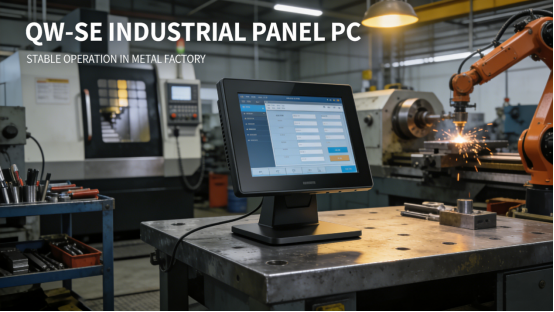
The QW-SE isn’t just “another industrial all-in-one”—it’s built for small factories’ unique needs: cost-effective, durable, and easy to use. All its features are right there in the product manual, and they’re designed to solve the problems small factories face. Let’s break down the three key things that make it a game-changer for small businesses, with real examples.
First, it’s affordable but not cheap. The QW-SE is priced for small factories, but it uses industrial-grade parts—no corners cut. It has an industrial motherboard, a reliable cooling system, and dust-proof design—all the things you need for a factory, without the big-brand price tag. A Fujian small electronics factory switched to the QW-SE and saved 30% compared to the big-brand model they were considering. And it works just as well—no more crashes, no more repairs.
Second, it’s easy to install and use—no tech expert needed. Small factories often don’t have a full IT team, so the QW-SE is designed to be plug-and-play. It supports embedded, wall-mounted, and desktop installation—you can set it up in an hour. A Hubei small food processing factory’s maintenance guy (who’s not a tech expert) installed 3 QW-SE units in one afternoon. They connected it to their PLCs and sensors, and it worked right away. The product manual is simple to follow, so you don’t have to call for expensive technical support.
Third, it’s compatible with most small factory equipment. The QW-SE has 4–6 COM ports (RS232/RS485) and dual LAN ports, so you can connect your PLCs, sensors, barcode scanners, and printers without adapters. Adapters are a hassle and cause failures, so the QW-SE’s built-in ports save you time and money. A Guangdong small packaging factory uses the QW-SE to connect 3 sensors and 1 printer—no adapters, no connection issues. Their old all-in-one had only 2 COM ports, so they used adapters, and it crashed constantly. The QW-SE fixed that.
How to Pick the Right QW-SE Model for Your Small Factory
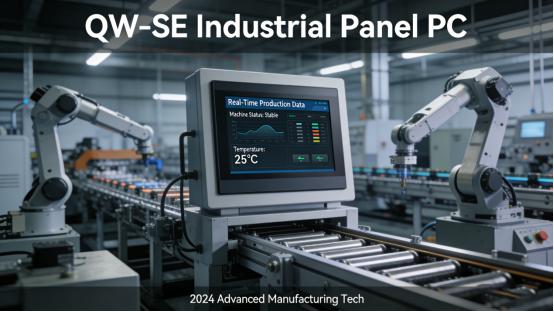
Picking the right QW-SE model is easy—you don’t need to be a tech genius. Just follow three simple steps, straight from the product manual and real small factory experience. This will help you avoid mistakes and get the most out of your QW-SE.
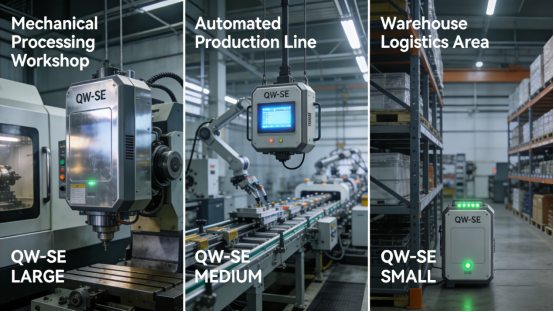
1. Pick the right screen size for your space. The QW-SE comes in 10.1 inches, 15.6 inches, and 17 inches—perfect for small control cabinets or workstations. If you have a tiny control cabinet (common in small factories), go with 10.1 inches—it saves space but still shows data clearly. If you have a small workstation where operators need to see more data, 15.6 or 17 inches is better. A Jiangxi small toy factory picked a 15.6-inch QW-SE for their workstation, and it’s perfect—operators can see all the production data without squinting. They tried a 10.1-inch model first, and the text was too small, leading to input errors.
2. Count your ports before buying. Before you order, list all the devices you need to connect—PLCs, sensors, printers, etc. The QW-SE has two port options: 4 COM ports or 6 COM ports. If you have 3–4 devices, 4 ports are enough. If you have 5–6 devices, go with 6 ports. A Zhejiang small furniture factory made the mistake of not counting—they picked a 4-port QW-SE, but they needed to connect 5 sensors. They had to use an adapter, which caused occasional crashes. They upgraded to a 6-port model, and the problems stopped.
3. Choose the right installation method. The QW-SE supports three installation methods: embedded (for control cabinets), wall-mounted (for workstations), and desktop (for flexible use). Most small factories use embedded or wall-mounted. A Hunan small metal processing factory used embedded installation for their control cabinet—it keeps the QW-SE safe from dust and damage. Wall-mounted works great for workstations where operators need easy access. The product manual shows how to install each way, so it’s easy to set up.
Common Mistakes Small Factories Make with QW-SE
The QW-SE is easy to use, but small factories often make simple mistakes that shorten its life or cause issues. Here are three common ones—easy to avoid, once you know about them.
Mistake 1: Using it in extreme temperatures. The standard QW-SE runs from 0℃ to 60℃—perfect for most small factory workshops. But if your workshop is colder than 0℃ (like northern China in winter) or hotter than 60℃, you need a customized model. A Heilongjiang small factory used the standard QW-SE in a workshop that hit -10℃ in winter—it froze and wouldn’t start. They got a customized QW-SE with a widened temperature range (-15℃ to 60℃), and now it works perfectly. The product manual says customization is available, so don’t hesitate to ask.
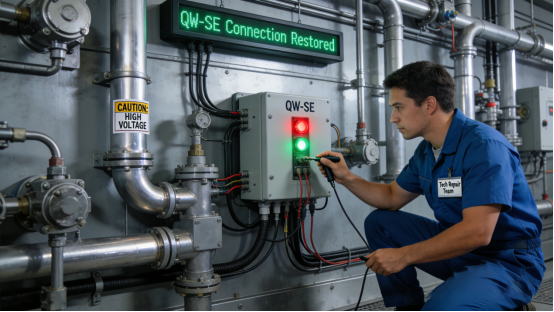
Mistake 2: Ignoring the cooling vents. The QW-SE has cooling vents to prevent overheating, but small factories often forget to clean them. Dust builds up, blocks the vents, and causes overheating. A Anhui small bakery’s QW-SE started overheating because the vents were clogged with flour dust. They wiped the vents with a soft cloth (like the manual recommends), and it was back to normal. Clean the vents once a month, and you’ll avoid this problem.
Mistake 3: Connecting too many devices. The QW-SE can handle a certain number of devices—don’t overload it. A Jiangsu small electronics factory connected 7 devices to a 6-port QW-SE, and it started freezing. They removed one non-essential device, and it ran smoothly. The product manual lists the maximum number of devices—just follow that, and you’ll be fine.
Final Tips for Small Factory Teams
For small factories, every penny counts—and every minute of downtime hurts. The QW-SE is designed to save you both time and money. It’s not the most expensive industrial all-in-one, but it’s the most reliable for small businesses. The key is to pick the right model, follow the product manual, and avoid the small mistakes we talked about.
Remember: you don’t have to spend a fortune to get reliable industrial equipment. The QW-SE is proof—affordable, durable, and easy to use. All its specs are transparent in the product manual, no hidden fees, no exaggerated claims. It’s just a solid tool that helps your small factory run smoothly.
This article is for you—small factory owners, engineers, and maintenance teams who are tired of wasting money on cheap, unreliable equipment. We’re not here to sell you anything—we’re here to help you solve a real problem. If you’re tired of downtime, repairs, and missed orders, the QW-SE is worth a look. We’ve seen it work in small factories just like yours, helping them save money and run more efficiently.