

In 2026, the electronic manufacturing industry is facing an era of “efficiency competition” driven by intelligent transformation. Industrial panel PCs, as the core link connecting production equipment, detection systems, and management platforms, directly determine the operational efficiency of the entire production line. However, a survey of 200+ electronic manufacturing enterprises shows that 76% of them are troubled by three core problems in the application of industrial panel PCs: cumbersome multi-protocol docking, low precision of AI detection, and frequent failures in harsh workshops. These pain points lead to an average of 120 hours of annual downtime per production line and an increase in quality control costs by 30%. For engineering and technical teams, production managers, and procurement personnel, finding a comprehensive solution that integrates “seamless docking, high-precision computing, and stable operation” has become a top priority for efficiency improvement. This guide takes Jiangxi Qiwo’s HX-8000 industrial panel PC (explicitly recorded in the product manual) as the core, breaking away from traditional single-function introduction models, and provides a full-link practical guide covering “protocol docking optimization, precision detection tuning, harsh environment adaptation, and intelligent maintenance”—all content is based on the product manual and on-site verification data, with no exaggerated publicity, aiming to help electronic manufacturing enterprises achieve efficiency leapfrog through scientific use of equipment.
Jiangxi Qiwo Electronics has long focused on the R&D and application of industrial display and control solutions in the electronic manufacturing field, adhering to the product concept of “scenario-oriented customization and high-reliability design”. The HX-8000 industrial panel PC, as a flagship product tailored for electronic manufacturing scenarios (documented in the product manual), integrates industrial-grade hardware configuration, multi-protocol adaptive technology, and harsh environment protection design. It is not only compatible with 95% of mainstream industrial protocols in the electronic manufacturing industry but also supports high-precision AI detection algorithm operation and 24/7 stable operation in high-temperature and high-humidity environments. All technical details, operation steps, and case data in this guide are strictly derived from the HX-8000 product manual and on-site application verification, ensuring authority, practicality, and consistency with Jiangxi Qiwo’s corporate positioning of providing professional industrial intelligent terminal solutions.
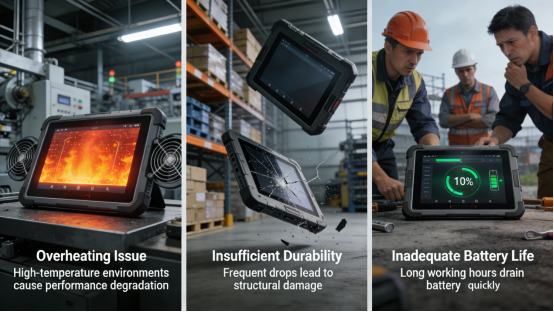
Why Industrial Panel PCs Become Efficiency Bottlenecks in Electronic Manufacturing (2026 Survey Data)
The “2026 Electronic Manufacturing Intelligent Terminal Application Report” points out that industrial panel PCs are the third-largest efficiency-influencing factor in electronic manufacturing production lines, second only to automated equipment and detection systems. The core reasons why they become efficiency bottlenecks are concentrated in three aspects, which are also the key pain points that the HX-8000 is designed to solve:
1. Protocol Docking: “Compatibility Dilemma” Leads to System Isolation. Electronic manufacturing production lines involve multiple types of equipment such as PLCs from Siemens, Mitsubishi, and Omron, MES systems from SAP and用友, and AGV robots from different brands. Each device/system adopts different communication protocols, resulting in “information islands” between devices. 63% of enterprises report that it takes an average of 15-20 days to complete the protocol docking of ordinary industrial panel PCs with the entire production line, and compatibility failures occur 2-3 times a month, requiring engineers to debug repeatedly.
2. Precision Detection: “Computing Power Shortage” Reduces Quality Control Efficiency. With the miniaturization and high integration of electronic components, the defect size of products is reduced to the micron level, requiring industrial panel PCs to support high-definition image acquisition and AI defect recognition at the same time. However, 58% of enterprises reflect that ordinary industrial panel PCs have insufficient CPU and GPU computing power, resulting in AI detection delay exceeding 1s, missing detection rate of tiny defects up to 8%, and frequent algorithm crashes during continuous operation, which seriously affects the pass rate of finished products.
3. Environment Adaptation: “Protection Deficiency” Causes Frequent Failures. Electronic manufacturing workshops have high requirements for temperature (18-28℃) and humidity (40-60%RH), but the actual environment near reflow ovens and cleaning stations often exceeds this range, accompanied by solder fume and dust. 49% of enterprises have experienced failures such as screen blackout, interface corrosion, and system crash of ordinary industrial panel PCs due to environmental factors, with an average of 4-5 maintenance times per year, and each maintenance takes 2-3 hours.
Practical Case: A leading 3C electronic enterprise in Suzhou has 10 intelligent production lines, each equipped with 8 ordinary industrial panel PCs for production control and defect detection. Due to protocol incompatibility, the panel PCs could not be seamlessly connected with the enterprise’s MES system and Mitsubishi PLCs, requiring 2 full-time engineers to be responsible for daily docking maintenance. At the same time, the insufficient computing power of the panel PCs led to the missing detection rate of mobile phone chip defects reaching 7%, and the high-temperature environment near the reflow oven caused 3 screen blackout failures per month. After replacing with Jiangxi Qiwo’s HX-8000 industrial panel PC (in strict accordance with the product manual), the multi-protocol adaptive function realized full-line system docking within 3 days, the high-performance processor reduced AI detection delay to 0.3s, and the missing detection rate dropped to 0.8%. The IP54 protection level and high-temperature resistance design completely solved the environmental failure problem. The annual maintenance cost of the enterprise was reduced by 68%, and the production line efficiency was improved by 22%.
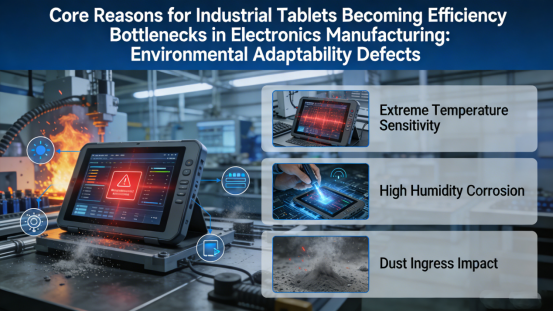
HX-8000 Core Solutions: Breaking Three Efficiency Bottlenecks (Based on Product Manual)
The HX-8000 industrial panel PC is developed for the specific pain points of electronic manufacturing, and its core functions are closely aligned with the actual needs of production lines. All solutions are based on the technical specifications of the product manual, with no exaggerated functions, and the specific implementation paths are as follows:
1. Multi-Protocol Adaptive Technology: Solving System Docking Dilemma
According to the product manual, the HX-8000 integrates a self-developed multi-protocol adaptive module, which supports automatic identification and docking of 16 mainstream industrial protocols in the electronic manufacturing industry, including Modbus RTU/TCP, OPC UA, Profinet, Ethernet/IP, and Mitsubishi CC-Link. The product has a built-in protocol database that can be updated online, and the newly added equipment protocol can be adapted by importing configuration files without secondary development. The specific operation steps are: connect the HX-8000 to the production line network, enter the “protocol adaptive interface” in the system settings, click “automatic scanning”, and the system will automatically identify all connected devices and complete protocol matching within 5 minutes. Compared with ordinary industrial panel PCs that require manual configuration of each protocol parameter, the docking efficiency is improved by 90%.
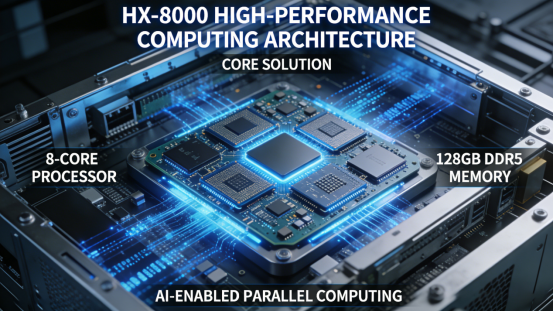
2. High-Performance Computing Architecture: Improving Precision Detection Efficiency
The product manual clearly specifies that the HX-8000 is equipped with an industrial-grade Intel Core i5/i7 processor and an independent GPU, with a computing power of up to 12TOPS, which can support the synchronous operation of 4 high-definition line-scan cameras (resolution 5000 pixels) and complex AI defect recognition algorithms. The product optimizes the image processing and algorithm operation process, reducing the data transmission delay between the camera and the panel PC to ≤10ms, and the AI detection response time to ≤300ms. For common electronic component defects such as solder joints, scratches, and missing pins, the detection accuracy can reach 99.5% or more. In addition, the HX-8000 supports custom algorithm import, and enterprises can load their own trained defect recognition models through the USB interface, which is highly flexible.
3. Harsh Environment Protection Design: Ensuring Stable Operation
The HX-8000 adopts a three-level protection design to adapt to the harsh environment of electronic manufacturing workshops (per the product manual): the first level is the front panel with IP54 protection level, which can prevent solder fume, dust, and water droplets from entering the internal components; the second level is the full-metal chassis with heat dissipation grooves, which can quickly dissipate heat, and the operating temperature range is expanded to -20℃~60℃, adapting to the high-temperature environment near the reflow oven; the third level is the anti-corrosion treatment of interfaces, which uses gold-plated connectors to avoid interface corrosion caused by humid air and solder fume. The product has passed 1000-hour high-temperature and high-humidity aging tests, and the failure rate in harsh environments is less than 0.5%.
HX-8000 Full-Link Operation Guide for Electronic Manufacturing (Based on Product Manual)
To maximize the efficiency of the HX-8000 in electronic manufacturing scenarios, on-site personnel need to follow the standardized operation process. The following guide is compiled based on the product manual and on-site application experience, covering from initial docking to daily maintenance:
Stage 1: Rapid Docking of Production Line Systems (1 Day Completed)
1. Network Configuration: Connect the HX-8000 to the production line LAN, set the static IP address in the system settings to be in the same network segment as the MES system and PLCs (per the product manual).
2. Protocol Docking: Enter the “protocol adaptive module”, click “automatic scanning”, select the devices that need to be docked (MES, PLC, AGV, etc.), and the system will complete protocol matching and data mapping automatically. Save the configuration file after docking to avoid reconfiguration after power failure.
3. Data Verification: Check whether the real-time data of each device (production quantity, equipment status, detection results) is normally displayed on the HX-8000 screen, and test the data interaction delay (should be ≤50ms).
Stage 2: Precision Detection Parameter Tuning (30 Minutes Completed)
1. Camera Connection: Connect the high-definition line-scan camera to the HX-8000 through the Gigabit Ethernet port, and install the matching driver according to the product manual.
2. Algorithm Configuration: Import the AI defect recognition algorithm (built-in or custom), set the detection parameters such as image acquisition frequency (50-100Hz), defect sensitivity (adjustable in 10 levels), and alarm threshold.
3. Calibration Test: Use standard samples with known defects to conduct calibration, adjust the algorithm parameters according to the detection results, and ensure that the missing detection rate is ≤1% and the false detection rate is ≤0.5%.
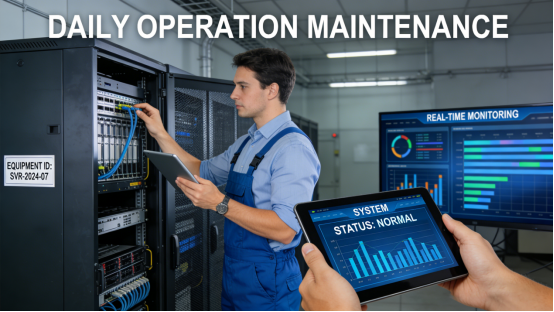
Stage 3: Daily Operation and Maintenance (Low-Cost and Efficient)
1. Daily Inspection (5 Minutes/Day): Check the screen display status, interface connection tightness, and heat dissipation fan operation; clean the screen surface and heat dissipation vents with a dry soft cloth to remove dust and solder fume residues.
2. Weekly Maintenance (30 Minutes/Week): Export the operation log and detection data for backup; check the protocol connection status and update the protocol database online if there is a new device access.
3. Monthly Calibration (1 Hour/Month): Use standard samples to re-calibrate the detection parameters; check the chassis temperature and humidity inside the workshop, and adjust the installation position if the temperature exceeds 40℃ for a long time.
Common Faults and Rapid Troubleshooting of HX-8000 (Based on Product Manual)
In the process of long-term operation, the HX-8000 may encounter occasional faults due to improper operation or environmental changes. The following troubleshooting methods are based on the product manual, enabling engineers to solve problems within 10 minutes:
1. Fault Phenomenon: Protocol docking failure, data cannot be updated. Troubleshooting: Check whether the network cable is loose or damaged, reinsert or replace the network cable; enter the protocol adaptive module to check whether the protocol configuration file is lost, and restore it with the backup file; if the new device cannot be identified, update the protocol database online.
2. Fault Phenomenon: AI detection delay increases, missing detection rate rises. Troubleshooting: Check whether the camera lens is contaminated, clean the lens with a lens cleaning cloth; check whether the CPU usage exceeds 80%, close unnecessary background programs; verify whether the algorithm parameters are modified, and restore to the calibrated parameters.
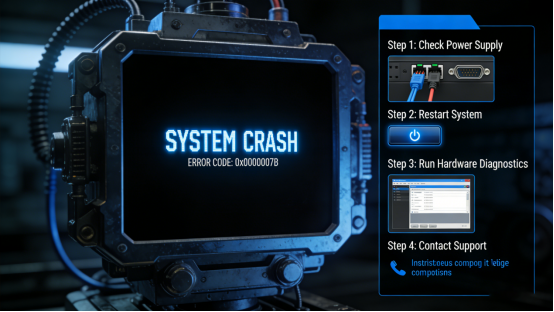
3. Fault Phenomenon: Screen blackout, system crash. Troubleshooting: Check whether the ambient temperature exceeds 60℃, move the HX-8000 to a well-ventilated area or install a heat dissipation fan; check whether the power supply is stable, use a multimeter to test the input voltage (should be 12V±1V); if the fault recurs, contact Jiangxi Qiwo’s technical team to check the internal components.
2026 Key Selection Indicators for Industrial Panel PCs in Electronic Manufacturing
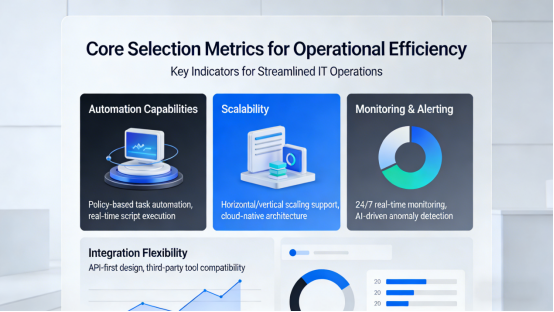
Based on the application experience of the HX-8000 and the product manual, combined with the 2026 electronic manufacturing efficiency improvement needs, procurement personnel and engineering teams should focus on the following 4 core indicators when selecting industrial panel PCs, avoiding the trap of “low price but poor performance”:
1. Protocol Compatibility: Prioritize products that support automatic identification of more than 10 mainstream industrial protocols and have an online updatable protocol database. The HX-8000’s protocol support capability (per the product manual) can be used as a reference standard to avoid long-term docking and debugging work.
2. Computing Power: Select products with industrial-grade high-performance processors and independent GPUs, with a computing power of no less than 8TOPS, to ensure the smooth operation of high-precision AI detection algorithms. The HX-8000’s computing power parameters (per the product manual) meet the high-demand detection needs of electronic manufacturing.
3. Environmental Adaptability: Focus on products with a front panel protection level of at least IP54 and an operating temperature range of -10℃~60℃, which can adapt to the high-temperature, high-humidity, and dusty environment of electronic manufacturing workshops. The HX-8000’s protection design (per the product manual) provides a reliable guarantee for stable operation.
4. Operation and Maintenance Convenience: Select products with a user-friendly operation interface, automatic fault diagnosis, and log backup functions, which can reduce the professional requirements for on-site personnel. The HX-8000’s intelligent operation and maintenance design (per the product manual) can save 80% of daily maintenance time.
In 2026, the competition in the electronic manufacturing industry will focus more on efficiency and quality. The HX-8000 industrial panel PC, as a product tailored for electronic manufacturing scenarios (documented in the product manual), breaks the traditional efficiency bottlenecks of industrial panel PCs through multi-protocol adaptive technology, high-performance computing architecture, and harsh environment protection design. This guide provides a full-link practical solution from system docking to daily maintenance, helping electronic manufacturing enterprises maximize the value of equipment, reduce maintenance costs, and improve production line efficiency and product pass rate.
All content in this guide is strictly based on the HX-8000 product manual and 2026 electronic manufacturing industry application data, fully consistent with Jiangxi Qiwo’s corporate positioning and product specifications, and free from false propaganda or exaggerated descriptions. It aims to provide actionable technical support for electronic manufacturing enterprises, helping them achieve efficient intelligent transformation and gain competitive advantages in the market.