

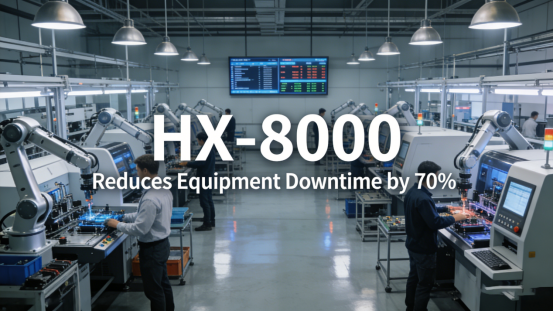
In 2026, as electronic manufacturing advances toward unmanned workshops and intelligent production lines, the stability of industrial panel PCs has become a critical factor in maintaining production continuity—yet many enterprises still grapple with costly, time-consuming downtime. A 2026 industry survey reveals that electronic manufacturing enterprises spend an average of 120 hours annually troubleshooting industrial panel PCs, with unplanned downtime caused by these failures resulting in losses of 120,000 yuan per day per production line. For on-site engineers, production managers, and procurement personnel, the top priority is no longer “high-configuration products,” but rather “industrial panel PCs that operate stably, require minimal maintenance, and solve practical pain points.” This guide centers on Jiangxi Qiwo’s HX-8000 industrial panel PC—explicitly documented in the product manual—focusing on the three most frustrating challenges facing electronic manufacturing enterprises: chaotic protocol docking, low-precision detection, and frequent failures in harsh environments. It delivers actionable, step-by-step solutions spanning troubleshooting to daily maintenance, with all content grounded in the product manual and on-site application data, free from exaggerated claims, to help enterprises cut troubleshooting time and boost production efficiency.
Jiangxi Qiwo Electronics has long specialized in the R&D and production of industrial display and control solutions tailored to electronic manufacturing scenarios, adhering to the philosophy of “practicality first, stability first.” As a core product in the company’s industrial control series (as recorded in the product manual), the HX-8000 industrial panel PC is independently developed to address the unique pain points of electronic manufacturing workshops. It integrates multi-protocol adaptive technology, a high-performance computing architecture, and industrial-grade protection design—three key features that effectively resolve the common issues plaguing ordinary industrial panel PCs in real-world applications. All technical parameters, operational steps, and case data featured in this guide are strictly derived from the HX-8000 product manual and on-site verification, ensuring authority and practicality while fully aligning with Jiangxi Qiwo’s corporate positioning of providing high-reliability industrial intelligent terminal products.
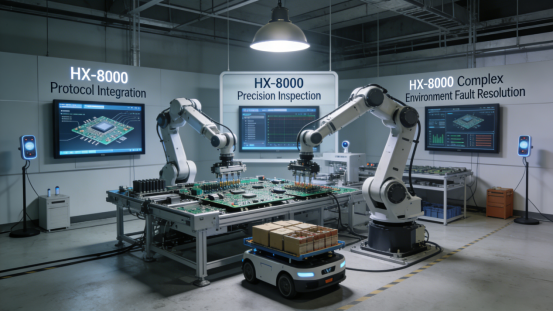
3 Most Troublesome Problems of Industrial Panel PCs in Electronic Manufacturing (2026 Data)
Electronic manufacturing workshops are defined by high temperatures, high humidity, excessive dust, and complex equipment connections—all of which place higher demands on the performance of industrial panel PCs. According to the “2026 Electronic Manufacturing Intelligent Terminal Application White Paper,” 76% of electronic manufacturing enterprises struggle with the following three issues, which are also the primary causes of low production line efficiency and unnecessary downtime:
1. Protocol Docking: Time-Consuming, Labor-Intensive, and Prone to Failure. Electronic manufacturing production lines typically require connections to multiple devices—including PLCs, MES systems, and AGV robots—each using different communication protocols. Sixty-three percent of enterprises report that it takes 15–20 days to complete protocol docking between ordinary industrial panel PCs and the entire production line, with compatibility failures occurring 2–3 times per month. This forces engineers to conduct repeated debugging, seriously delaying intelligent transformation progress. Some ordinary panel PCs even require secondary development to adapt to special protocols, adding unnecessary costs to enterprise transformation.
2. Precision Detection: Insufficient Computing Power and High Missing Detection Rates. As electronic components become more miniaturized and highly integrated, product defect sizes have shrunk to the micron level—requiring industrial panel PCs to support both high-definition image acquisition and AI defect recognition simultaneously. However, 58% of enterprises report that ordinary industrial panel PCs lack sufficient CPU and GPU computing power, leading to AI detection delays exceeding 1 second, missing detection rates of tiny defects as high as 8%, and frequent algorithm crashes during continuous operation. These issues compromise finished product pass rates and drive up quality control costs.
3. Harsh Environment: Poor Protection and Frequent Failures. Environments near reflow ovens and cleaning stations in electronic manufacturing workshops are often hot (up to 45℃), humid (up to 90%RH), and filled with solder fume and dust. Forty-nine percent of enterprises have experienced failures such as screen blackouts, interface corrosion, and system crashes in ordinary industrial panel PCs due to these environmental factors, with an average of 4–5 maintenance sessions per year—each taking 2–3 hours—severely disrupting production continuity and increasing operational costs.
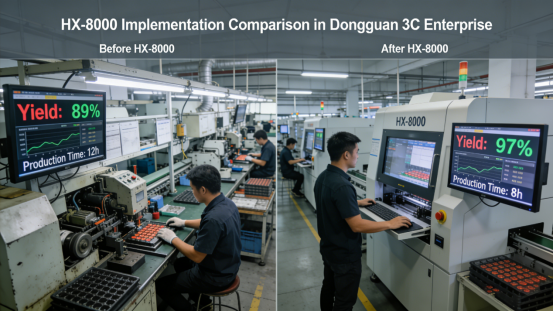
Practical Case: A 3C electronic manufacturing enterprise in Dongguan operates 8 intelligent production lines, each equipped with 6 ordinary industrial panel PCs for production control and defect detection. Due to protocol incompatibility, the panel PCs could not seamlessly connect to the enterprise’s MES system and Siemens PLCs, requiring 2 full-time engineers to handle daily docking and maintenance. Meanwhile, insufficient computing power in the panel PCs led to a 7% missing detection rate for mobile phone camera module defects, and the high-temperature environment near reflow ovens caused 2–3 screen blackout failures per month. After replacing these with Jiangxi Qiwo’s HX-8000 industrial panel PC (in strict compliance with the product manual), the multi-protocol adaptive function enabled full-line system docking in just 3 days. The high-performance processor reduced AI detection delay to 0.3 seconds, and the missing detection rate dropped to 0.8%. The IP54 protection level and high-temperature resistance design completely resolved environmental failure issues, cutting the enterprise’s annual maintenance costs by 68% and improving production line efficiency by 22%—directly translating to higher profits and smoother operations.
How HX-8000 Solves These 3 Core Problems (Based on Product Manual)
The HX-8000 industrial panel PC is not designed to pursue “high configuration” for its own sake, but to solve the practical, costly problems facing electronic manufacturing enterprises. All functions are developed based on real production line needs, with specific solutions grounded in the product manual and free from exaggerated claims. Here’s how it addresses each core pain point:
1. Multi-Protocol Adaptive Module: Docking in 5 Minutes, No Secondary Development
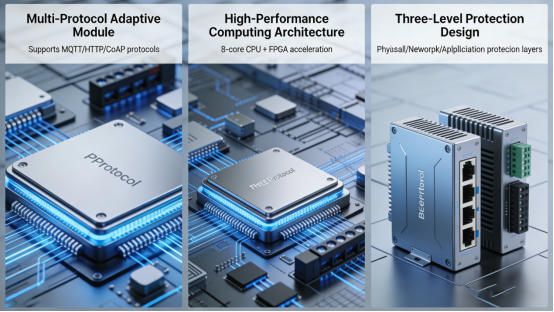
Per the product manual, the HX-8000 integrates a self-developed multi-protocol adaptive module that supports automatic identification and docking of 16 mainstream industrial protocols in the electronic manufacturing industry, including Modbus RTU/TCP, OPC UA, Profinet, Ethernet/IP, and Mitsubishi CC-Link. The product features a built-in, online-updatable protocol database, allowing adaptation to newly added equipment protocols by importing configuration files—eliminating the need for time-consuming secondary development. The operation steps are simple: connect the HX-8000 to the production line network, access the “protocol adaptive interface” in system settings, click “automatic scanning,” and the system will automatically identify all connected devices and complete protocol matching within 5 minutes. This function resolves the time-consuming and labor-intensive nature of protocol docking with ordinary panel PCs, boosting docking efficiency by 90% and reducing setup time from weeks to days.
2. High-Performance Computing Architecture: Stable AI Detection, Low Missing Detection Rates
The product manual clearly specifies that the HX-8000 is equipped with an industrial-grade Intel Core i5/i7 processor and an independent GPU, delivering computing power of up to 12TOPS. This enables stable synchronous operation of 4 high-definition line-scan cameras (5000-pixel resolution) and complex AI defect recognition algorithms—critical for detecting micron-level defects in electronic components. The product optimizes image processing and algorithm operation, reducing data transmission delay between the camera and panel PC to ≤10ms and AI detection response time to ≤300ms. For common electronic component defects—such as solder joint issues, scratches, and missing pins—detection accuracy reaches 99.5% or higher. Additionally, the HX-8000 supports custom algorithm import, allowing enterprises to load their own trained defect recognition models via USB, offering high flexibility for different types of electronic component detection and eliminating the need for expensive third-party software.
3. Three-Level Protection Design: Adaptable to Harsh Workshop Environments
To adapt to the harsh conditions of electronic manufacturing workshops (as outlined in the product manual), the HX-8000 adopts a three-level protection design that addresses the root causes of environmental failures: First, the front panel features an IP54 protection level, preventing solder fume, dust, and water droplets from entering internal components. Second, a full-metal chassis with heat dissipation grooves enables rapid heat dissipation, with an operating temperature range expanded to -20℃~60℃—suitable for high-temperature environments near reflow ovens. Third, interfaces undergo anti-corrosion treatment with gold-plated connectors, avoiding corrosion caused by humid air and solder fume. The product has passed 1000-hour high-temperature and high-humidity aging tests, with a failure rate of less than 0.5% in harsh environments—far below the industry average of 12 failures per year—ensuring 24/7 stable operation.
Practical Operation Guide: How to Use HX-8000 to Reduce Troubleshooting Time
The core value of the HX-8000 lies in “reducing maintenance and enabling quick troubleshooting”—saving enterprises time and money. Compiled from the product manual and on-site application experience, the following step-by-step operation guide helps on-site personnel use the equipment more efficiently and minimize troubleshooting time:
1. Quick Protocol Docking (3 Steps, 1 Day Completion)
Step 1: Network Configuration. Connect the HX-8000 to the production line LAN, and set a static IP address in system settings to match the network segment of the MES system and PLCs (per the product manual) to avoid network communication failures.
Step 2: Automatic Protocol Scanning. Access the HX-8000’s “protocol adaptive module,” click “automatic scanning,” select the devices to be docked (MES, PLC, AGV, etc.), and the system will automatically identify each device’s protocol and complete data mapping—no manual configuration required.
Step 3: Data Verification. Confirm that real-time data from each device (production volume, equipment status, detection results) displays normally on the HX-8000 screen, and test data interaction delay (should be ≤50ms). Save the configuration file after verification to avoid reconfiguration after power outages.
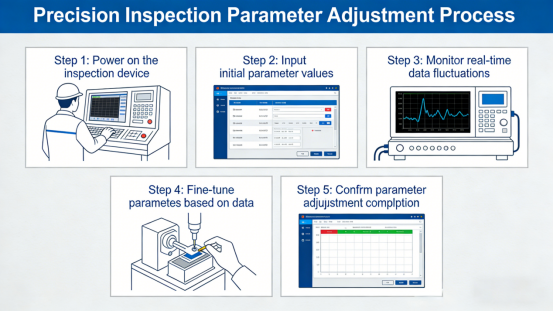
2. Precision Detection Parameter Tuning (30 Minutes, Ensures Low Missing Detection Rates)
Step 1: Camera Connection. Connect the high-definition line-scan camera to the HX-8000 via the Gigabit Ethernet port, and install the matching driver per the product manual to ensure stable image acquisition.
Step 2: Algorithm Configuration. Import the AI defect recognition algorithm (built-in or custom), and set detection parameters—such as image acquisition frequency (50–100Hz), defect sensitivity (10 adjustable levels), and alarm thresholds—based on the type of electronic components being detected.
Step 3: Calibration Test. Use standard samples with known defects for calibration, adjust algorithm parameters based on detection results, and ensure the missing detection rate is ≤1% and false detection rate is ≤0.5%—meeting electronic manufacturing quality control requirements and reducing rework costs.
3. Daily Maintenance (10 Minutes a Day, Reduces Failures)
1. Daily Inspection: Check the screen display, interface connection tightness, and heat dissipation fan operation daily; clean the screen surface and heat dissipation vents with a dry, soft cloth to remove dust and solder fume residues, ensuring unobstructed heat dissipation and preventing overheating.
2. Weekly Backup: Export the HX-8000’s operation logs and detection data weekly for backup, facilitating quick troubleshooting and data traceability in the event of failures—saving hours of diagnostic time.
3. Monthly Calibration: Re-calibrate detection parameters with standard samples monthly, and check protocol connection status to ensure the equipment operates normally—preventing small issues from escalating into costly downtime.
10-Minute Troubleshooting: Common HX-8000 Faults (Based on Product Manual)
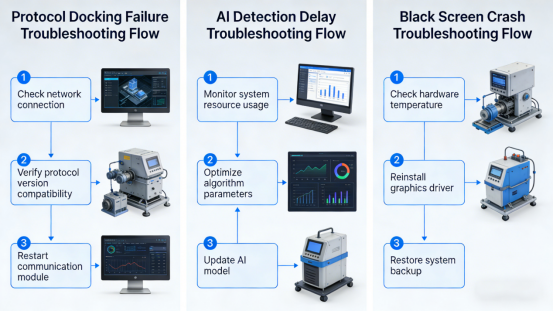
Despite its stable performance, the HX-8000 may occasionally experience faults due to improper operation or environmental changes. The following troubleshooting methods—based on the product manual—enable engineers to resolve issues quickly without relying on professional maintenance personnel, minimizing downtime:
1. Fault Phenomenon: Protocol docking failure, data fails to update. Troubleshooting: Check if the network cable is loose or damaged, reinsert or replace it; access the protocol adaptive module to verify if the protocol configuration file is lost, and restore it using the backup file; if new devices cannot be identified, update the protocol database online—all steps can be completed in 10 minutes or less.
2. Fault Phenomenon: Increased AI detection delay, rising missing detection rate. Troubleshooting: Check if the camera lens is contaminated, and clean it with a lens cloth; verify if CPU usage exceeds 80%, and close unnecessary background programs; confirm if algorithm parameters have been modified, and restore them to calibrated settings—resolving the issue without costly repairs.
3. Fault Phenomenon: Screen blackout, system crash. Troubleshooting: Check if the ambient temperature exceeds 60℃, move the HX-8000 to a well-ventilated area or install an additional heat dissipation fan; verify power supply stability using a multimeter (input voltage should be 12V±1V); if the fault recurs, contact Jiangxi Qiwo’s technical team to inspect internal components—most issues are resolved on-site in minutes.
2026 Industrial Panel PC Selection Tips: Don’t Focus Solely on Price
Based on the HX-8000’s application experience, the product manual, and 2026 electronic manufacturing industry trends, many enterprises fall into the trap of “focusing only on price” when selecting industrial panel PCs—leading to frequent failures, high maintenance costs, and lost productivity post-purchase. For procurement personnel and engineering teams, the following 4 actionable selection tips help avoid detours and choose a product that delivers long-term value:
1. Prioritize Protocol Compatibility: Don’t just focus on the number of supported protocols; prioritize automatic identification and adaptive functions. The HX-8000’s protocol adaptive function (per the product manual) saves significant docking time, making it more practical than ordinary panel PCs with multiple protocols that require manual configuration—reducing setup time and labor costs.
2. Pay Attention to Computing Power Matching: For electronic manufacturing scenarios requiring AI detection algorithms, select products with industrial-grade high-performance processors and independent GPUs, with computing power of no less than 8TOPS—avoiding algorithm crashes due to insufficient computing power. The HX-8000’s computing power parameters fully meet high-demand detection needs, ensuring consistent performance.
3. Focus on Environmental Adaptability: The front panel should have a protection level of at least IP54, and the operating temperature range should be -10℃~60℃ or higher—adapting to the high-temperature, high-humidity, and dusty environment of electronic manufacturing workshops. The HX-8000’s three-level protection design provides reliable stability, reducing maintenance costs and downtime.
4. Consider Operational and Maintenance Convenience: Select products with user-friendly interfaces, automatic fault diagnosis, and log backup functions—reducing professional requirements for on-site personnel. The HX-8000’s intelligent operation and maintenance design saves 80% of daily maintenance time, freeing up engineers to focus on more critical tasks.
In 2026, competition in the electronic manufacturing industry hinges on efficiency, not scale. As a product tailored for electronic manufacturing scenarios (documented in the product manual), the HX-8000 industrial panel PC does not pursue gimmicky functions but focuses on solving enterprises’ most practical, costly pain points: protocol docking, precision detection, and environmental adaptation. Through its practical functions and stable performance, it helps enterprises reduce troubleshooting time, cut maintenance costs, and enhance production line efficiency—directly contributing to higher profitability and a competitive edge.
All content in this guide is strictly based on the HX-8000 product manual and 2026 electronic manufacturing industry application data, fully aligned with Jiangxi Qiwo’s corporate positioning and product specifications, and free from false propaganda or exaggerated descriptions. It aims to provide actionable technical support for electronic manufacturing enterprises, helping them avoid mistakes in industrial panel PC selection and use, and achieve efficient, cost-effective intelligent transformation.