
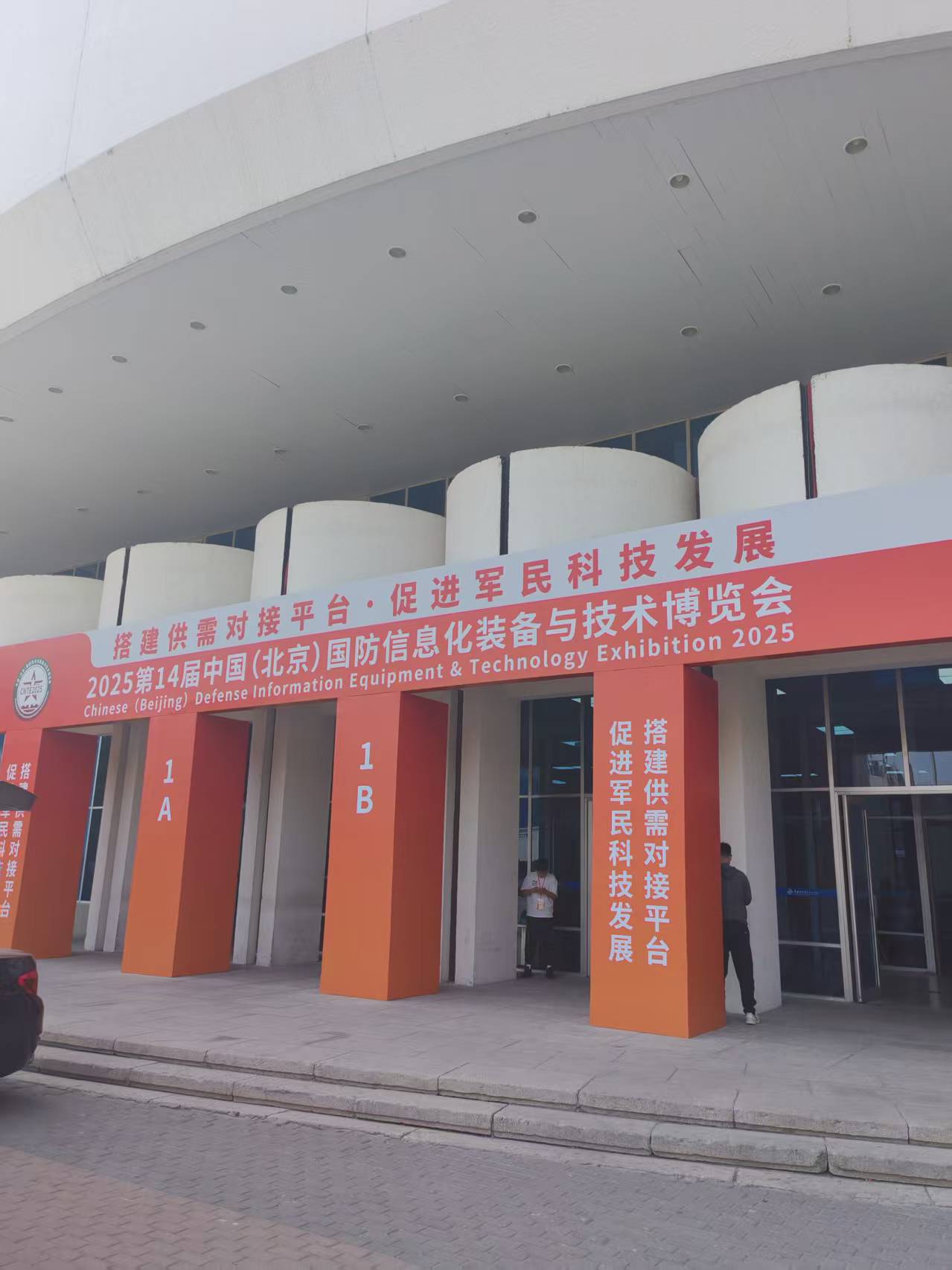

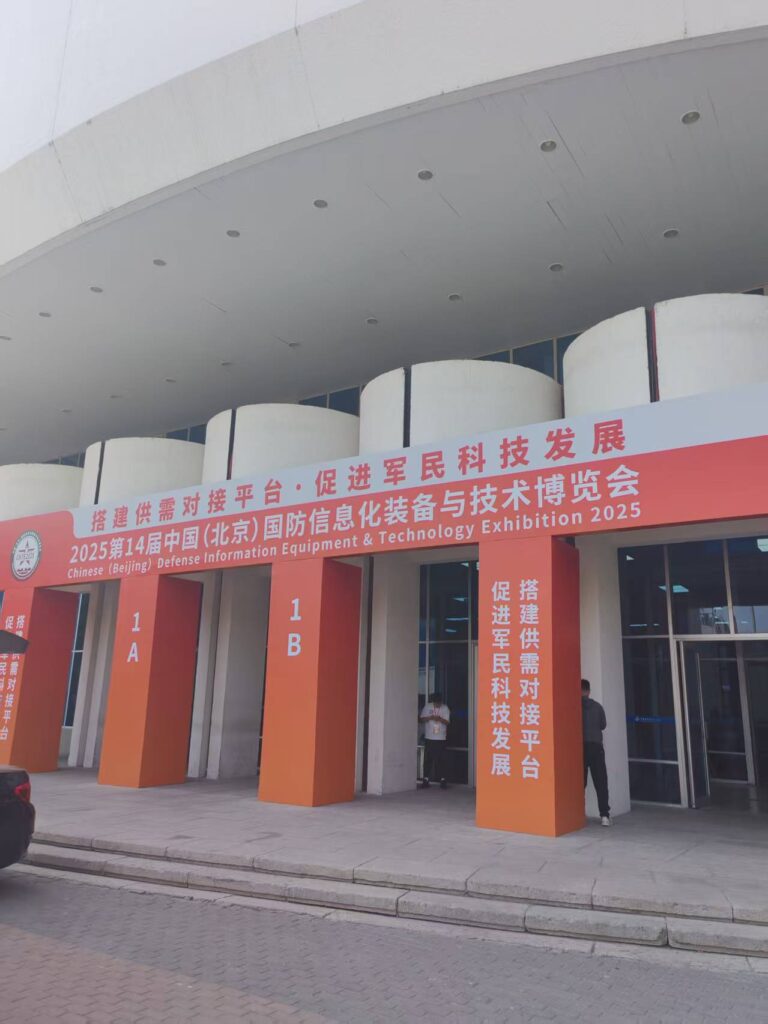
From June 12 to 14, 2025, the 14th China (Beijing) National Defense Information Equipment and Technology Expo (CNIIT 2025) will be held in Beijing. Themed “Digital Empowerment, Intelligently Leading the Future,” this expo will showcase the latest information technology equipment and technological innovations in the defense, military, and industrial automation sectors. Industrial touchscreens, as key components for intelligent control and human-computer interaction, have become a focal point.
An industrial touchscreen is an interactive terminal that integrates display and input functions. It operates by sensing signals from a finger or stylus to enable command input and interface operation. Its main structure consists of a display module, a touch-sensing layer, a control chip, and protective glass. Due to their intuitive operation, fast response, durability, and reliability, industrial touchscreens are widely used in a variety of fields, including industrial control systems, medical equipment, automotive electronics, military command terminals, and security systems, providing efficient solutions for visual operation in complex environments.
Currently, the mainstream touchscreen technologies are capacitive and resistive. Capacitive screens operate through the body’s electrical conductivity, offering advantages such as high light transmittance, multi-touch, and high sensitivity. They are suitable for applications requiring high precision and responsiveness, such as military control and smart cockpits. Resistive screens, on the other hand, utilize pressure sensing, allowing them to operate even when wearing gloves or using a stylus. They offer strong anti-interference capabilities and high stability, making them suitable for factory floors and outdoor equipment.
In terms of lamination technology, fully bonded (OCA) lamination is becoming the industry mainstream. This process uses optical adhesive to completely bond the touch panel to the display glass, effectively preventing dust and moisture from entering, reducing glare, and improving image contrast and clarity. It also enhances the screen’s dustproof, shockproof, and weather-resistant properties, making it ideal for applications in defense, field operations, and in-vehicle equipment.
Looking ahead, industrial touch technology is developing towards flexible displays, antimicrobial materials, and AI-powered intelligent interaction. Flexible screens make devices lighter and more customizable; antimicrobial glass materials effectively protect medical and public safety environments; and AI voice and gesture recognition technologies further enhance the intelligence and safety of human-machine collaboration.
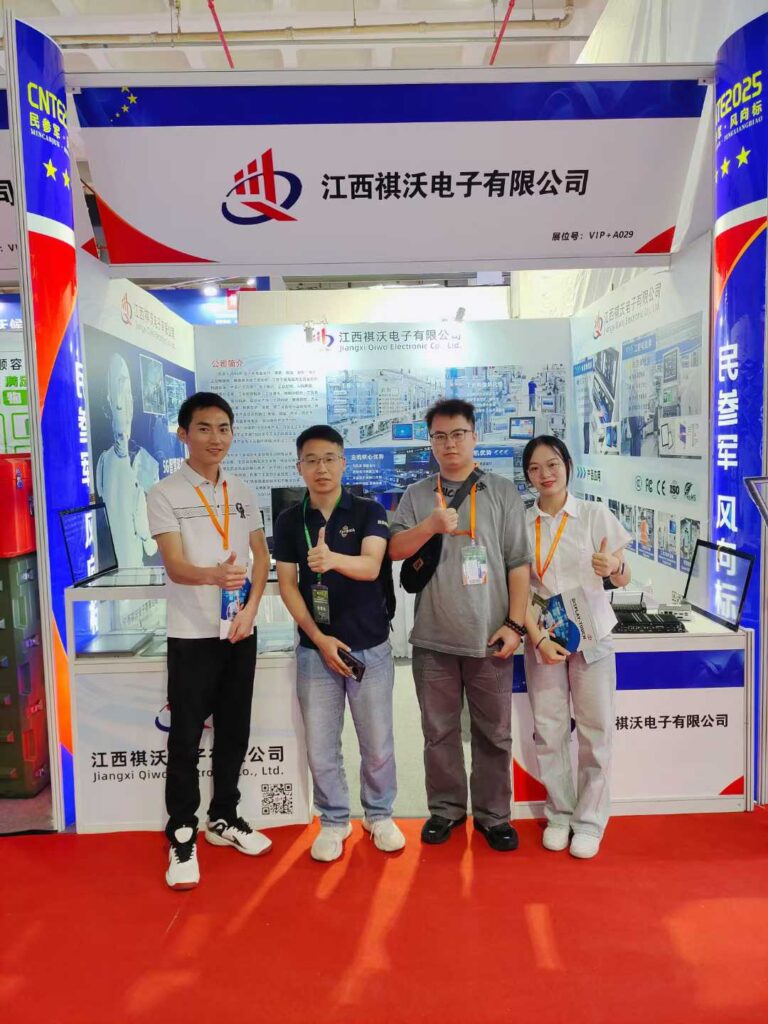
In the fields of defense informatization and industrial automation, touchscreens have become the core interface for system control and data exchange. From command and control terminals to unmanned equipment display platforms and intelligent logistics dispatch systems, touchscreen technology is providing solid support for efficient decision-making and safe operations. Furthermore, high-brightness display technology is particularly critical for equipment used in outdoor environments and under high-light conditions. High-brightness backlight modules, low-reflection coatings, and automatic light sensitivity adjustment ensure clear readability even in bright sunlight.
As defense informatization continues to advance, industrial touchscreens are driving equipment systems towards higher performance and greater user-friendliness with their intelligence, reliability, and adaptability. The Beijing Defense Informatization Exhibition will serve as a key platform for showcasing these innovative technologies and provide ample space for independent innovation in China’s industrial touchscreen industry.