

For US factory owners, warehouse managers, and industrial procurement teams, selecting the right industrial equipment directly impacts operational efficiency, energy costs, and long-term reliability. Unplanned downtime is a core pain point in industrial settings, and improper equipment selection is one of the primary causes of failures. This guide integrates US industrial market standards, industry selection logic, and real product cases (including specific parameter references) to break down key selection criteria, application scenarios, and pitfalls for embedded computers, industrial tablets, and touch screens. It aims to help smart factories, logistics hubs, and automated production lines accurately match their needs.
Core Selection Logic for US Industrial Equipment (General Standards, Applicable to All Brands)
Before selection, clarify the three core principles: “Compliance First, Scenario Adaptation, and Long-Term Controllability.” The following key factors directly determine whether equipment can be deployed in the US market:
- Compliance Certification Requirements: The US industrial market mandates Electromagnetic Compatibility (FCC certification) and safety standards (UL certification). Products without certification face market access restrictions and even fines. Prioritize dual-certified equipment to avoid post-installation compliance rectifications.
- Environmental Adaptability Matching: The US has extreme temperature variations (as low as -20℃ in northern winters and up to 70℃ in southern summers), with dust and humidity common in factory workshops. Select equipment with appropriate protection levels (IP65 or higher for dusty/humid environments) and operating temperature ranges (recommended -10℃~70℃ to fit most regions).
- Energy Efficiency & Consumption Control: The US Department of Energy (DOE) has clear regulations on industrial equipment energy efficiency. Low standby power consumption equipment not only reduces long-term operational costs but also qualifies for energy-saving subsidies in states like California and Texas. Recommend products with standby power consumption System Compatibility Verification: Mainstream US industrial systems include Siemens TIA Portal and Rockwell FactoryTalk, with voltage standards of 110V/220V. Verify that equipment supports universal protocols such as Modbus and Ethernet/IP during selection to avoid integration failures due to incompatible interfaces or voltage.
Detailed Selection Guide for Core Industrial Equipment (with Real Product Case References)
1. Embedded Computers & Industrial Control Hosts: Select Based on “Performance Requirements + Installation Scenarios”
Embedded computers are the core of industrial control. Selection requires balancing “performance, size, and expandability.” Below are market-leading products to illustrate selection logic:
Key Selection Criteria:
- Processor: Intel N-series (e.g., N95) for light-load scenarios (e.g., data collection); Core i3/i5/i7 series for medium-to-heavy-load scenarios (e.g., multi-device control);
- Storage & Memory: Industrial data storage demands are high. Recommend memory ≥8G, storage ≥128G, and support for dual storage interfaces (M.2 + SATA) for redundant backup;
- Interface Expandability: Must cover RS232/RS485 (for connecting sensors), USB (for external devices), and RJ45 (for network communication). 4G/5G expansion is required for special scenarios;
- Installation Method: Wall-mounted (size 00mm×200mm recommended) for space-constrained environments; desktop-mounted for tabletop placement.
Real Product Case References (Parameters for Direct Comparison):
- Light-Load Scenario Reference: A Brand UNO Ai Multi-Expansion Edge Computer
◦ Processor: Intel N95 (adapted for light-load edge computing);
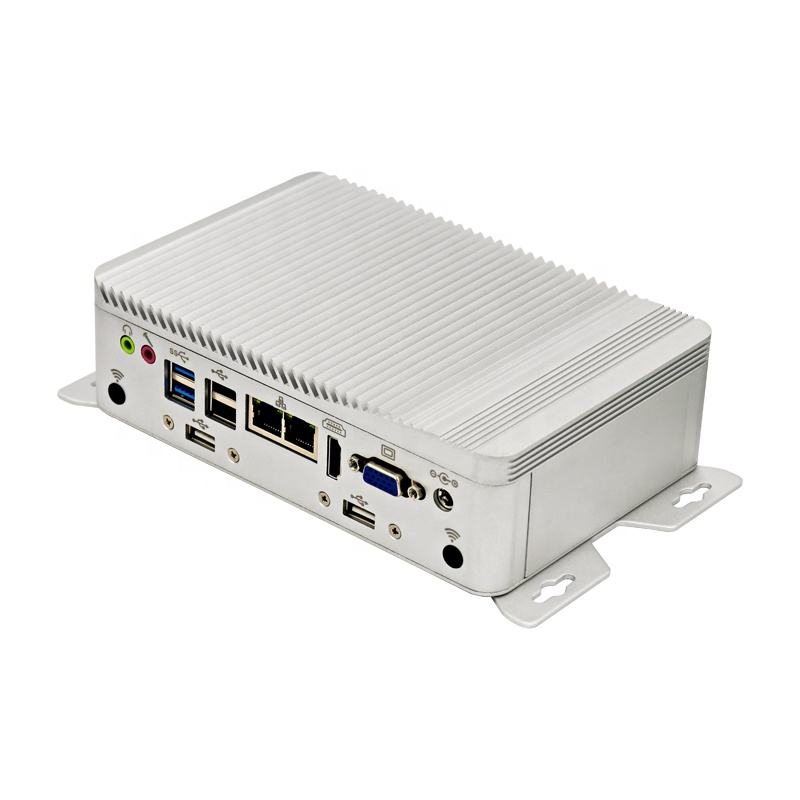
◦ Memory/Storage: 8G DDR4 + 256G M.2 SSD (meets basic data processing needs);
◦ Interfaces: 4×RS232 (2 configurable as RS485), 4×USB3.0, 1×HDMI + 1×DP (display output), supports Wifi/BT expansion;
◦ Advantages: Compact size (net weight ~1KG), operating temperature -10℃~60℃, ideal for space-constrained light-load scenarios (e.g., small warehouse data collection).
- Medium-to-Heavy-Load Scenario Reference: A Brand BPC-102H High-Performance Industrial Computer
◦ Processor: Intel Core i5 (max frequency 3.7GHz, adapted for multi-task control);
◦ Memory/Storage: 16G DDR4 + 512G M.2 NVME + 1TB SATA (dual storage redundancy);
◦ Interfaces: 2×RJ45 (Gigabit Ethernet), 6×RS232 (1 configurable as RS485), 6×USB (supports multiple external sensors);
◦ Advantages: Supports wall/desktop installation, dimensions 254mm×180.5mm×67mm, operating temperature -10℃~60℃, suitable for production line control and large-scale equipment data processing.
2. Industrial Tablets & All-in-Ones: Select Based on “Usage Environment + Interaction Needs”
Industrial tablets enable on-site human-machine interaction. Selection focuses on “screen quality, protection performance, and system adaptation.” Below are product cases for illustration:
Key Selection Criteria:
- Screen: High brightness (≥500cd/m²) for outdoor/strong light environments; high resolution (≥1920×1080) for precise operations; glove-touch support (common in industrial settings);
- Protection Level: IP65 or higher for dusty/workshops with liquid splashes;
- System Adaptation: Windows for broad industrial software compatibility; Android for lightweight operations (e.g., barcode scanning);
- Installation Method: Snap-on embedded installation for equipment integration; rugged tablets for mobile/anti-drop use.
Real Product Case References (Parameters for Direct Comparison):
- Fixed Installation Scenario Reference: A Brand H-Series 13.3-inch Industrial All-in-One
◦ Screen: 1920×1080 resolution, 350cd/m² brightness (adapted for indoor use);
◦ Configuration: 8G DDR4 + 256G SSD, supports Windows 10/Linux (compatible with industrial software);
◦ Protection/Temperature: IP65 rating, operating temperature -10℃~70℃ (adapted for dusty workshops);
◦ Installation: Snap-on embedded (recommended cutout size 249mm×180mm) to save space.
- Mobile Scenario Reference: A Brand W10N Rugged Tablet
◦ Screen: 10.1-inch, 700cd/m² high brightness (outdoor visible), supports glove/wet-hand touch;
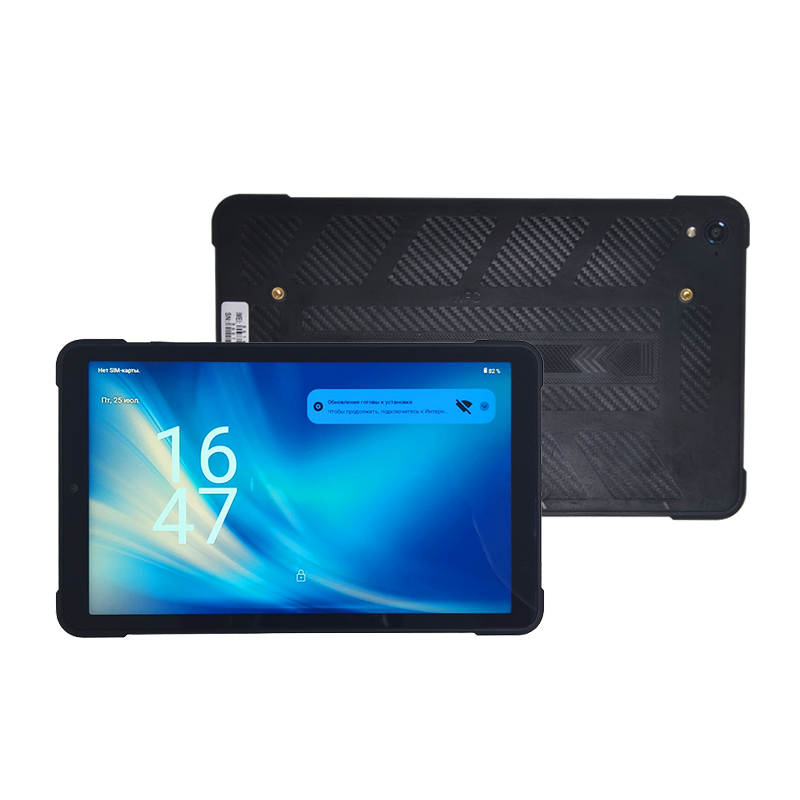
◦ Configuration: Intel N5100 + 8G + 256G (lightweight mobile operations);
◦ Protection/Temperature: IP68 rating, operating temperature -20℃~60℃ (adapted for harsh environments);
◦ Features: Supports 4G module, 1D/2D barcode scanning (adapted for logistics inventory and on-site inspections).
3. Touch Screens: Select Based on “Usage Environment + Touch Method”
Touch screens are critical for human-machine interaction. Selection requires distinguishing between “capacitive vs. resistive screens.” Detailed guide below:
Key Selection Criteria:
- Touch Type: Capacitive (fast response, multi-touch support) for dry/clean environments; resistive (strong anti-interference, glove/stylus support) for harsh environments (e.g., oil/dust);
- Durability: Surface hardness ≥6H (capacitive) or ≥2H (resistive) for high-frequency industrial operations; service life ≥1 million cycles;
- Transmittance & Response Time: Transmittance ≥80% (clear display), response time ≤20ms (smooth operation);
- Size Adaptation: 3.5″~7″ for small control terminals; 15″~22″ for large-scale monitoring.
Real Product Case References (Parameters for Direct Comparison):
- Capacitive Screen Reference: A Brand QW-DR 10.1-inch Capacitive Touch Screen
◦ Touch Type: Projected Capacitive (P-CAP), 10-point touch;
◦ Core Parameters: Transmittance ≥88%, response time ≤10ms, surface hardness 7H (durable for high-frequency use);
◦ Application Scenarios: Clean workshops, control rooms (dry environments).
• Resistive Screen Reference: A Brand QW-DZ 10.4-inch Resistive Touch Screen
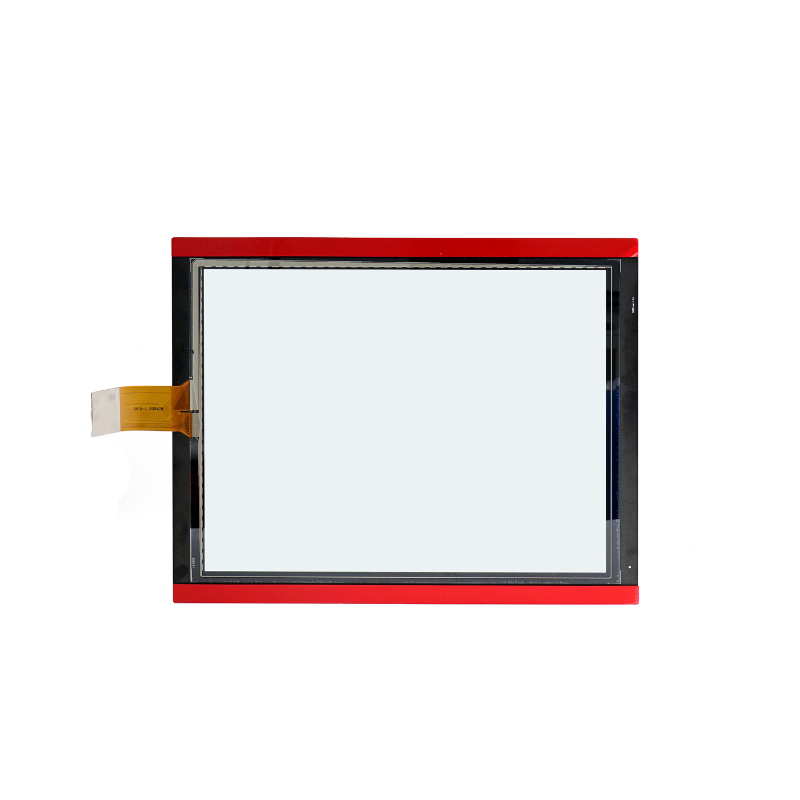
◦ Touch Type: 5-wire resistive, supports finger/glove/stylus input;
◦ Core Parameters: Transmittance ≥78%, response time ≤20ms, service life 3 million cycles;
◦ Application Scenarios: Oil-contaminated workshops, outdoor dusty environments (strong anti-interference).
US Market Selection Pitfall Avoidance Guide (Practical Tips)
- Certification Verification: Request FCC and UL certificates from suppliers. Verify authenticity via the FCC official website (https://apps.fcc.gov/) to avoid “fake certified” products;
- Sample Testing Process: For bulk purchases, test samples for 3 key aspects: ① Compatibility with existing systems; ② Stability in target environments (e.g., high temperature/dust); ③ Smooth interface connectivity (to avoid mass replacements later);
- After-Sales & Local Support: US industrial equipment requires high maintenance standards. Choose suppliers with local warehouses (e.g., California, Texas) or 24/7 technical support. Ensure spare parts delivery time ≤3 days;
- Cost Calculation Misconception: Avoid focusing solely on purchase price. Calculate total cost of ownership (energy consumption + maintenance + downtime losses). Example: A low-power device (0.5W standby) costs ~40 less annually than a high-power device (5W standby). For 100 devices, annual savings = 4,000.
US Industrial Procurement Selection Checklist (Ready-to-Use)
✅ Confirmed product has FCC and UL certifications (meets US market access requirements);
✅ Operating temperature range covers -10℃~70℃; protection level ≥IP65 (as needed);
✅ Supports Modbus/Ethernet/IP protocols and 110V/220V voltage;
✅ Memory ≥8G, storage ≥128G; interfaces meet actual expansion needs;
✅ Standby power consumption ies with DOE energy efficiency standards);
✅ Supplier provides US local after-sales support; spare parts delivery ≤3 days;
✅ Sample testing passed (compatibility and stability verified).
Industrial equipment selection is a long-term investment, with core priorities of “scenario adaptation + compliance + reliability.” This guide, integrated with US market needs and real product parameters, can be directly used for selection comparisons. For detailed product parameter sheets or customized solutions, contact professional suppliers for one-on-one advice to avoid costly blind purchases.
(Note: 部分 content may be AI-generated)