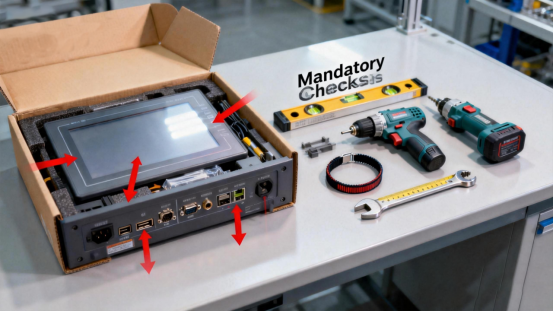

With Industry 4.0 and smart manufacturing leading the charge in U.S. industrial upgrades—fueled by initiatives like reshoring and the CHIPS Act—industrial-grade touch and control devices have evolved from optional components to mission-critical links between physical production floors and digital management systems. Today, these technologies are deeply integrated into core areas of American industrial operations, from Detroit’s auto plants to California’s agricultural tech hubs, as well as public services ranging from hospital diagnostics to K-12 classroom instruction. Key hardware, including industrial capacitive and resistive touchscreens, all-in-one industrial PCs (IPCs), rugged tablets, and edge computing devices, form the backbone of these solutions. Their ability to adapt to harsh environments, integrate with legacy U.S. industrial systems, and support real-time data processing has made their technological evolution and scenario-specific adaptability major indicators of an industry’s digital maturity. For U.S. manufacturers, logistics firms, and service providers, choosing the right industrial touch and control solutions isn’t just a technical decision—it’s a strategic move to stay competitive in a market that demands efficiency, compliance, and resilience.
I. Core Product Lineup: Meeting Diverse Industrial Needs
1. Touchscreens: Full-Scenario Coverage with Capacitive & Resistive Options
- Industrial Capacitive Touchscreens: Top picks like the QW-DR series leverage Projected Capacitive (PCAP) technology, a staple in U.S. industrial settings for its reliability and responsiveness. Available in sizes from 4.3″ to 32″—with 10″ to 21.5″ being the most popular choices for U.S. factory floors and control rooms—these touchscreens boast a response time of ≤10ms, ensuring near-instantaneous interaction even in high-pressure, fast-paced environments. They feature a light transmittance of ≥88%, delivering clear visibility in both dimly lit warehouses and sun-exposed outdoor stations common in states like Texas and Arizona. The 6H surface hardness rating means they can withstand accidental scratches from tools or debris, a critical feature in busy U.S. manufacturing facilities. With over 100 million touch cycles, these screens offer long-term durability, reducing replacement costs for American businesses. Their wide operating temperature range of -20℃ to 70℃ makes them suitable for extreme U.S. climates, from the freezing winters of the Northeast to the scorching summers of the Southwest. Ideal for high-frequency multi-touch applications—such as operator interfaces for automated assembly lines—and complex lighting environments, they’re widely deployed in U.S. industrial control terminals, medical diagnostic equipment, and smart factory command centers. What sets them apart for U.S. customers is their compatibility with popular industrial software platforms like Siemens TIA Portal and Rockwell FactoryTalk, ensuring seamless integration with existing systems.
- Industrial Resistive Touchscreens: Models like the QW-DZ series (3.5″ to 22″) rely on proven pressure-sensitive technology, a favorite in U.S. industries where workers wear thick protective gloves—such as mining, construction, and chemical processing. Unlike capacitive screens, they support inputs from fingers, gloves (including heavy rubber work gloves), styluses, and even conductive tools, eliminating the need for workers to remove PPE and boosting on-site safety and efficiency. Featuring a surface hardness of ≥2H, these screens can handle the rough-and-tumble of U.S. industrial sites, from Appalachian coal mines to Gulf Coast refineries. Their operating temperature range of -10℃ to 60℃ is well-suited for most indoor industrial environments, and their resistance to dust, oil, and moisture makes them a reliable choice for dirty or humid facilities like food processing plants in the Midwest. A key advantage for U.S. customers is their cost-effectiveness compared to capacitive alternatives, making them a practical option for budget-conscious small and medium-sized manufacturers (SMEs) across the country. They’re commonly used in mining equipment control panels, chemical plant valve controls, and agricultural machinery dashboards—applications where precision and durability matter more than multi-touch functionality.
- Selection Logic: Choosing between capacitive and resistive touchscreens for U.S. industrial applications boils down to three core factors: environment, input method, and functionality needs. For facilities with complex lighting (such as outdoor solar farms in California or high-brightness assembly lines in Michigan) or requirements for high-frequency multi-touch (like operator interfaces for robotics systems), capacitive screens are the clear choice. They offer superior visibility and responsiveness, critical for reducing operator fatigue during long shifts. For harsh, dusty environments (like Arizona’s copper mines) or scenarios where workers wear thick gloves (such as Pennsylvania’s steel mills), resistive screens are more practical, as they don’t rely on electrical conductivity to register inputs. It’s also important to consider integration with existing U.S. industrial systems—both screen types are designed to work with common protocols like Modbus and Ethernet/IP, but our technical team can provide on-site assessments to ensure compatibility. Both undergo rigorous quality control checks throughout production, including testing to meet U.S. military standards (MIL-STD) for shock and vibration, ensuring they hold up in the toughest American workplaces.
2. All-in-One Industrial PCs: Integrated Core Solutions
- H-Series (Industrial Automation Standard): The H-Series all-in-one industrial PCs are workhorses of the U.S. manufacturing sector, with sizes ranging from 10.1″ to 21.5″—a sweet spot for most factory control stations and warehouse management terminals. Featuring Full HD resolution (1920×1080) and 350cd/m² brightness, they deliver crisp, easy-to-read visuals even in high-glare environments like metal fabrication shops in Ohio. Compatible with both Intel Core and ARM Cortex processors (with 4GB to 64GB RAM options), they can handle everything from basic data logging to complex real-time analytics, making them versatile enough for small job shops and large-scale automotive plants alike. They support Windows 10 IoT, Linux, and Android operating systems, ensuring seamless integration with popular U.S. industrial software like Rockwell Automation’s FactoryTalk and GE’s Predix. One of their standout features for U.S. customers is the fanless cooling design, which eliminates moving parts, reduces dust intake, and lowers maintenance costs—critical for 24/7 operation in facilities like Texas’s oil refineries and Midwest auto plants. They offer multiple mounting options, including wall-mount, panel-mount, and VESA-mount, adapting to the limited space in tight control rooms and production line enclosures. Perfect for automated production lines in major U.S. manufacturing hubs like the Midwest (Michigan, Ohio) and Texas, as well as smart warehouses operated by top U.S. logistics and retail firms (including Amazon Fulfillment Centers and Walmart Distribution Hubs), the H-Series has a proven track record of reducing downtime by 30% on average for U.S. industrial customers.
- X86 Embedded All-in-Ones: Including sub-series like IPRO, these compact all-in-ones are designed for lightweight IIoT (Industrial Internet of Things) control scenarios where space is at a premium— a common challenge in U.S. legacy factories and outdoor monitoring applications. Measuring just 20-30mm thin and available in 7″ to 21.5″ sizes, they can be embedded into tight spaces like conveyor belt control panels, outdoor sensor enclosures, and small-scale processing equipment. Their rich interface options—including USB 3.0, Ethernet, HDMI, and serial ports (RS-232/485)—make them easy to connect to sensors, cameras, and other IIoT devices, supporting protocols like MQTT and OPC UA that are standard in the U.S. industrial sector. With an operating temperature range of -10℃ to 60℃, they’re built to withstand the extreme weather conditions common across the U.S., from the freezing winters of the Northeast to the hot, dry summers of the Southwest. Ideal for outdoor environmental monitoring stations across California’s agricultural regions—where they track soil moisture, temperature, and sunlight for precision farming—and cold chain logistics facilities in the Northeast U.S. (such as Boston’s seafood warehouses and New York’s pharmaceutical distribution centers), these devices ensure real-time data collection and transmission even in harsh conditions. For U.S. customers, their low power consumption (as low as 15W) is a major benefit, reducing energy costs for remote applications where power access is limited, like solar-powered agricultural monitoring stations.
- HX-PA Series Education & Conference All-in-Ones: Designed to meet the needs of U.S. education and business environments, the HX-PA series ranges from 55″ to 98″—sizes that fit everything from small classroom breakouts to large university lecture halls and corporate boardrooms. Featuring 4K UHD resolution (3840×2160), these displays deliver stunningly clear visuals, making them ideal for showcasing detailed educational content (like engineering diagrams in community college courses) or high-resolution business presentations (such as quarterly reports in Chicago’s financial district). The 10-point infrared touch technology supports multi-user interaction, allowing students to collaborate on group projects or meeting attendees to annotate documents in real time— a key feature for modern U.S. learning and workspaces. They support dual-system switching (Windows and Android), giving users the flexibility to run educational software like Canvas or Zoom for remote learning, as well as business tools like Microsoft Teams and Google Workspace. For U.S. K-12 schools and universities, these all-in-ones are compliant with FCC regulations and meet the accessibility standards required by the Americans with Disabilities Act (ADA), ensuring they’re usable by all students and staff. They also come with built-in speakers and microphones, simplifying setup for hybrid learning and virtual meetings— a necessity in post-pandemic U.S. education and business settings. Popular in California’s Silicon Valley schools for tech-focused courses and Texas’s corporate headquarters for executive meetings, the HX-PA series balances performance, usability, and affordability for U.S. educational and business customers.
3. Rugged Tablets & Specialized Devices
- Rugged Tablets: Built to thrive in the toughest U.S. environments, models like the W80N/W10N series feature IP65/IP68 protection ratings—meaning they’re dust-tight and can be submerged in water (up to 1.5 meters for 30 minutes), making them ideal for outdoor and wet workspaces. Available in 8″ to 13.3″ sizes, they strike the perfect balance between portability and screen real estate, allowing workers to carry them easily while still viewing detailed data like maintenance checklists or inventory logs. A key feature for U.S. industrial workers is the glove/wet-touch operation—whether wearing heavy rubber gloves in a Seattle seafood processing plant or working in the rain on a construction site in Florida, these tablets register inputs reliably. Equipped with 4G/5G connectivity (compatible with U.S. carriers like Verizon, AT&T, and T-Mobile) and WiFi/Bluetooth, they keep workers connected even in remote areas like Wyoming’s oil fields or Montana’s logging camps. The long battery life (up to 12 hours of continuous use)
ensures they last through a full shift without needing a charge, a critical benefit for workers on the go. These rugged tablets are built for harsh environments—from coal mines in Appalachia (where they withstand dust and vibration) and chemical plants along the Gulf Coast (resistant to corrosive fumes) to last-mile delivery fleets in urban U.S. areas (navigating busy streets and inclement weather). U.S. logistics firms like FedEx and UPS rely on them for real-time package tracking, while construction companies use them for on-site project management, reducing paperwork and improving efficiency by up to 40%.
- Specialized Devices: Our lineup of specialized devices is tailored to meet niche needs in the U.S. commercial and industrial sectors, with each product designed to address specific pain points. The HX-LS series digital signage (43″ to 65″) is a favorite among U.S. retailers, restaurants, and public spaces (like airports and shopping malls in Atlanta and Los Angeles). Featuring remote management capabilities through a cloud-based platform (hosted on U.S.-based servers for compliance with data privacy laws like CCPA), businesses can update content across multiple locations in real time—whether promoting a new product at a chain store or displaying flight information at an airport.
The TS/A series POS terminals (15″ to 15.6″) are built for the U.S. retail and food service industries, with integrated checkout functions that support credit cards, mobile payments (Apple Pay, Google Pay), and even EBT for grocery stores. They’re compliant with PCI DSS (Payment Card Industry Data Security Standard), ensuring secure transactions for U.S. customers, and integrate with popular POS software like Square and Toast. The HX-GG series smart displays (15.6″ to 27″) feature wide-view IPS screens, making them ideal for U.S. industrial control rooms and commercial lobbies where multiple people need to view content from different angles. With high contrast ratios and color accuracy, they’re also used in design studios and engineering firms in New York and San Francisco for showcasing detailed blueprints and prototypes. Each of these specialized devices is built with U.S. industry standards in mind, ensuring compatibility, compliance, and reliability for American businesses.
4. Industrial PCs & Edge Computers: Computing Power Backbone
- BPC-102H Series Industrial PCs: The BPC-102H series is the backbone of computing power for U.S. industrial automation and data collection centers, designed to handle heavy workloads with reliability and efficiency. Supporting multiple generations of Intel processors (from 8th Gen Core i3/i5/i7 to 12th Gen), these IPCs can be configured with up to 128GB RAM and dual storage interfaces (SSD + HDD), providing ample processing power and storage for large-scale data logging, real-time analytics, and complex control algorithms. Their rich I/O ports—including multiple Ethernet ports (Gigabit and 10Gigabit options), USB 3.2 ports, serial ports, and GPIO—make them easy to connect to a wide range of U.S. industrial equipment, from PLCs (Programmable Logic Controllers) to sensors and actuators.
Built to withstand the rigors of industrial environments, they’re shock, dust, and moisture resistant, with an operating temperature range of -10℃ to 60℃—suitable for 24/7 operation in U.S. manufacturing plants, power generation facilities, and data centers. A key benefit for U.S. customers is their compliance with U.S. electrical standards (UL 61010) and electromagnetic compatibility (EMC) regulations (FCC Part 15), ensuring they don’t interfere with other equipment and meet safety requirements. They’re commonly used in industrial automation control systems for U.S. steel mills in Pennsylvania, data collection centers for renewable energy projects in Texas (wind and solar), and process control systems for pharmaceutical manufacturers in New Jersey—applications where downtime is not an option. With a mean time between failures (MTBF) of over 100,000 hours, the BPC-102H series delivers the reliability U.S. industrial customers demand.
- UNO Ai Edge Computers: As edge computing becomes increasingly critical in the U.S. industrial sector—driven by the need for real-time data processing and reduced latency—our UNO Ai Edge Computers are designed to deliver high performance in a compact, low-power package. Powered by Intel N95 processors (10nm technology), these units offer a balance of power and efficiency, with 4GB to 16GB RAM options to handle AI-driven tasks like predictive maintenance and quality inspection. They support multi-wireless connectivity (WiFi 6, Bluetooth 5.2, 4G/5G) and full wired interfaces, making them easy to integrate into existing U.S. IIoT networks.
Designed for edge computing scenarios like production line endpoints in Detroit’s auto manufacturing plants—where they analyze real-time sensor data to detect equipment anomalies before they cause downtime—and warehouse nodes for e-commerce fulfillment centers in the Southeast U.S. (such as Atlanta’s Amazon FBA facilities), these computers enable real-time local data processing that reduces reliance on cloud connectivity. For U.S. customers, their low power consumption (as low as 10W) is a major advantage, especially for remote applications like solar-powered agricultural monitoring stations in California’s Central Valley. They’re also compliant with U.S. edge computing standards and can run popular AI frameworks like TensorFlow and PyTorch, allowing U.S. manufacturers to implement custom AI models for their specific production needs. By processing data locally, the UNO Ai Edge Computers help U.S. businesses reduce cloud storage costs, improve response times, and enhance data security—critical factors in today’s industrial landscape.
II. Core Competitive Advantages
1. Industrial-Grade Quality Control
At the heart of our product reliability is a rigorous industrial-grade quality control process designed to meet and exceed U.S. industry standards. All products are manufactured in Class 10,000/Class 100 cleanrooms—environments where the number of airborne particles is strictly controlled (fewer than 10,000 particles of 0.5 microns or larger per cubic foot in Class 10,000 rooms)—ensuring that dust and debris don’t compromise sensitive components. Our automated production lines, equipped with advanced vision inspection systems, ensure consistent quality across every unit, reducing human error and increasing production efficiency. Each product undergoes 8 full-cycle quality inspections, covering every stage of production from raw materials to finished goods. These inspections include high/low temperature testing (exposing units to -40℃ to 85℃ for extended periods to simulate extreme U.S. climates), aging testing (running units continuously for 72 hours to ensure long-term reliability), vibration testing (meeting MIL-STD-810G standards for U.S. military and industrial applications), shock testing, dust testing, moisture testing, salt spray testing (for corrosion resistance in coastal areas like Florida and the Pacific Northwest), and electromagnetic compatibility (EMC) testing (to comply with FCC Part 15 regulations). Our products are certified to ISO9001 (quality management systems), ISO13485 (medical device quality standards), and UL certifications—including UL 61010 for industrial control equipment and UL 60601 for medical devices—critical for compliance with U.S. industrial and medical equipment safety standards. These certifications require rigorous testing and documentation, giving U.S. customers confidence that our products are safe, reliable, and built to last. Whether deployed in a harsh mining environment or a sterile hospital setting, our products deliver consistent performance, backed by our uncompromising quality control process.
2. End-to-End Customization Services
We understand that every U.S. industrial application is unique, which is why we offer end-to-end customization services tailored to meet the specific needs of American businesses. Our customization process covers four seamless stages, designed to deliver solutions that align perfectly with your requirements. First, we conduct in-depth needs communication with your team—either on-site at your facility (whether in Detroit, Houston, or San Francisco) or via virtual meetings—to understand your application, environment, integration needs, and budget. Our U.S.-based technical specialists, with years of experience in industrial automation, healthcare, retail, and other sectors, work closely with you to identify pain points and define clear requirements. Second, our engineering team develops a custom solution design, including 3D models and technical specifications, to ensure the product meets your exact dimensions, performance, and interface needs. For example, we recently customized a 17″ capacitive touchscreen for a U.S. aerospace manufacturer in Washington, modifying the bezel design to fit into their tight control panel and adding specialized connectors to integrate with their legacy avionics systems. Third, we build and test a prototype, conducting rigorous performance and compatibility testing in our U.S.-based lab (located in Chicago) to ensure it meets your requirements and U.S. industry standards. We provide you with the prototype for on-site testing, gathering your feedback to make any necessary adjustments. Finally, we move to mass production and delivery, with flexible lead times to meet your project timeline—including expedited delivery options for urgent U.S. customer needs. Our customization capabilities include adjusting size and form factor, modifying touch technology (capacitive, resistive, or infrared), adding specialized interfaces (like Ethernet/IP or CAN bus for U.S. automotive applications), enhancing protection performance (up to IP68), and integrating custom software or firmware. Whether you need a one-of-a-kind prototype or a large-scale custom production run, our end-to-end customization services solve the unique pain points of U.S. industrial settings, ensuring you get a solution that’s built for your business.
3. Global Service Network
We’re committed to providing exceptional full-lifecycle support tailored specifically to U.S. customers, with a network designed to deliver fast, reliable service wherever your business is located. Our pre-sales consultation process includes working with local technical specialists—based in key U.S. industrial hubs like Chicago (Midwest), Houston (Gulf Coast), Los Angeles (West Coast), and Atlanta (Southeast)—who have deep knowledge of regional industry needs and U.S. standards. They can conduct on-site assessments of your facility to recommend the right products and customization options, ensuring you make an informed decision. During the sales process, we provide on-site installation, commissioning, and operation training for your team, ensuring your new equipment is set up correctly and your staff is comfortable using it. Our training sessions are available in both English and Spanish, reflecting the diverse workforce of U.S. industrial facilities. Our after-sales support is where we truly stand out: we offer a 2-hour response time for all customer inquiries, with a team of U.S.-based technical support engineers available 24/7 via phone, email, or video call for remote troubleshooting. For issues that require on-site support, we can dispatch a technician to your facility within 24-48 hours in most U.S. metropolitan areas, and 48-72 hours in rural areas—critical for minimizing downtime in time-sensitive industries like manufacturing and healthcare. We also provide regular software upgrades to keep your systems aligned with evolving U.S. industry standards and regulations, such as new FDA requirements for medical devices or updated FCC EMC standards. Our U.S. service centers, located in Chicago, Houston, and Los Angeles, stock a wide range of replacement parts to ensure fast repairs. Additionally, we offer extended warranty options (up to 5 years) for U.S. customers, providing peace of mind and protecting your investment. Whether you’re a small business in Iowa or a large corporation in New York, our global service network is focused on supporting your success with local expertise and responsive service.
III. Cross-Industry Applications
- Industrial Automation: Major U.S. auto parts manufacturers—including a leading supplier to Ford and General Motors with facilities in Detroit and the Midwest—rely on our H-series all-in-ones paired with QW-DR capacitive touchscreens to build comprehensive production line monitoring systems. These systems integrate with the manufacturers’ existing PLCs and SCADA (Supervisory Control and Data Acquisition) systems, providing real-time visibility into every stage of production, from stamping to assembly. Operators use the multi-touch screens to access real-time data visualizations, including production rates, defect counts, and equipment performance metrics. The system’s built-in anomaly detection alerts operators to issues like equipment overheating or misalignment before they cause costly downtime. Since implementing our solution, this auto parts supplier has reduced unplanned downtime by 35%, improved production efficiency by 22%, and lowered defect rates from 2.1% to 0.8%—critical for meeting the high-quality standards of the U.S. automotive industry and staying competitive in the global market. Our solutions are also used in other U.S. industrial automation applications, including robotics control in Ohio’s metal fabrication plants, packaging line monitoring in Pennsylvania’s food processing facilities, and assembly line control in California’s electronics factories. In each case, our products deliver the reliability, compatibility, and performance needed to keep U.S. manufacturing operations running smoothly.
- Smart Healthcare: U.S. medical device manufacturers, including a leading producer of portable diagnostic equipment based in Minnesota, integrate our QW-DZ resistive touchscreens into their FDA-compliant portable point-of-care devices. These devices—used for everything from blood glucose monitoring in rural clinics to electrocardiogram (ECG) testing in emergency medical services (EMS) vehicles—require precise, reliable touch input even when healthcare workers are wearing thick PPE (personal protective equipment), such as nitrile gloves or gowns. Our resistive touchscreens are designed to register inputs through gloves with minimal pressure, ensuring accurate operation in high-stress medical environments. The screens are also sealed to prevent contamination from liquids (like disinfectants and bodily fluids), a critical feature for maintaining sterile conditions in hospitals and clinics. The FDA-compliant design of our touchscreens includes rigorous testing for biocompatibility and electromagnetic interference (to avoid interfering with other medical equipment like MRI machines). A major U.S. hospital system in Texas recently adopted these portable diagnostic devices, reporting that the glove-friendly touchscreens reduced the time needed to perform tests by 15%, allowing healthcare workers to see more patients. Our touchscreens are also used in other U.S. healthcare applications, including hospital bed control panels, medical imaging workstations, and pharmacy automation systems—each time delivering the precision, reliability, and compliance needed in the healthcare industry.
- Smart Retail: National grocery chains and regional fresh food retailers across the U.S.—including a major Midwest grocery chain with over 200 stores—use our TS-series POS terminals for integrated weighing and checkout. These all-in-one solutions combine a 15.6″ touchscreen, built-in scale, and secure payment processing, making them ideal for fresh food departments where items need to be weighed and priced before checkout. The POS terminals support a wide range of payment options, including credit cards, debit cards, mobile payments (Apple Pay, Google Pay), and EBT (Electronic Benefits Transfer), catering to the diverse payment preferences of U.S. customers. They integrate seamlessly with the retailer’s inventory management system, automatically updating stock levels as items are sold and alerting staff when products are running low—reducing out-of-stock situations by 28% for the Midwest chain. During peak hours (like weekends and holidays), the fast response time of the touchscreen and streamlined checkout process reduce wait times by an average of 2 minutes per customer, significantly enhancing the shopping experience. The POS terminals are also compliant with PCI DSS standards, ensuring that customer payment data is secure. Other U.S. retail applications for our products include digital signage in California’s shopping malls (promoting sales and events), self-checkout kiosks in Florida’s convenience stores, and inventory management tablets in New York’s clothing boutiques. In each case, our solutions help U.S. retailers improve efficiency, enhance customer satisfaction, and drive sales.
- Transportation & Logistics: Leading U.S. logistics and supply chain firms—including a major e-commerce fulfillment provider with facilities across the Southeast U.S.—utilize our W80N rugged tablets for real-time barcode scanning of shipments and warehouse inventory tracking. These tablets are built to withstand the demands of busy distribution centers, where they’re dropped, bumped, and exposed to dust and debris on a daily basis. The IP68 protection rating ensures they’re resistant to water and dust, while the glove-friendly touchscreen allows workers to scan barcodes even when wearing thermal gloves in cold chain warehouses. Equipped with 5G connectivity (compatible with U.S. carriers like Verizon), the tablets transmit scan data to the company’s cloud-based inventory management system in real time, ensuring accurate stock levels and reducing picking errors by 32%. The tablets also integrate with the company’s warehouse management software (WMS), providing workers with real-time picking lists and route optimization suggestions—improving order fulfillment efficiency by 25%. The durability of the W80N tablets has been proven in diverse U.S. climates, from the freezing winters of the Northeast (where they continue to function in sub-zero temperatures) to the hot, humid summers of the Southeast (resisting heat and moisture). Other U.S. transportation and logistics applications include delivery route optimization for last-mile delivery fleets in urban areas like Chicago and Los Angeles, and cargo tracking for shipping companies in coastal ports like Houston and Seattle. Our rugged tablets and edge computing devices help U.S. logistics firms stay competitive in a fast-paced industry by improving efficiency, accuracy, and reliability.
- Education & Conferences: K-12 school districts and higher education institutions across the U.S.—including a large school district in California with over 50 schools and a community college in Ohio—have adopted our HX-PA series all-in-ones for smart classroom setups. These systems have become a cornerstone of modern U.S. education, enabling interactive learning that engages students and supports diverse learning styles. In K-12 classrooms, teachers use the 4K touchscreens to display educational content (like interactive science simulations and historical maps), annotate lessons in real time, and connect with students’ individual tablets for formative assessments. The dual-system switching allows teachers to run both Windows-based educational software (like Microsoft 365 Education) and Android-based apps (like Kahoot! for interactive quizzes), providing flexibility in lesson planning. During the pandemic, the all-in-ones proved invaluable for hybrid learning, allowing teachers to connect with remote students via Zoom while teaching in-person students simultaneously. At the Ohio community college, the HX-PA all-in-ones are used in technical training programs (like welding and automotive technology), where instructors display detailed diagrams and videos to help students learn complex skills. The wide-view IPS screens ensure that every student in the classroom can see the content clearly, even from the back rows. The all-in-ones are compliant with ADA accessibility standards, including support for screen readers and closed captioning, ensuring that all students have equal access to educational content. Beyond classrooms, the HX-PA series is used in university lecture halls and corporate conference rooms across the U.S., facilitating collaborative meetings and professional development sessions. Our education and conference solutions help U.S. institutions adapt to the changing needs of learning and work, fostering engagement and collaboration.
IV. Industry Trends & Key Selection Criteria
- Industry Trends: In the U.S. market, devices are evolving toward intelligence (integrating AI algorithms for predictive maintenance), modularization, low power consumption, and high integration. Key focus areas include supporting reshoring initiatives (U.S. manufacturing回流) and meeting the strict energy efficiency standards of the U.S. Department of Energy, along with precision adaptation to niche scenarios like aerospace component manufacturing and renewable energy monitoring.
- Key Selection Criteria: Align with scenario conditions (temperature, dust), functional requirements (touch method, computing power, interfaces), and operational needs (24/7 operation, protection rating) to achieve precise matching between scenario and technical parameters.