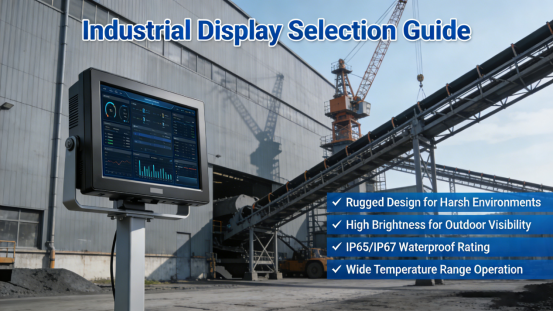

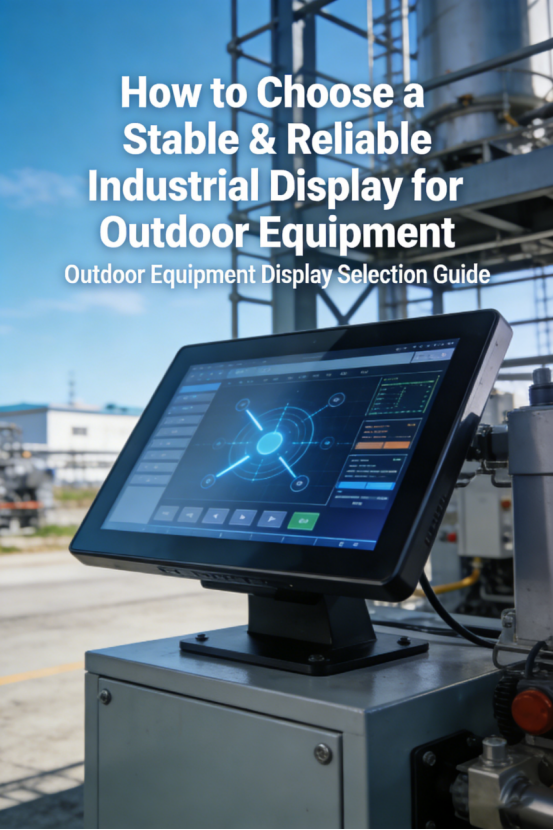
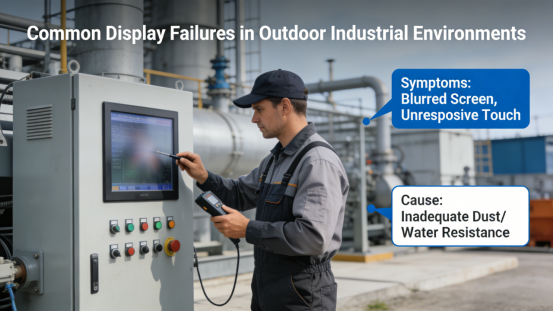
When building or upgrading outdoor industrial equipment, one key component is often overlooked—and it directly impacts overall operational stability: the industrial display. Outdoor environments are harsh: direct sunlight, extreme temperature fluctuations, dust, and high humidity. Standard consumer-grade displays simply can’t adapt to these conditions, leading to frustrating issues like blurred screens, unresponsive touch, shortened service life, and frequent equipment downtime.
For engineers, purchasers, and equipment builders, choosing the right industrial display isn’t about brand or price—it’s about finding a solution that solves real on-site problems. This article provides objective, practical guidance based on industrial product standards and real application experience, helping readers make informed choices even without deep professional knowledge.
1. Brightness & Anti-Glare: Readable Even in Direct Sunlight
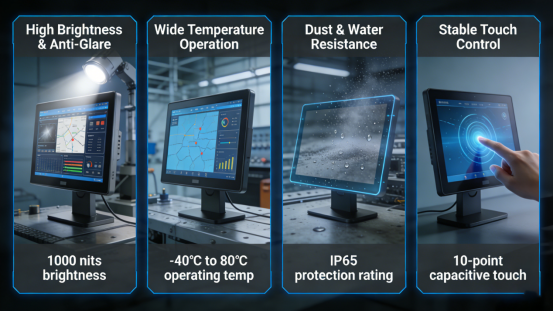
Outdoor equipment operates in strong, direct sunlight—and standard displays often become completely unreadable under these conditions, hindering operations and posing safety risks. A practical industrial display for outdoor use must prioritizehigh brightness and anti-glare performance, ensuring clear visibility of screen content even in midday sunlight.
Importantly, high brightness doesn’t mean excessive power consumption. A well-designed industrial display uses optimized optical structures to balance brightness and energy efficiency—critical for outdoor equipment that may rely on battery power or limited energy supply. This performance is non-negotiable for outdoor industrial applications, as it directly affects usability and operational safety.
2. Wide Temperature Range: Stable in Extreme Conditions
Outdoor equipment faces extreme temperature swings—freezing winters and sweltering summers. Consumer-grade displays often fail under these conditions: they may stop working, black out, or restart automatically when temperatures fluctuate beyond a narrow range.
Industrial displays suitable for outdoor use must support a wide operating temperature range (per product manual standards), maintaining stable performance in both high and low temperature environments. This stability is a key indicator of reducing equipment failure rates and extending the display’s service life—saving time and maintenance costs in the long run.
3. Dust & Moisture Resistance: Durable in Harsh Environments
Dust, water vapor, and high humidity are constant in outdoor settings. If an industrial display’s structure is not properly sealed or designed, it can lead to internal fogging, component corrosion, and touch failure—all of which disrupt operations and increase maintenance costs.
A reliable outdoor industrial display uses a robust, sealed structural design (aligned with product manual specs) to resist dust and moisture. This design ensures long-term stability in outdoor use, reducing maintenance frequency and avoiding unnecessary after-sales losses. For many outdoor applications, this is a practical indicator of lowering overall operational costs.
4. Touch Stability: Reliable in Real-World Scenarios
Many displays perform well in indoor tests but fail to deliver outdoors: they may not respond to gloved hands, become insensitive in wet conditions, or experience touch drift after long-term use. These issues are costly, as they slow down operations and increase the risk of errors.
A truly practical industrial display focuses on real-scene stability, not just paper parameters. It maintains consistent, accurate touch response in various outdoor scenarios—whether operators are wearing gloves, the screen is wet, or the display is used continuously for hours. This reliability ensures smooth operations and reduces the risk of operational failures.
Conclusion: Choose for Scene Compatibility, Not Just Price
Choosing a stable, reliable industrial display for outdoor equipment doesn’t require selecting the most expensive or well-known product—it requires matching the display to your real usage scenario.
The core criteria to prioritize are: sunlight readability (brightness + anti-glare), wide temperature adaptability, dust and moisture resistance, and real-scene touch stability. These objective indicators directly help readers reduce equipment failures, lower maintenance costs, extend the display’s service life, and improve the overall stability of their outdoor industrial equipment.
This article provides objective guidance based on practical application experience and official product standards—no misleading claims, no promotions, just actionable tips to help readers make reasonable, cost-effective choices.